Okazaki, Kyoto
Photo: Libra1111 / Wikimedia Commons (CC BY-SA 4.0)
Neighbourhood guide

Okazaki

Art museums, Meiji gardens and Nanzen-ji along the Lake Biwa Canal

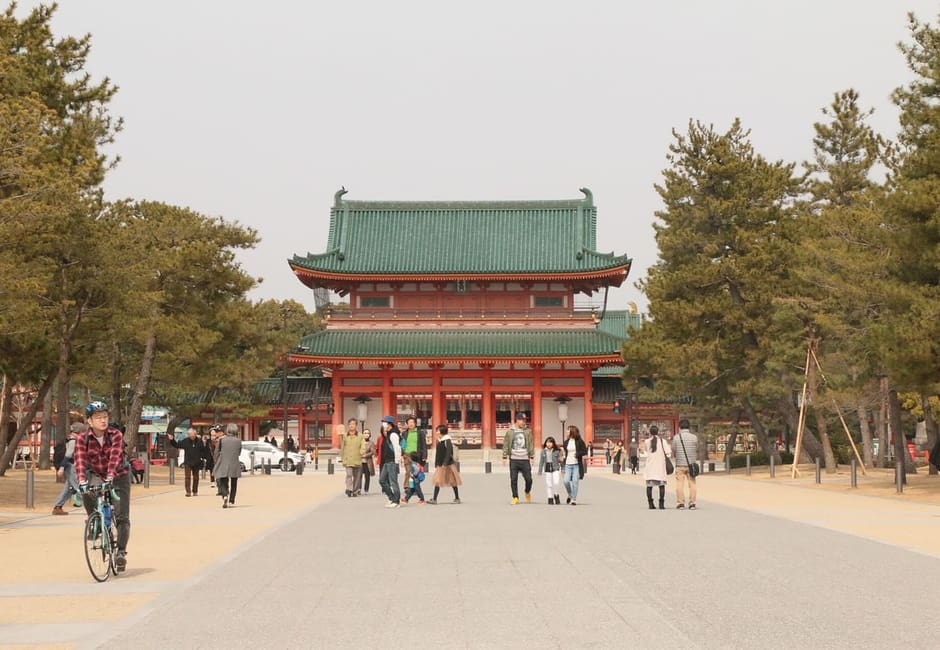
Okazaki is Kyoto's museum quarter. Two art museums sit either side of the approach to Heian Shrine, by its giant torii, and the zoo, a crafts museum and ROHM Theatre Kyoto are a few minutes away round Okazaki Park. Follow the Lake Biwa Canal east and you're at Nanzen-ji, with Eikan-do and Murin-an a short walk from its gate.

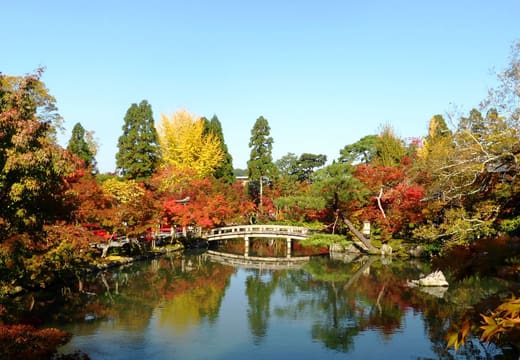
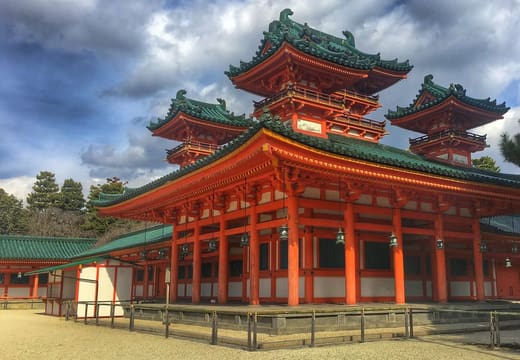
Plenty of it is Meiji-era. Heian Shrine went up in 1895, copying the old palace halls at about five-eighths scale, and Murin-an, the villa Yamagata Aritomo built from 1894, has a garden that runs on canal water. The temples are the older layer. Tenju-an was founded in 1339, and Eikan-do has been a temple for more than 1,100 years.

It's a daytime neighbourhood. The sights close by 17:00 or 18:00 and most of the museums shut on Mondays, though the National Museum of Modern Art, Kyoto stays open until 20:00 on Fridays. Late November brings the crowds, when Eikan-do's maples turn and its 2026 light-up starts on 20 November.

Getting there

From Kyoto Station, take the Karasuma Line and change at Karasuma Oike for the Tozai Line, about 15 minutes to Higashiyama or 17 to Keage. City Bus 5 from stop A1 stops outside the Kyoto City KYOCERA Museum of Art, but Kyoto City's tourism site steers you to the subway, as the area round Nanzen-ji gets very crowded in season.

27 places
Keage (Tozai Line) · Dobutsuen-mae bus stop (City Bus 5) stations
Tap to open the interactive map

What to see

Start at Heian Shrine. The grounds are free, and the 33,000 m² garden behind the halls costs ¥600 (its weeping cherries flower in early April). On 22 October, Jidai Matsuri day, the grounds close at noon. The Kyoto City KYOCERA Museum of Art and the National Museum of Modern Art, Kyoto (MoMAK) are just south. The city museum's Collection Room is ¥730, and MoMAK's Collection Gallery is ¥1,000. The Hosomi Museum's shows draw on a family collection that includes Rimpa and Ito Jakuchu, and the Kyoto Museum of Crafts and Design covers all 74 of Kyoto's traditional crafts, free if you come in kimono.

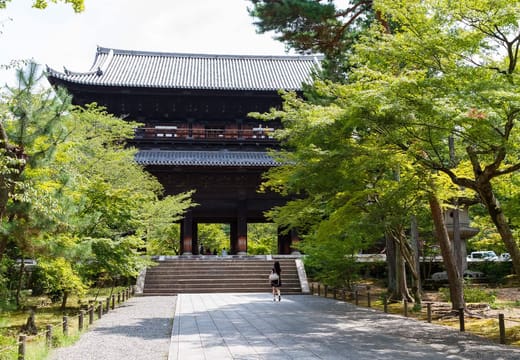
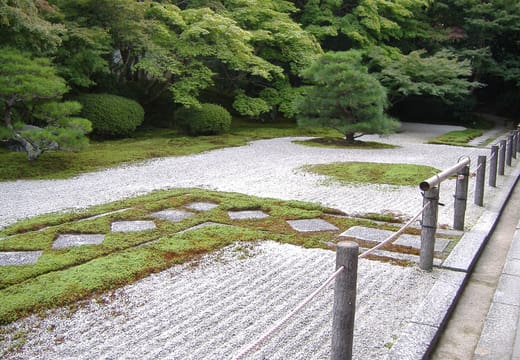
Nanzen-ji, to the east, has a 22 m Sanmon gate you can climb and the Hojo's dry garden, nicknamed the tiger cubs crossing. Its subtemple Konchi-in, a few minutes away, has Kobori Enshu's Crane and Turtle Garden. Eikan-do's just north. It's ¥1,000, or ¥1,500 during its autumn exhibition from 11 November to 6 December 2026.

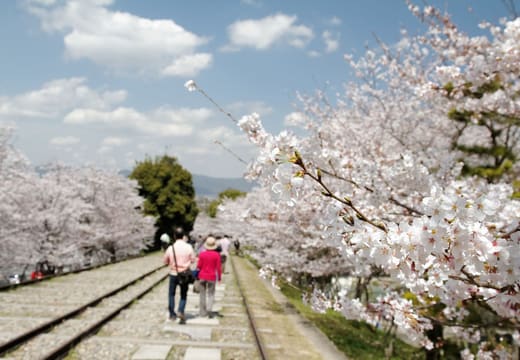
Walk the Keage Incline, 582 m of old rails where boats rode carriages up the slope, and look underneath for Nejiri-manpo, a tunnel whose bricks spiral. The Lake Biwa Canal Museum nearby is free. Shoren-in, to the south, has a pond garden credited to Soami (¥600). In autumn, Shogo-in opens its halls of Kano school paintings on set days until 6 December 2026 (¥800), and Okazaki Shrine, with its rabbit statues, holds its festival on 16 October.

Where to eat and drink

Book lunch where you can. Yamamoto Menzou is a small udon shop near Heian Shrine with a ten-seat counter. Book online up to three days ahead or phone from 9:00 on the day. It's closed on Thursdays. Nanzenji Junsei serves yudofu courses from ¥3,850 by Nanzen-ji (its closing days change month to month), and Rokusei, on the canal west of the shrine, packs lunch into a lacquered wooden pail for ¥4,000.

Blue Bottle Coffee Kyoto opens at 9:00 in a machiya more than 100 years old, and it's calmest just after opening. Kyoto Nama Chocolat serves its ganache in two tatami rooms (¥1,200 with a drink), and Rokusei's cafe, Satei, does soufflés from 14:00 to 17:00. Dinner's harder, since Rokusei's is by reservation only, but Kyoto Modern Terrace at ROHM Theatre Kyoto serves until 22:00. Daiyasu sells its senmaizuke turnip pickle from September to April.

Where to stay

The Westin Miyako Kyoto is about 2 minutes' walk from Keage Station and runs a free 25-minute bus from the Hachijo side of Kyoto Station. Hotel Okura Kyoto Okazaki Bettei is a small hotel a minute from the Okazaki-jinja-mae bus stop, and Yachiyo is a ryokan on the approach to Nanzen-ji. You'll also find smaller inns and guesthouses in the side streets.

It suits you if you like early starts and calm evenings. If you've got kids, Kyoto City Zoo lets children of junior high school age and under in free. If you want bars near your bed, you're better off near Kawaramachi.

How to do it in a day

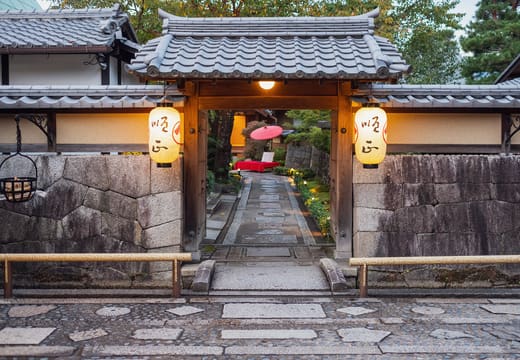
On any day but Thursday, start with porridge at Hyotei's annex at 8:00. You'll want to be at Nanzen-ji for 8:40. Walk out to the aqueduct, then get coffee at Blue Bottle Coffee Kyoto. Go into Murin-an on your booked slot, walk the Keage Incline and stop at the Lake Biwa Canal Museum unless it's a Monday. Lunch is yudofu at Nanzenji Junsei (last orders 14:30).

Then follow the Okazaki Canal west to the giant torii. Give Heian Shrine's garden an hour and pick one museum. The KYOCERA museum's last entry is 17:30, and MoMAK runs to 20:00 on Fridays. Stop at Satei before it shuts at 17:00, and end at ROHM Theatre Kyoto's bookshop, open until 20:00. From 20 November to 6 December 2026, you can swap the evening for Eikan-do's light-up (17:30 to 21:00, ¥1,000).

Cafe · ¥ Blue Bottle Coffee Kyoto Blue Bottle's first cafe in Kansai opened in March 2018 in a two-storey machiya more than 100 years old, a few minutes' walk from Nanzen-ji. Inside, the old posts, beams and bare clay walls stay, under a tall open ceiling with big windows.
Shopping · ¥ Daiyasu Daiyasu has made Kyoto pickles since 1902 and has kept its main shop in Okazaki, east of Heian Shrine, since 1930. Its senmaizuke, Shogoin turnip shaved 2.6 mm thin and cured with Hokkaido kelp, has gone to the Imperial court every year since 1963.
Temple · ¥ Eikan-do Eikan-do, formally Zenrin-ji, has been a temple for more than 1,100 years and still goes by its old nickname, Eikan-do of the maples. Its main image is the Mikaeri Amida, a Buddha who turns his head to look back, and its grounds fill up with visitors for the leaves in late November.
Shrine · Free Heian Shrine Heian Shrine went up in 1895 for the 1,100th anniversary of Kyoto becoming the capital, and its vermilion halls copy the Heian palace's state halls at about five-eighths scale. Behind them is a 33,000 m² stroll garden by the seventh Ogawa Jihei, with weeping cherries in spring and irises in early summer.
Museum · ¥¥ Hosomi Museum The Hosomi Museum opened in 1998 to show what three generations of the Hosomi family collected, from Shinto and Buddhist art and tea utensils to Edo painting such as Rimpa and Ito Jakuchu. Exhibitions change through the year.
Food · ¥¥¥ Hyotei Hyotei started more than 400 years ago as a tea stall by Nanzen-ji's outer gate, and it still serves kaiseki in separate tea-house rooms, one under the original thatched roof. Its signature dish is the Hyotei egg.
Landmark · Free Keage Incline The Keage Incline is a 582 m inclined railway that carried canal boats up and down a 36 m drop on wheeled carriages, so cargo never had to be unloaded. It was the longest in the world when it was built. The rails are still there, and you can walk the whole slope between rows of cherry trees.
Temple · ¥ Konchi-in Konchi-in is a Nanzen-ji subtemple, moved to this spot in 1605, whose Crane and Turtle Garden by Kobori Enshu is a Special Place of Scenic Beauty, with a crane island and a turtle island facing each other behind a bed of white gravel. Its Toshogu shrine, built in 1628, has a dragon on the worship hall ceiling painted by Kano Tan'yu.
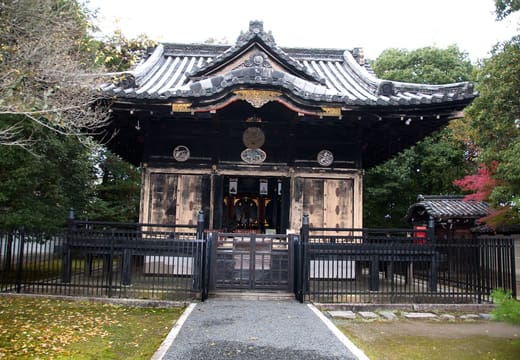
Shrine · Free Kumano Shrine Kumano Shrine was founded in 811, when the mountain ascetic Nichien brought the Kumano deity here from Kishu, and it's the oldest of Kyoto's three Kumano shrines. It's also the guardian shrine of Shogo-in.
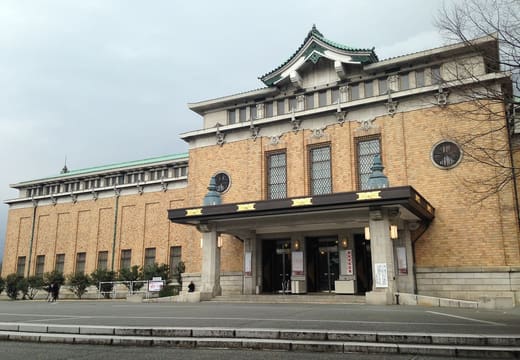
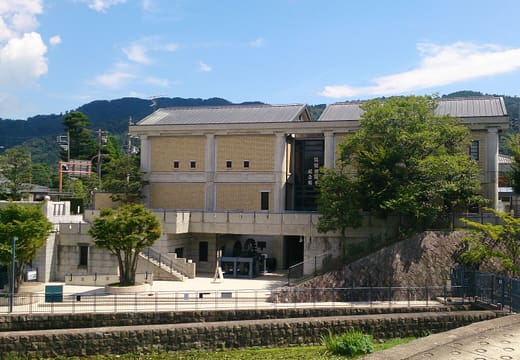
Museum · ¥ Kyoto City KYOCERA Museum of Art Kyoto's city art museum opened in 1933, and its main building is the oldest public art museum building still standing in Japan. A 2020 renovation tucked a glass-fronted entrance under the front plaza and added Higashiyama Cube, a wing for contemporary shows, while the Collection Room shows Kyoto school painting.
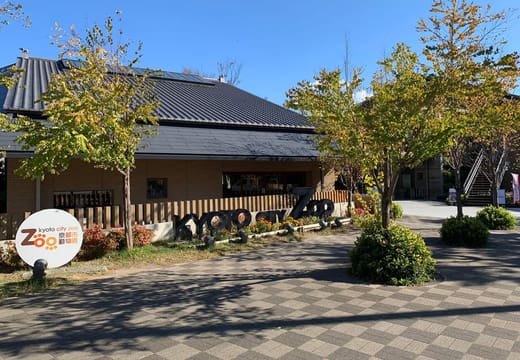
Museum · ¥ Kyoto City Zoo Kyoto City Zoo opened in Okazaki Park on 1 April 1903, starting with 238 animals of 61 species. It's a short walk from Heian Shrine and the Okazaki museums, so it fits easily into a day in the area.
Shopping · ¥¥ Kyoto Handicraft Center Kyoto Handicraft Center has sold Japanese crafts to visitors in Shogoin since 1967, from Kyoto damascene and woodblock prints to pottery and kimono.
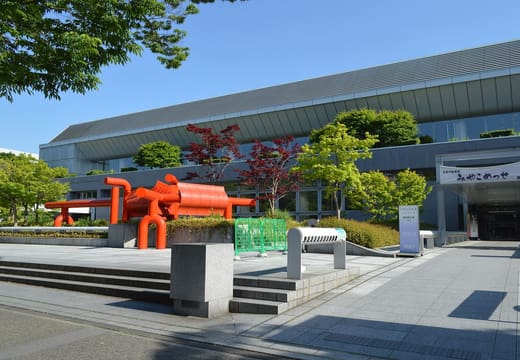
Museum · ¥ Kyoto Museum of Crafts and Design In the basement of the Miyako Messe hall, this museum lays out all 74 of Kyoto's designated traditional crafts, from textiles and dyeing to lacquer and ceramics, with videos and panels on how each is made. Craftspeople demonstrate their work between 10:30 and 17:30, with a different craft on different days.
Cafe · ¥ Kyoto Nama Chocolat Kyoto Nama Chocolat is a cafe for its own soft ganache chocolates, set in a machiya on a quiet residential street near Heian Shrine. There are two connected tatami rooms and a veranda, 16 seats in all, and no music, just the wind and the leaves.
Museum · Free Lake Biwa Canal Museum This free city museum tells the story of the Lake Biwa Canal, dug through the hills from 1885 to 1890 to bring boats, water and later hydroelectric power into Kyoto. There's a model of boats riding up the Keage Incline on their carriages, a diorama of Keage and Okazaki, and the drum house where the winches for the incline's cables were worked.
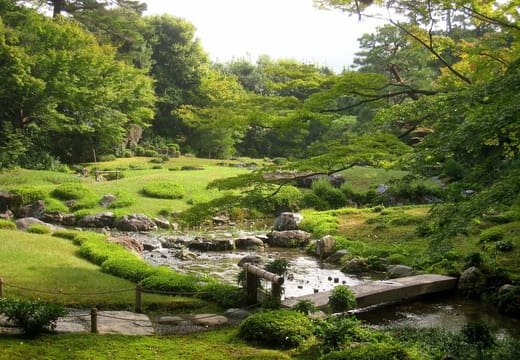
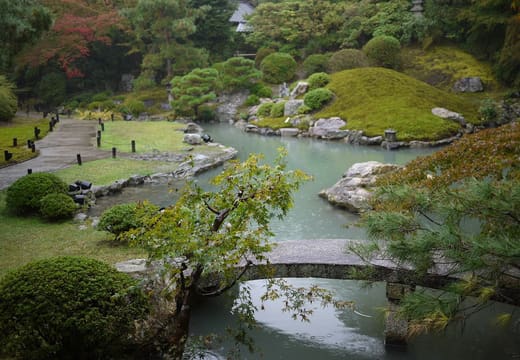
Park · ¥ Murin-an Murin-an was the villa of the Meiji statesman Yamagata Aritomo, built from 1894 to 1896, and the seventh Ogawa Jihei laid out its garden with Lake Biwa Canal water running through it like a country stream and the Higashiyama hills as its backdrop. Yamagata wanted lawn, not moss, though more than 50 kinds of moss have since taken over. Upstairs in the Western-style house is the room where he and Ito Hirobumi talked foreign policy before the Russo-Japanese War.
Temple · ¥ Nanzen-ji Nanzen-ji is the head temple of the Nanzen-ji school of Rinzai Zen. Its 22 m Sanmon gate, rebuilt in 1628, has a balcony you can climb, and the Hojo is a National Treasure whose dry garden, credited to Kobori Enshu, is nicknamed the tiger cubs crossing. Out in the grounds, a red-brick aqueduct carries the Lake Biwa Canal, finished in 1890, past the temple.
Food · ¥¥ Nanzenji Junsei Junsei serves yudofu, Kyoto's simmered tofu, in the garden grounds of a school of medicine opened by the Edo-period physician Shingu Ryotei. The old Junsei Shoin building is a registered tangible cultural property, and the tofu is made from Japanese soybeans and served with the house dipping sauce.
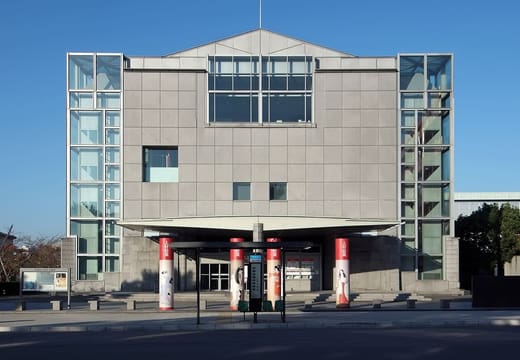
Museum · ¥ National Museum of Modern Art, Kyoto MoMAK is the national museum of 20th-century art and crafts, with a lean toward Kyoto and Kansai artists such as the Kyoto school of Japanese-style painting. Fumihiko Maki designed its granite-gridded building, which opened in 1986, and the collection holds 425 works by the potter Kawai Kanjiro.
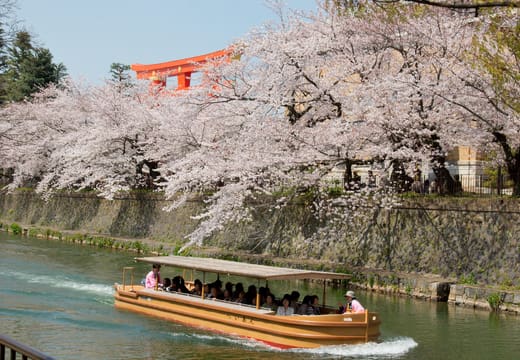
Park · Free Okazaki Canal The Okazaki stretch of the Lake Biwa Canal runs through Okazaki Park and under the giant Heian Shrine torii, with cherry trees along its banks. In cherry season, Jikkokubune boats run 25-minute, roughly 3 km round trips from the Nanzen-ji boat basin, with a guide explaining the canal's history.
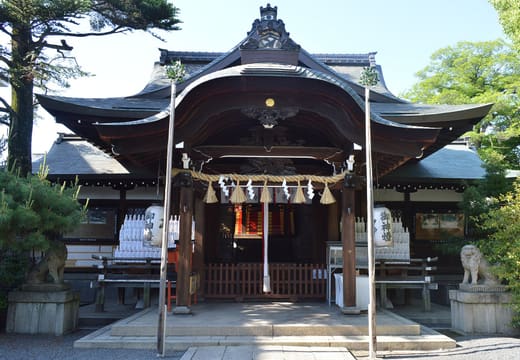
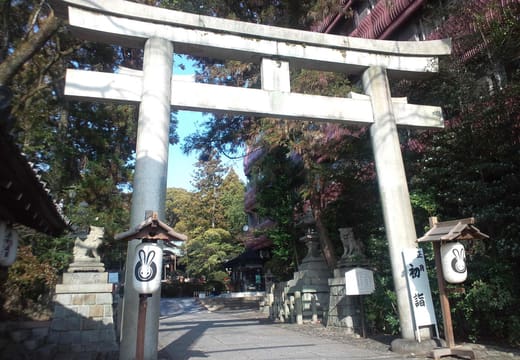
Shrine · Free Okazaki Shrine Okazaki Shrine was founded in 794 as one of the shrines guarding the four sides of the new capital, the eastern one, which is why it's also called Higashi Tenno. Wild rabbits once lived all over this area, so rabbits are its messengers, and you'll find rabbit guardian statues and a black granite rabbit at the water basin.
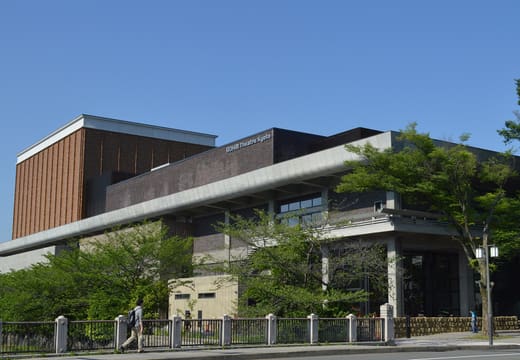
Landmark · Free ROHM Theatre Kyoto ROHM Theatre Kyoto is the old Kyoto Kaikan, a modernist hall by Kunio Maekawa that opened in 1960, rebuilt and reopened under its new name in 2016. It holds a 2,000-seat main hall, a 700-seat South Hall and a black-box North Hall, round a courtyard called ROHM Square.
Food · ¥¥ Rokusei Rokusei has cooked Kyoto cuisine since 1899 and started its teoke bento in 1966, seasonal dishes packed into a wooden pail lacquered on the inside. In 1977 it moved to its spot on the north bank of the canal, just west of Heian Shrine.
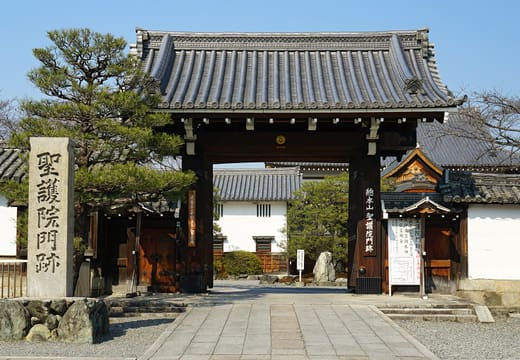
Temple · Free Shogo-in Shogo-in is the head temple of the Honzan Shugen school, which once oversaw yamabushi mountain ascetics across Japan, founded in 1090 and rebuilt on this site in 1676. After the Great Tenmei Fire of 1788 burned the Imperial Palace, it served as Emperor Kokaku's temporary palace for about three years, and its halls are lined with Kano school paintings.
Temple · ¥ Shoren-in Shoren-in is a Tendai temple whose head priests, until the Meiji era, were nearly all imperial princes or sons of the top regent families, and it feels more like a palace than a monastery. You walk through the tatami halls first, then out into a pond garden credited to Soami that borrows the hill behind it, and the Kirishima garden credited to Kobori Enshu.
Temple · ¥ Tenju-an Tenju-an is a Nanzen-ji subtemple founded in 1339 as the memorial hall of Nanzen-ji's founding priest and rebuilt in 1602 by Hosokawa Yusai. It has two gardens, one round a pond and one of dry stone and gravel.
Food · ¥ Yamamoto Menzou Yamamoto Menzou is a small udon shop near Heian Shrine, with a ten-seat counter and two tables. The red Menzou Special is a spicy bowl with burdock tempura, fried mochi and egg (you choose the heat), and the beef and burdock tsukemen comes with a hot dipping broth.

Stay in Okazaki

Browse live availability and compare prices around the neighbourhood.

See hotels near Okazaki on Booking.comPrices are for the night of Saturday 17 October. You can change the dates on Booking.com. If you book, Roam Kyoto earns a small commission from Stay22 at no extra cost to you.