Kyoto Cherry Blossom Map
Where to see sakura in Kyoto, and the nights they're lit
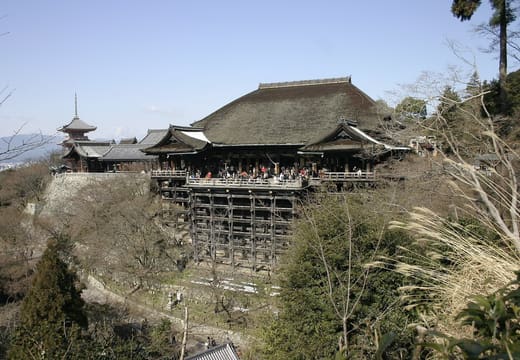
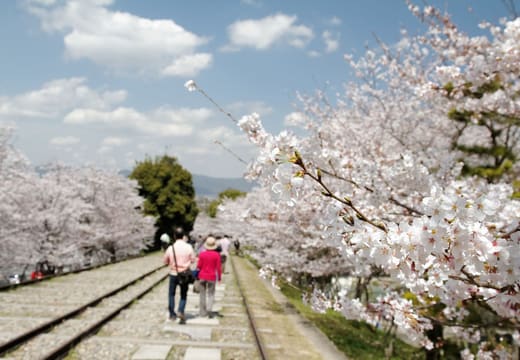
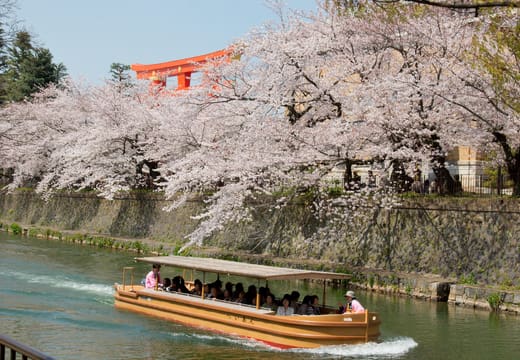
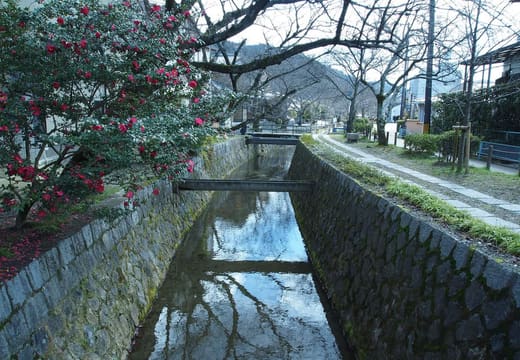
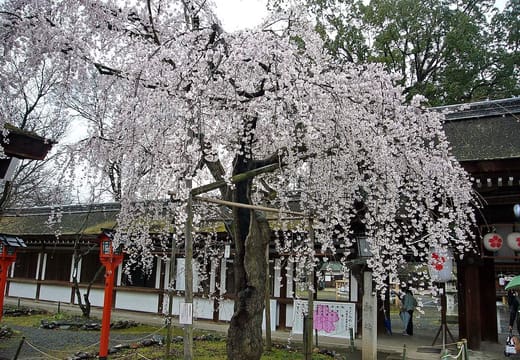
Kyoto's Somei-yoshino cherries usually reach full bloom around 4 April, about nine days after the first flowers open. Early and late kinds stretch the season well beyond that. Hirano Shrine has something in flower for about six weeks from mid-March, and Nison-in's Fugenzo cherry doesn't flower until mid-April and lasts into Golden Week. Go to the big names early. Kiyomizu-dera opens at 6:00, and the Philosopher's Path and the Keage Incline are free to walk, so start there before the crowds arrive. After dark, Maruyama Park's weeping cherry and the trees along the Shirakawa canal in Gion are lit, and you don't pay to see either.
The cherry blossom spots on a map
Every spot in this collection, numbered from west to east. Spots within about 250 m of each other share a pin, and the ones outside the frame are listed under it. Tap a pin to open its page, or open the full map to see the spots with the events and the rest of Kyoto.
- Nison-in · Arashiyama
- Kameyama Park, Okochi Sanso · Arashiyama
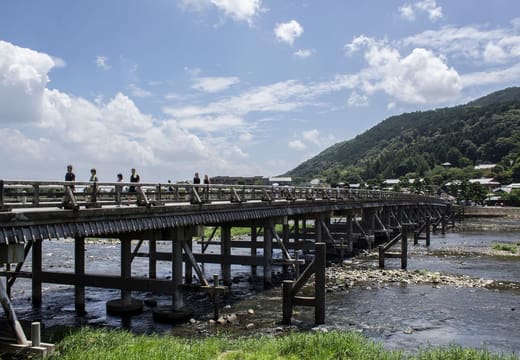
- Togetsukyo Bridge · Arashiyama
- Daikaku-ji · Arashiyama
- Sagano Romantic Train · Arashiyama
- Ninna-ji · Kinkakuji
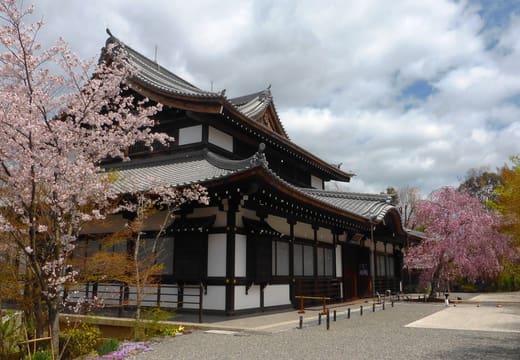
- Hirano Shrine · Kitano
- To-ji · Kyoto Station
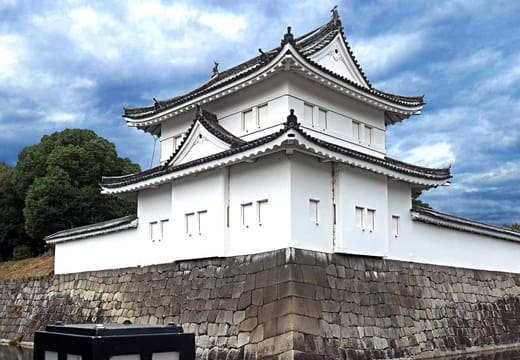
- Nijo Castle · Nijo
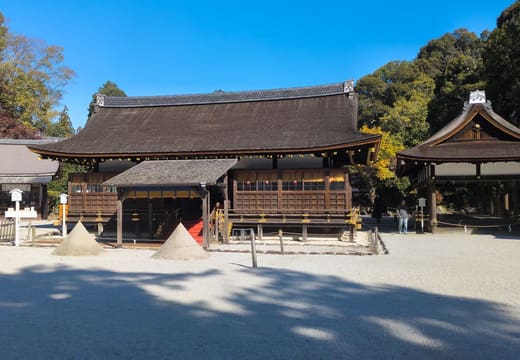
- Kamigamo Shrine · Demachiyanagi
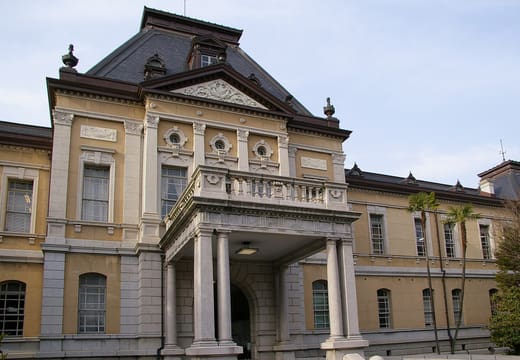
- Kyoto Prefectural Old Main Building · Imperial Palace
- Kyoto Botanical Gardens · Demachiyanagi
- Shosei-en Garden · Kyoto Station
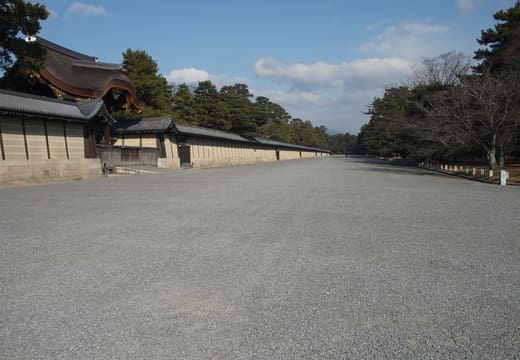
- Kyoto Gyoen · Imperial Palace
- Gion Shirakawa · Gion
- Maruyama Park · Gion
- Okazaki Canal · Okazaki
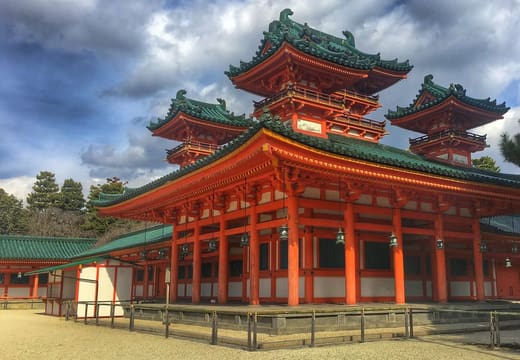
- Heian Shrine · Okazaki
- Kiyomizu-dera · Higashiyama
- Shogunzuka Seiryuden · Higashiyama
- Keage Incline · Okazaki
- Philosopher's Path · Ginkakuji
- Daigo-ji · Daigo
Off the map: Choken-ji (Fushimi).
Cherry blossom 2027 at a glance
Checked . Bloom dates move by a week or more from year to year, and every light-up date below is last year's, so check the source before you book anything round one.
- When they usually bloom
- In an average year (1991 to 2020) the Meteorological Agency's Kyoto tree opens around 26 March and reaches full bloom around 4 April. In 2026 that was 23 and 30 March. Over the last six years full bloom has come as early as 24 March (2023) and as late as 5 April (2024 and 2025). Source: Japan Meteorological Agency
- Forecasts
- None for 2027 yet. Last season the Japan Meteorological Corporation published its first forecast on 18 December 2025, with Kyoto's first flowers on 23 March and full bloom on 30 March. Both came on the day. Source: Japan Meteorological Corporation
- Hirano Shrine
- About 400 trees of some 60 kinds, from early to late flowering. Not announced for 2027. In 2026 they were lit from sunset to about 21:00, 28 March to 12 April. Source: Kyoto City Tourism Association
- Maruyama Park
- Not announced. In 2026 the big weeping cherry was lit 18:00 to 22:00 from 24 March to 8 April. Spreading a sheet to save a spot isn't allowed. Source: Kyoto City Tourism Association
- Gion Shirakawa
- Not announced. In 2026 the cherries on the 220 m of canal from Kawabata-dori to Tatsumi Daimyojin were lit 18:00 to 22:00, 27 March to 5 April. Source: Kyoto City Tourism Association
- Kiyomizu-dera at night
- Not announced. In 2026 the temple stayed open to 21:30 (last entry 21:00) from 27 March to 5 April, and you didn't need to book. Source: Kiyomizu-dera
- Nijo Castle
- Not announced. The 2026 cherry festival ran 19 March to 19 April. The light-up, 18:00 to 22:00 (last entry 21:00), needed its own ticket, ¥2,400 to ¥3,200 from junior high age up, depending on the day and when you bought it, and 4, 5 and 11 April took date-specific tickets. Source: Nijo Castle, Kyoto City
- To-ji
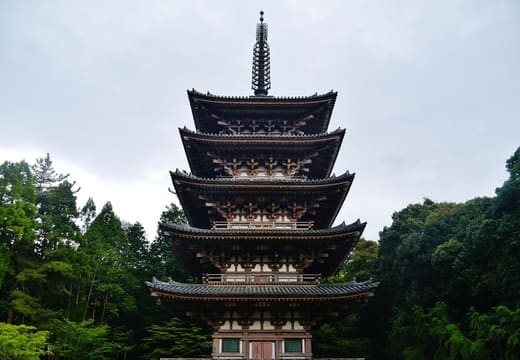
- Not announced. In 2026 the pagoda and its Fuji-zakura weeping cherry were lit 18:00 to 21:30 (last entry 21:00), 14 March to 12 April, ¥1,000. Source: To-ji
- Ninna-ji, Omuro Hana Matsuri
- Not announced. In 2026 it ran 27 March to 6 May, and adults paid ¥800 to go past the middle gate to the low Omuro cherries (free for high school students and younger). They flower late, usually early to mid April. Source: Kyoto City Tourism Association
- Daigo-ji
- The Hotaiko Hanami Gyoretsu, a procession recalling Hideyoshi's cherry party of 1598, is normally held on the second Sunday of April. It was called off in 2026, so check the temple's page before you plan round it. Source: Daigo-ji
- Kyoto accommodation tax
- Kyoto has charged it since October 2018, and the rates went up on 1 March 2026. You pay it per person per night, set by the room rate before meals and consumption tax. It's ¥200 under ¥6,000, ¥400 under ¥20,000, ¥1,000 under ¥50,000, ¥4,000 under ¥100,000 and ¥10,000 from ¥100,000 up. Source: Kyoto City
- Kyoto events calendar, the light-ups and festivals with times and a map
- Where to stay in Kyoto, the neighbourhoods to base yourself in
- What's on in Kyoto: March 2027 · April 2027
The places
Cherry blossom light-ups and festivals
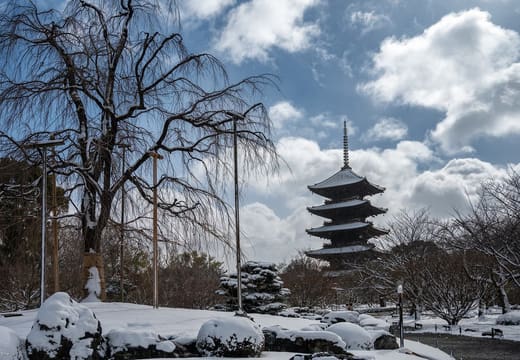
- 14 Mar to 12 Apr (dates to be confirmed) Cherry Blossom Light-up at To-ji To-ji The five-storey pagoda, Japan's tallest wooden tower, is lit with the Fuji-zakura weeping cherry beside it, and the Kondo and Kodo halls open at night. It's a 15-minute walk from Kyoto Station. Official site Hotels nearby
- 19 Mar to 19 Apr (dates to be confirmed) Nijo Castle Cherry Blossom Festival Nijo Castle About 300 cherry trees of 50 kinds flower in turn through the festival. By day there's a stamp rally and a fair of Kyoto products, and the evening light-up runs on its own ticket. Official site Hotels nearby
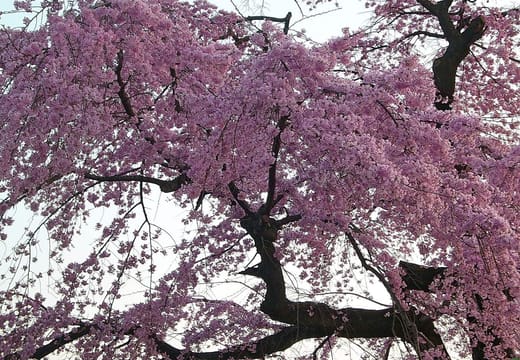
- 24 Mar to 8 Apr (dates to be confirmed) Cherry Blossom Light-up at Maruyama Park Maruyama Park The park's big weeping cherry, Gion no Yozakura, is lit every evening through the blossom. The tree is the second generation, tended by the 16th Sano Toemon. Official site Hotels nearby
- 25 Mar to 5 Apr (dates to be confirmed) Chion-in Spring Light-up Chion-in The National Treasure Sanmon gate, one of Japan's largest wooden two-storey gates, and the Yuzen-en garden are lit for the cherry season. Official site Hotels nearby
- 27 Mar to 5 Apr (dates to be confirmed) Gion Shirakawa Cherry Blossom Light-up Gion Shirakawa The cherries over the Shirakawa canal are lit from Kawabata-dori to Tatsumi bridge, about 220 m, with lanterns along the lane past the old teahouses. Official site Hotels nearby
- 27 Mar to 5 Apr (dates to be confirmed) Kiyomizu-dera Spring Night Viewing Kiyomizu-dera The temple stays open to 21:30 while its 1,500 or so cherries are out, and a blue beam of light from the grounds shines out over the city. No booking needed. Official site Hotels nearby
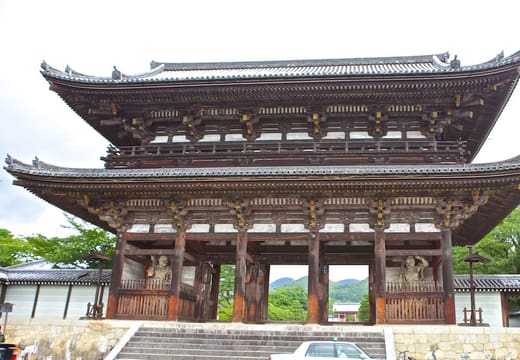
- 27 Mar to 6 May (dates to be confirmed) Omuro Flower Festival at Ninna-ji Ninna-ji Ninna-ji's Omuro cherries, a protected Place of Scenic Beauty, are at their best in early to mid April, with azaleas and then new maple leaves after them. The grounds charge a special entry fee during the festival. Official site Hotels nearby
- 28 Mar to 12 Apr (dates to be confirmed) Cherry Festival at the Old Kyoto Prefectural Office Kyoto Prefectural Government Old Main Building Seven cherries fill the courtyard of the old prefectural office, an Important Cultural Property, among them a grandchild of Maruyama Park's first weeping cherry and the rare Katamori-zakura. It's lit up in the evenings for the first week. Official site Hotels nearby
- 1 to 5 Apr (dates to be confirmed) Cherry Blossom Light-up at Kyoto Botanical Gardens Kyoto Botanical Gardens Five evenings when the gardens' cherries are lit and you can walk the big grounds after dark. Official site Hotels nearby
- 5 to 12 Apr (dates to be confirmed) Hanakuyo Flower Offering at Kurama-dera Kurama-dera Eight days in mid April when the mountain's unzu-zakura cherries flower, later than in the city, and flowers, tea, music and dance are offered at the main hall. Official site Hotels nearby
- 10 Apr (dates to be confirmed) Okasai Cherry Blossom Festival at Hirano Shrine Hirano Shrine A procession of about 200 people in period costume, weaving maidens and a column of court poets among them, leaves the shrine at 13:00 and tours the neighbourhood. It's held on 10 April every year. Official site Hotels nearby