Kyoto Early in the Morning
The city before the crowds arrive
The big sights fill up as the morning goes on, so set an alarm. Fushimi Inari never closes, Kiyomizu-dera opens its gate at 6:00, and Ryoan-ji opens at 8:00 for most of the year, before Kinkaku-ji's 9:00. Nishi Hongan-ji's morning service starts at 6:00 in the Amida-do, and it's free. Breakfast isn't hard to find either. Inoda Coffee and Maeda Coffee both open at 7:00, and Honke Daiichi Asahi by the station serves ramen from 6:00 (closed Thursdays). If you'd rather start in a hot bath, Sauna no Umeyu opens at 6:00 every day but Thursday.
32 places
Year round, before 9am When
The places
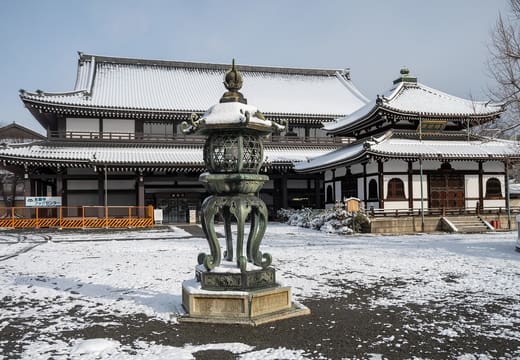
Temple · Kyoto Station Higashi Hongan-ji The head temple of the Otani branch of Jodo Shinshu, founded here in 1602 on land Tokugawa Ieyasu gave it. Both great halls burned in the fighting of 1864, and the Goei-do and Amida-do you walk into today were finished in 1895.
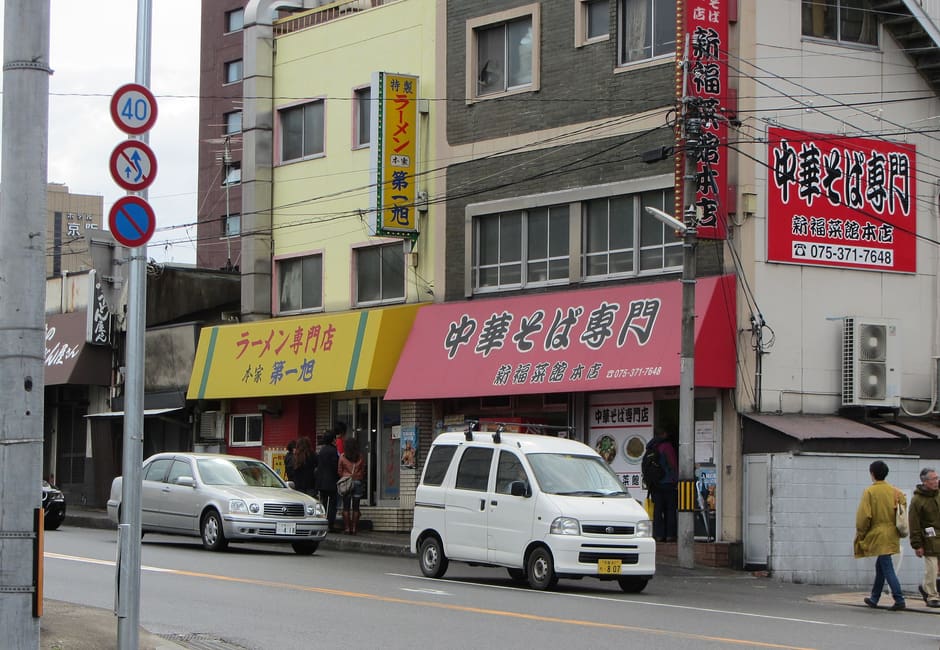
Food · Kyoto Station Honke Daiichi Asahi A 31-seat ramen shop east of the station that's open from 6:00 until 1:00. The soup is a clear soy broth with raw soy sauce from Fushimi, topped with pork from mature sows, Kyoto's Kujo green onions and mung bean sprouts.
Cafe · Kyoto Station Kaikado Café The cafe of Kaikado, the tea caddy makers, on the Shichijo-Kawaramachi corner. The coffee is the fifth-generation owner's favourite blend, roasted in-house since 2023, and the teas include Postcard Teas from London and Marukyu Koyamaen from Kyoto. Kaikado's tins and Asahi-yaki cups are in use around the room, and the pieces on display are for sale.
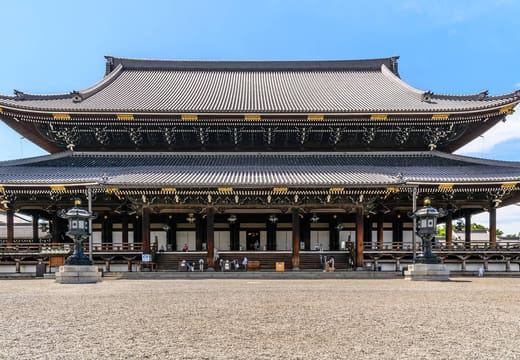
Temple · Kyoto Station Nishi Hongan-ji The head temple of the Hongwanji branch of Jodo Shinshu, and part of the Historic Monuments of Ancient Kyoto World Heritage listing since 1994. The Goei-do, rebuilt in 1636, measures 62 m by 48 m, and you can walk in and sit on its tatami. Out front, a ginkgo of about 400 years spreads its branches like roots, which is why it's called the upside-down ginkgo.
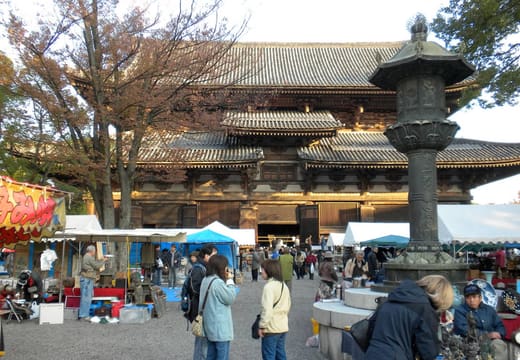
Market · Kyoto Station To-ji Kobo-ichi Market On the 21st of every month, Kobo-san's day, nearly 1,000 stalls fill To-ji's grounds. It started over 700 years ago as tea stalls for pilgrims at the monthly Mieku service for Kukai. Then came stalls selling dango, firewood, charcoal and pots.
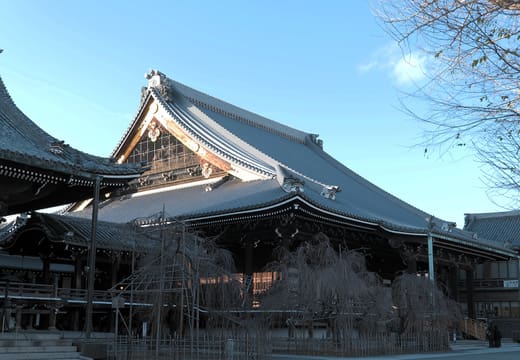
Temple · Shijo-Karasuma Bukko-ji Bukko-ji is the head temple of the Shinshu Bukkoji school of Pure Land Buddhism, moved to this spot in 1586 on Toyotomi Hideyoshi's orders. Its founder's hall, rebuilt in 1884, is a single-storey wooden hall 26.5 metres wide and 33.1 deep, and the Amida Hall next to it dates from 1904. Since 2014 the grounds have also held D&Department Kyoto, a design shop and gallery with a canteen that cooks with local produce.
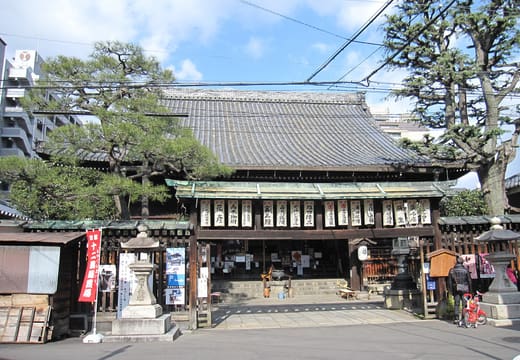
Temple · Shijo-Karasuma Inaba-do Inaba-do, formally Byodo-ji, is a Shingon temple where people pray to its Yakushi, the healing Buddha, for protection from cancer. The temple dates its founding to 1003, and its buildings were rebuilt in 1886. It's also the setting of two kyogen comedies, Inabado and Onigawara.
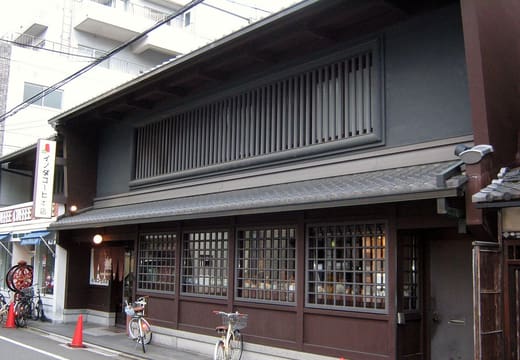
Cafe · Shijo-Karasuma Inoda Coffee Inoda Coffee's main shop is a 211-seat coffee house behind a machiya front on Sakaimachi-dori, with staff in bow ties and gingham-check tables. The coffee comes with milk and sugar already in, the way Inoda has served it from the start. Go early for the Kyoto Breakfast, a plate of ham, scrambled eggs and salad with bread, a small orange juice and a drink.
Cafe · Shijo-Karasuma Maeda Coffee Maeda Coffee's main shop opened in 1981 in a former kimono merchant's building near Shijo-Karasuma, and it seats 100. A German Probat roaster works in the shop, so the room smells of beans. The house speciality is spaghetti Napolitan, and the cakes and pies are made in-house.
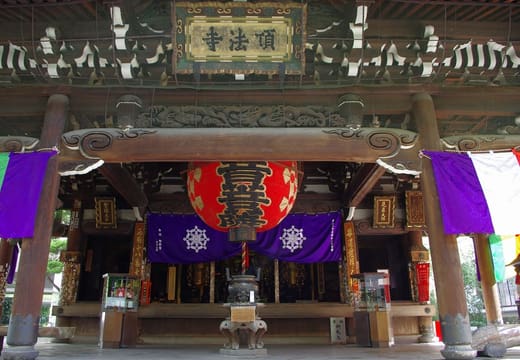
Temple · Shijo-Karasuma Rokkaku-do Rokkaku-do, formally Choho-ji, is a small temple a block off Karasuma-dori, named for its six-sided main hall (the one standing now was rebuilt in 1877). Its priests, the Ikenobo line, shaped ikebana here in the 1400s. Just inside the gate, look for the hexagonal heso-ishi, the 'navel stone', named because Kyoto once thought of this spot as its centre.
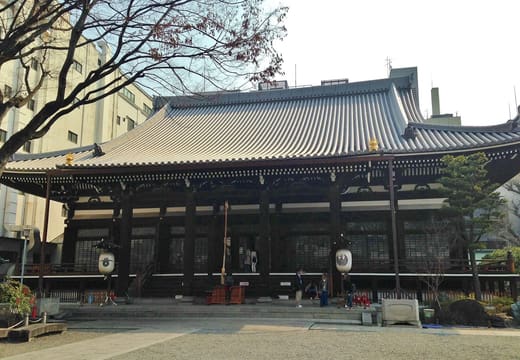
Temple · Kawaramachi Honno-ji Honno-ji is a head temple of the Hokke school, known around the world for the Honno-ji Incident of 1582, when Oda Nobunaga died after his general Akechi Mitsuhide turned on him. That temple stood elsewhere, and Toyotomi Hideyoshi later moved Honno-ji to this site on Teramachi. Its Daihoden museum shows what came through five fires, from a tea bowl Nobunaga owned to the three-legged frog incense burner said to have croaked a warning the night before.
Cafe · Kawaramachi Smart Coffee Smart Coffee, on Teramachi just north of Sanjo, opened in 1932 as Smart Lunch, and it still roasts its own beans the way it did then. Downstairs is the coffee shop, with hotcakes, French toast and egg sandwiches at ¥800 to ¥850, and upstairs is a lunch room serving Western-style plates.
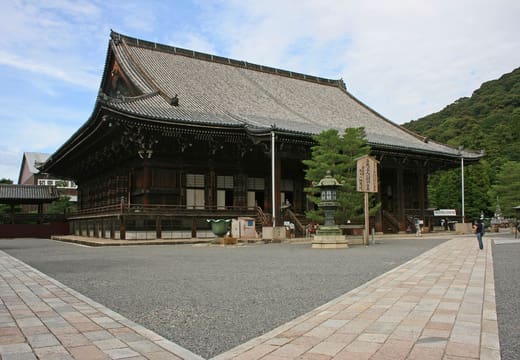
Temple · Gion Chion-in Chion-in is the head temple of Jodo Shu, where the founder Honen taught and spent his last years. You walk in through the Sanmon, built in 1621, about 24 metres tall and 50 metres wide under some 70,000 roof tiles, one of the largest wooden gates in Japan. The 70-tonne bell, cast in 1636, rings 108 times on New Year's Eve, swung by a team of 17.
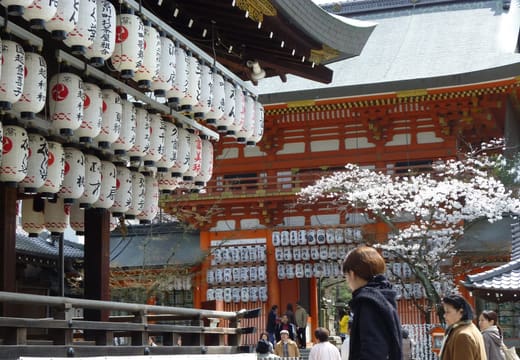
Shrine · Gion Yasaka Shrine Yasaka Shrine watches over the streets of Gion, and its history goes back to at least 876, when the priest Enjo enshrined Gozu Tenno to stop the epidemics sweeping Kyoto. That prayer started the Gion Matsuri, which still fills July, with float processions on 17 and 24 July. The shrine has long ties to the geiko of Gion next door.
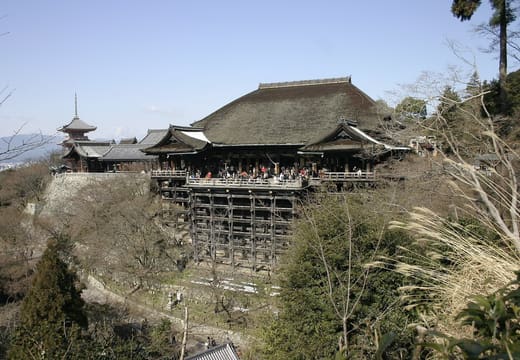
Temple · Higashiyama Kiyomizu-dera Kiyomizu-dera was founded in 778 on Mount Otowa, and its main hall, rebuilt in 1633, juts out over the slope on a wooden stage about 13 metres high. Eighteen zelkova pillars hold it up, and the joints don't use a single nail. The grounds have about 1,500 cherry trees and 1,000 maples, and they've been part of the Historic Monuments of Ancient Kyoto World Heritage site since 1994.
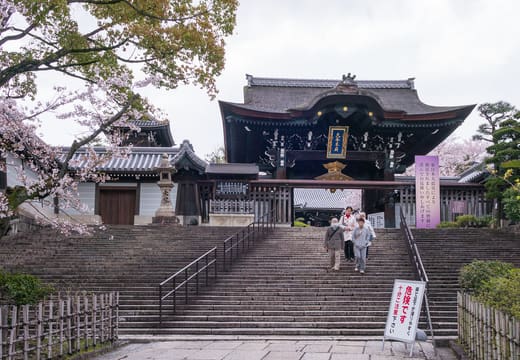
Temple · Higashiyama Otani Hombyo Otani Hombyo is the mausoleum of Shinran, founder of Jodo Shinshu Buddhism, moved here, to Higashiyama-Gojo, in 1603. You come in over the Entsukyo, a stone bridge of 1856 with two arches that's nicknamed the spectacles bridge, above a pond of Oga lotus said to be grown from a 2,000-year-old seed.
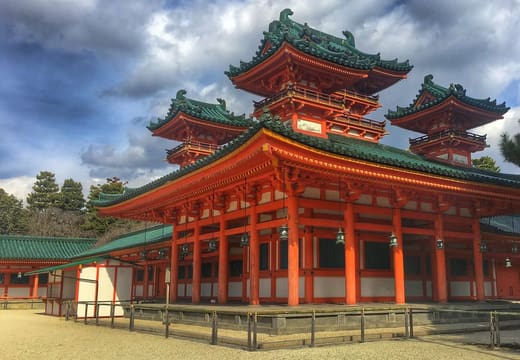
Shrine · Okazaki Heian Shrine Heian Shrine went up in 1895 for the 1,100th anniversary of Kyoto becoming the capital, and its vermilion halls copy the Heian palace's state halls at about five-eighths scale. Behind them is a 33,000 m² stroll garden by the seventh Ogawa Jihei, with weeping cherries in spring and irises in early summer.
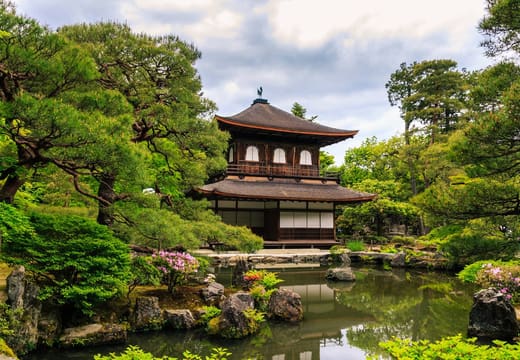
Temple · Ginkakuji Ginkaku-ji Ashikaga Yoshimasa, the eighth Muromachi shogun, began building a mountain villa here in 1482, and after his death in 1490 it became the Zen temple Jisho-ji. Two buildings survive from his day, the Kannon-den, which is the Silver Pavilion itself, and the Togu-do hall, and both are National Treasures. In front of the main hall, a stepped bed of white sand patterned like ripples (the Ginshadan) sits beside a flat-topped sand cone, the Kogetsudai.
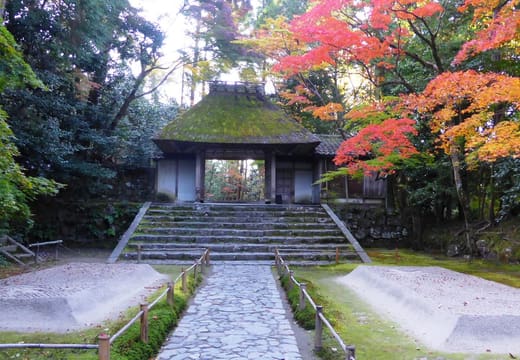
Temple · Ginkakuji Honen-in Honen-in is a short climb east of the Philosopher's Path, on the spot where Honen, founder of the Jodo sect, kept a hermitage with his disciples Anraku and Juren. The present temple dates from 1680. You walk in through a thatched gate between two mounds of white sand, the byakusadan, and the patterns drawn in them change with the seasons.
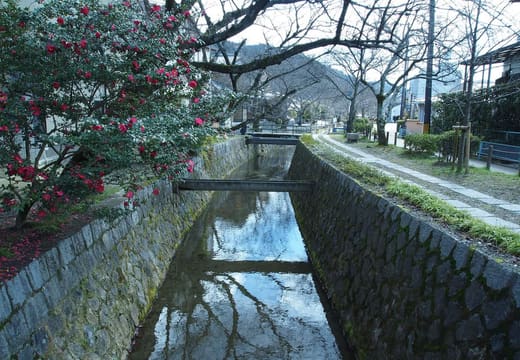
Neighbourhood · Ginkakuji Philosopher's Path A stone path that follows a branch of the Lake Biwa Canal for about 1.8 km, from near Nyakuoji Bridge in the south to Ginkaku-ji in the north. It's named after Kitaro Nishida, the Kyoto University philosopher who's said to have walked here deep in thought. In 1922 the painter Hashimoto Kansetsu gave 360 cherry trees for the banks, which is why they're known as Kansetsu's cherry trees.
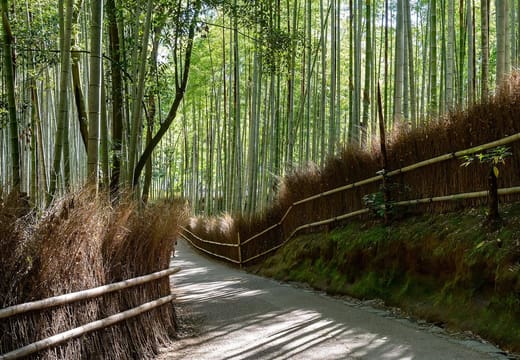
Park · Arashiyama Arashiyama Bamboo Grove This bamboo path is one of the sights Kyoto is best known for. It runs about 400 m from Nonomiya Shrine past Tenryu-ji's north gate to Okochi Sanso, with tended bamboo on both sides, and on a cloudy day it's dim even at noon.
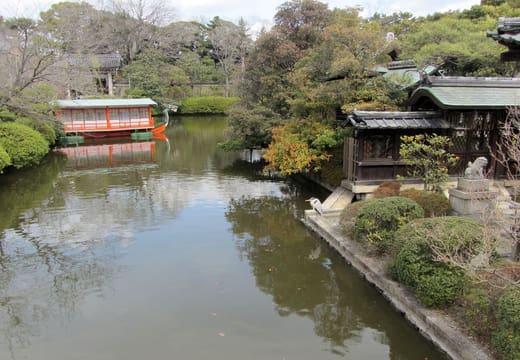
Temple · Nijo Shinsen-en Shinsen-en is what's left of the imperial garden laid out in 794 beside the Heian palace, a spring-fed pond with a shrine to the dragon king Zennyo Ryuo, now a Toji Shingon temple just south of Nijo Castle. Kukai is said to have prayed for rain on its shore in 824, and the rite held here in 869 to ward off disaster, with 66 halberds, one for each province, grew into the Gion Festival. When Tokugawa Ieyasu built the castle he took the spring to fill his moats, and the garden lost its northern grounds.
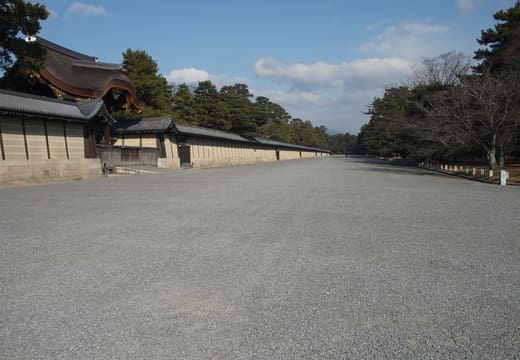
Park · Imperial Palace Kyoto Gyoen Kyoto Gyoen is the park around the Imperial Palace, 1.3 km long and 700 m wide. More than 140 princely and noble houses stood here in the Edo period, and what's left is lawns, woods more than a century old and the remains of a few old gardens, among about 100,000 trees. It never closes and it's free.
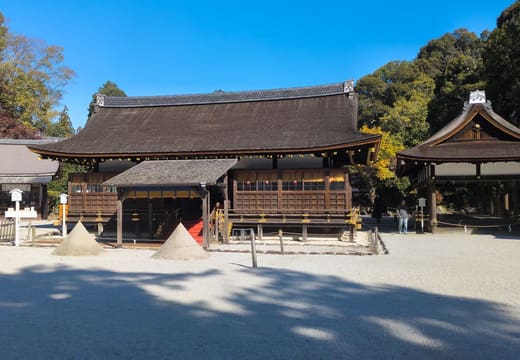
Shrine · Demachiyanagi Kamigamo Shrine Kamigamo Shrine is one of Kyoto's oldest, on 76 hectares south of Mt Koyama, where its god is said to have come down to earth. In front of the Hosodono hall stand two cones of white sand, the tatesuna, that stand for the mountain, with pine needles stuck in the top of each. The two main halls are National Treasures and 41 other buildings are Important Cultural Properties.
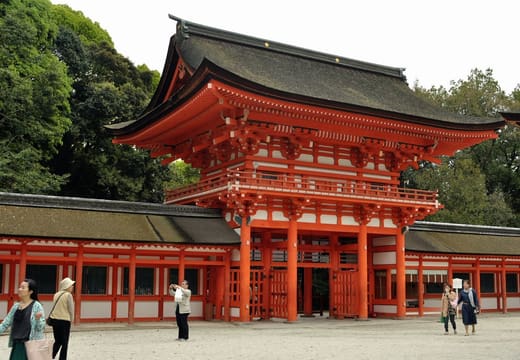
Shrine · Demachiyanagi Shimogamo Shrine You reach Shimogamo Shrine through Tadasu no Mori, a 12.4-hectare forest with clear streams that runs from the main halls south to Kawai Shrine. The shrine's two main halls are National Treasures, 53 more buildings are Important Cultural Properties, and it's been a UNESCO World Heritage site since 1994. The Aoi Matsuri, its festival with Kamigamo Shrine, falls on 15 May every year.
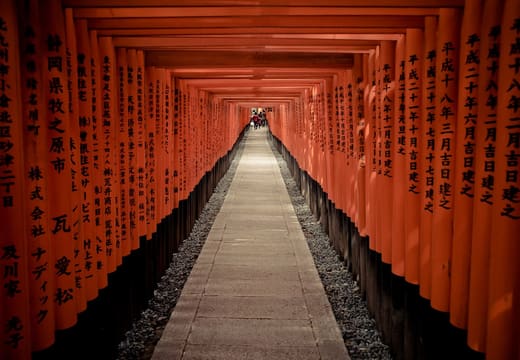
Shrine · Fushimi Fushimi Inari Taisha Fushimi Inari Taisha is the head shrine of Japan's roughly 30,000 Inari shrines, and its deity was enshrined here in 711. Giving a torii, as a prayer or as thanks for one answered, was common by the start of the Edo period, and about 10,000 of them now line the paths up 233 m Mount Inari behind the main hall.
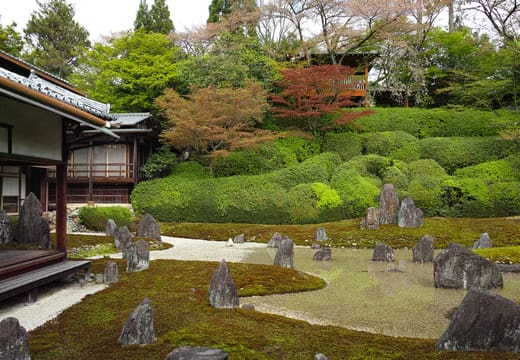
Temple · Fushimi Komyo-in Komyo-in, a Tofuku-ji sub-temple founded in 1391, goes by the nickname moss temple of rainbows. Its main garden, Hashin-tei, is a 1939 dry garden by Shigemori Mirei, with moss, white sand and standing stones set in diagonal lines, and the tea house Ragetsu-an (1957) is placed so you watch the moon rise over it from the garden.
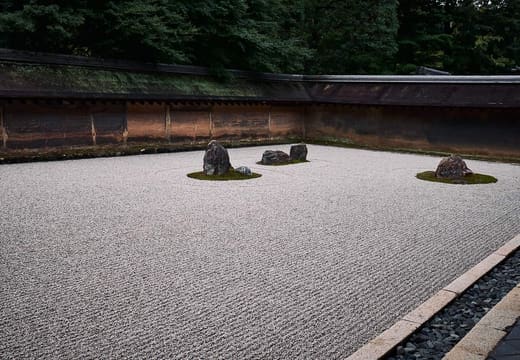
Temple · Kinkakuji Ryoan-ji Ryoan-ji's rock garden is 15 stones set in 248 square metres of white sand, and nobody knows what its maker meant by them. Hosokawa Katsumoto founded the temple in 1450 on a villa of the Tokudaiji family, and the garden probably dates from 1499, when the abbot's hall was built. The earthen wall around it is 180 cm high, made of clay mixed with rapeseed oil.
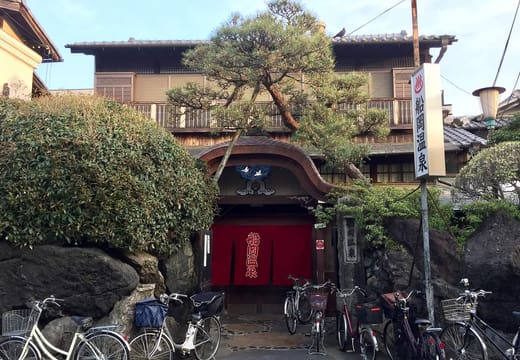
Sento · Kitano Funaoka Onsen Funaoka Onsen was built as the bathhouse of Funaoka-ro, a restaurant inn, and its 1923 changing room and the old inn building have been registered Tangible Cultural Properties since 2003. Look up in the changing room, where the transoms and ceiling are decorated with unusual wood carvings, and at the curved gable on the Kuramaguchi-dori front, added in 1928. It's still a working neighbourhood sento, with an open-air bath, a sauna, an electric bath and a cold plunge.
Sento · Kyoto Station Goko-yu Goko-yu is a two-floor sento near Omiya-Gojo. Upstairs are a hot steam sauna and a far-infrared one, a cold bath of well water, and a bath with Bad Gastein radium ore sunk in the tub, indoors but open to the outside air, so it feels like an outdoor bath. Downstairs there are six more baths. The herbal bath changes about once a week, and a snack counter sells draught beer for afterwards.
Sento · Demachiyanagi Kamogawa-yu Kamogawa-yu opened on Kitaoji-dori in 1926, and Yutonamisha took it over in 2023. The bathing room is small and tiled in light blue, brown and pink, with a big tub in the middle, which you don't often see in Kyoto. The water is groundwater heated over a wood fire, and both sides have a sauna and a cold bath.
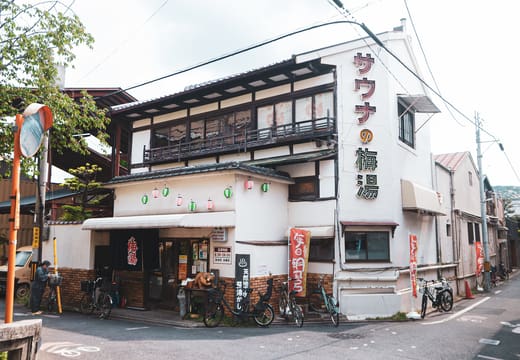
Sento · Kyoto Station Sauna no Umeyu Umeyu sits on the Takase canal, a 15-minute walk from Kyoto Station, under a big neon sign that lights up red, yellow and green at night. The "sauna" in its name supposedly dates from when the sign went up and a sento with a sauna was still rare. Yutonamisha, a company that takes over sento to keep them open, has run it since 2015, when it was about to close, and both sides have a dry sauna, a cold bath, an electric bath and a herbal bath.
More collections
Kyoto Autumn Leaves Where the maples turn, and when to go Kyoto Cherry Blossom Map Where to see sakura in Kyoto, and the nights they're lit Free Things to Do in Kyoto Big sights that cost nothing, and when to catch them  Rainy Day Kyoto Where to go when it pours
  Kyoto with Kids Places to break up the temples
Free Things to Do in Kyoto Big sights that cost nothing, and when to catch them Rainy Day Kyoto Where to go when it pours Kyoto with Kids Places to break up the temples