Rainy Day Kyoto
Where to go when it pours
Nishiki Market's 390 m lane has a roof the whole way, and the Teramachi and Shinkyogoku arcades run under cover from Sanjo to Shijo, past seven temples and a shrine. Sanjusangendo's 1,001 Kannon statues stand inside one hall that's 120 m long, and at the manga museum you're free to pull any of about 50,000 manga off the shelves. Check the closing day before you go. The manga museum shuts on Wednesdays, and so does the railway museum, except on holidays and in school holidays. In heavy rain, Kennin-ji's staff may turn you away if your socks are soaked.
90 places
Any time When
The places
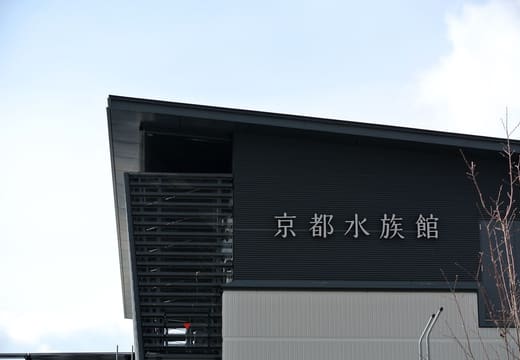
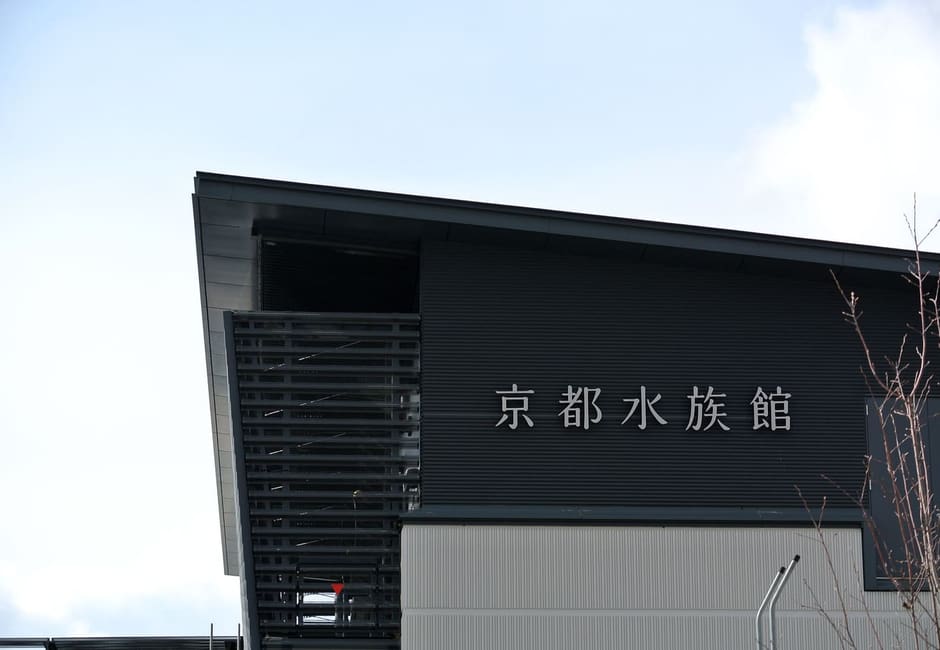
Museum · Kyoto Station Kyoto Aquarium An aquarium in Umekoji Park that opened in March 2012. Its river zone recreates the upper to lower reaches of the Yura River, home to Japanese giant salamanders, a special natural monument. The jellyfish room shows about 30 kinds around a 360-degree tank called GURURI, and bottlenose dolphins perform in the stadium.
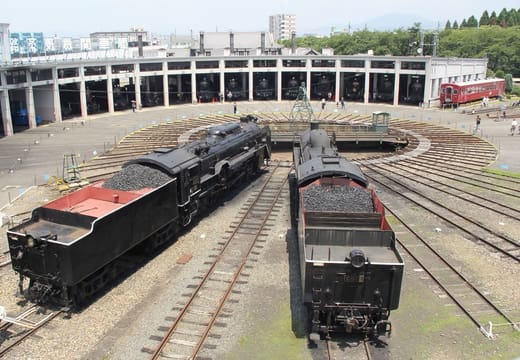
Museum · Kyoto Station Kyoto Railway Museum A railway museum next to Umekoji Park that opened on 29 April 2016, with steam locomotives still in working order. The SL Steam ride pulls a coach 1 km out and back behind a real steam engine, and after the last run you can watch the locomotive turn on the turntable in the middle of the roundhouse.
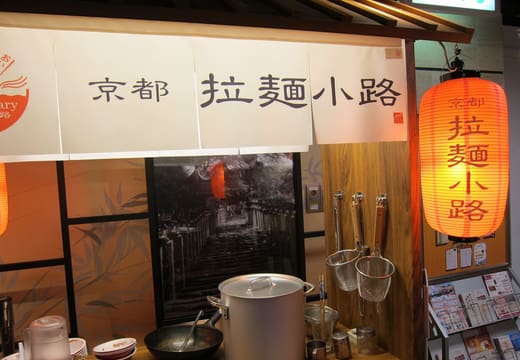
Food · Kyoto Station Kyoto Ramen Koji Ten ramen shops share the 10th floor of the station building, just south of the big staircase, and each has its own seats. The line-up runs from Sapporo miso at Men-ya Kotetsu and Yamagata's Wantanmen no Mangetsu (since 1960) to Toyama Black and Ganso Hakata Daruma's tonkotsu (since 1963), plus Kyoto's own bowls.
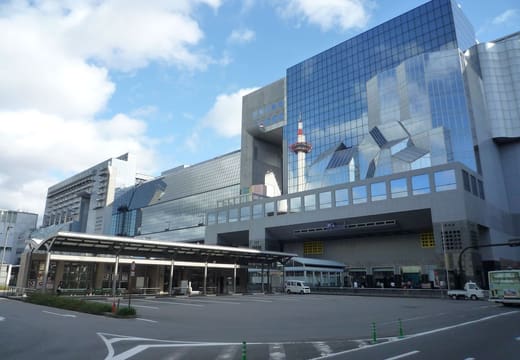
Landmark · Kyoto Station Kyoto Station Building Kyoto's station is a sight in its own right. Hiroshi Hara won the 1991 design competition, and the building opened in 1997. A 171-step staircase climbs 35 m to a rooftop garden 59.8 m up, and the Skyway, a 185 m corridor on the 10th floor, looks north over the city.
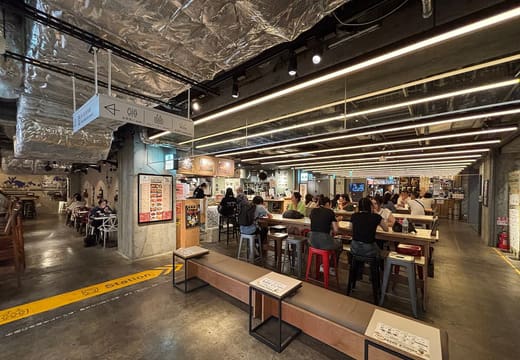
Shopping · Kyoto Station Kyoto Tower Sando The bottom three floors of the Kyoto Tower building, opened in April 2017. The basement is a food hall that runs to 23:00, with counters for gyoza, dashi rice bowls, Torisei yakitori and conveyor-belt sushi. The ground floor sells Kyoto sweets and souvenirs, and upstairs you can book a wagashi or sushi-making class.
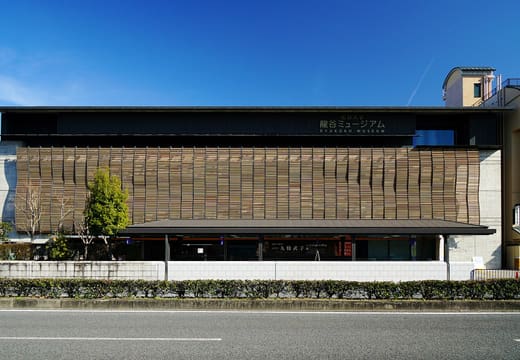
Museum · Kyoto Station Ryukoku Museum Ryukoku University's museum stands on Horikawa-dori facing Nishi Hongan-ji and puts on exhibitions on the history of Buddhism, from its start in India to Japan. Don't miss the full-size reconstruction of the corridor of Cave 15 at Bezeklik, near Turfan in Xinjiang, about 15 m long and 3.5 m high, with nine murals of about 3 m each.
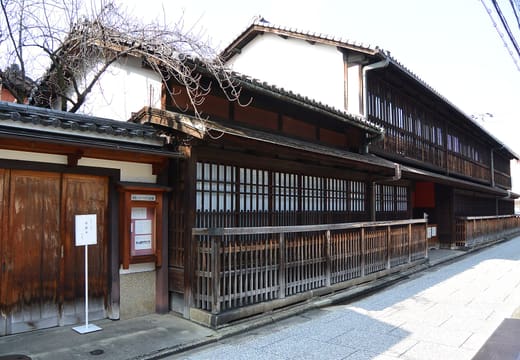
Museum · Kyoto Station Shimabara Sumiya Sumiya is the last surviving ageya, an Edo-period banquet house where hosts fed and entertained guests with taiyu and geiko sent over from the okiya. The Nakagawa family has run it since Shimabara, Kyoto's old licensed hanamachi, moved here in 1641. It was enlarged in 1787 and listed as an Important Cultural Property in 1952.
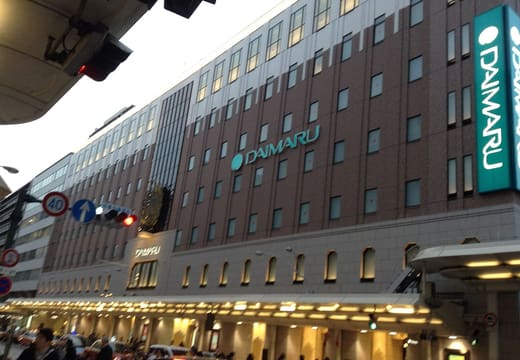
Shopping · Shijo-Karasuma Daimaru Kyoto Daimaru is the department store on Shijo-dori just west of Takakura-dori, and its food halls fill both basement floors. Le Petitmec, the Kyoto bakery, has a counter on B1. The eighth floor is restaurants, open later than the rest of the store.
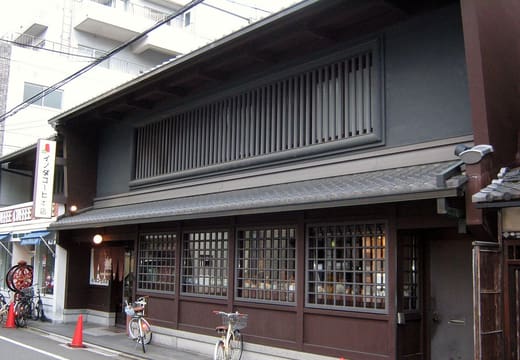
Cafe · Shijo-Karasuma Inoda Coffee Inoda Coffee's main shop is a 211-seat coffee house behind a machiya front on Sakaimachi-dori, with staff in bow ties and gingham-check tables. The coffee comes with milk and sugar already in, the way Inoda has served it from the start. Go early for the Kyoto Breakfast, a plate of ham, scrambled eggs and salad with bread, a small orange juice and a drink.
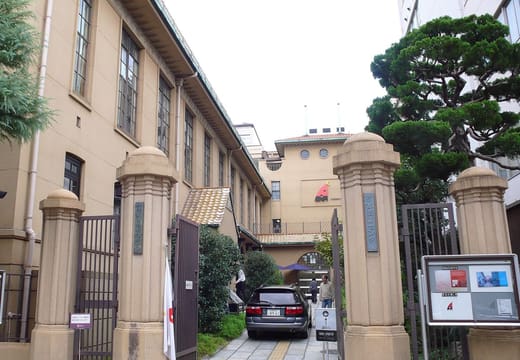
Museum · Shijo-Karasuma Kyoto Art Center Kyoto Art Center took over the 1931 building of Meirin Elementary School, which opened in 1869 and closed in 1993. Since 2000 it has run galleries and performances, and it lends studios to young artists free of charge. The ground-floor Maeda Coffee cooks inside an artwork, a box-shaped kitchen tower by the artist Teppei Kaneuji and the architect Toshikatsu Ienari.
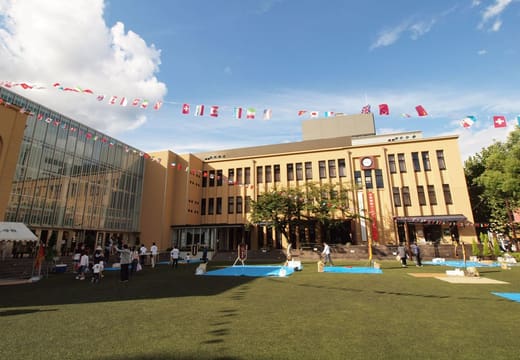
Museum · Shijo-Karasuma Kyoto International Manga Museum The manga museum fills an early Showa school building, the former Tatsuike Elementary School, with about 50,000 manga on 200 metres of open shelves. You can take any of them down and read. Shonen titles are on the first floor, shojo on the second and seinen on the third, and there's a corner of translated manga from around the world.
Cafe · Shijo-Karasuma Maeda Coffee Maeda Coffee's main shop opened in 1981 in a former kimono merchant's building near Shijo-Karasuma, and it seats 100. A German Probat roaster works in the shop, so the room smells of beans. The house speciality is spaghetti Napolitan, and the cakes and pies are made in-house.
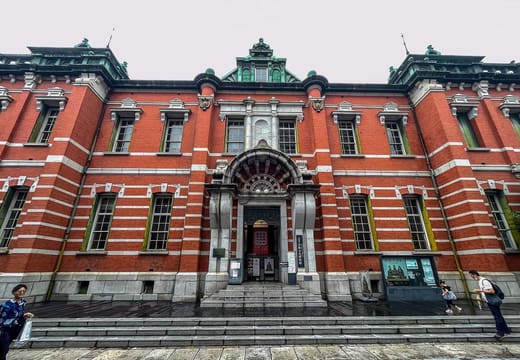
Museum · Shijo-Karasuma Museum of Kyoto The Museum of Kyoto covers the city's history on its second floor and puts on large special exhibitions above. Even if you skip both, walk through the annex, the old Bank of Japan Kyoto branch, a red-brick building finished in 1906 to a design by Tatsuno Kingo and his student Nagano Uheiji. It's an Important Cultural Property and free to enter.
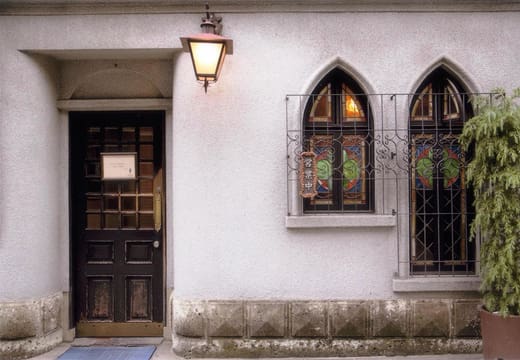
Cafe · Kawaramachi Francois Coffee House Francois opened in 1934 in a lane by the Takase canal just south of Shijo, a salon-style coffee house its owner Tateno Shoichi meant as a place to talk about art and against the war. Stained-glass windows, a white ceiling, red velvet chairs and a copy of the Mona Lisa set the tone. The north half, remodelled in 1941 to a design by Bencivenni, an Italian studying at Kyoto University, was registered as a Tangible Cultural Property in 2003.
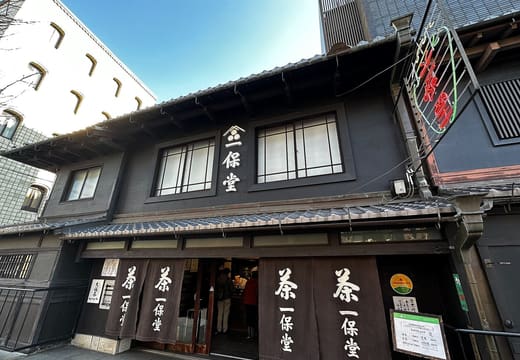
Shopping · Kawaramachi Ippodo Tea Ippodo's main store has stood on Teramachi-dori, just north of Nijo, since 1864, when it was rebuilt here after the fire of the Hamaguri Gate Incident. The business began in 1717 as Omiya, selling tea and ceramics, and Prince Yamashina gave it the name Ippodo in 1846. Inside there's a big counter under a board listing every tea, a wall of old tea jars and the 44-seat Kaboku Tearoom.
Shopping · Kawaramachi Kamiji Kakimoto Kamiji Kakimoto is a paper shop whose roots go back to 1716, when the family ran a bamboo business on Teramachi at Nijo. It turned to paper in 1845 and has followed it from washi to Western paper and paper goods. While a new building goes up on its Teramachi site, the shop trades from a temporary store on Fuyacho-dori just north of Sanjo.
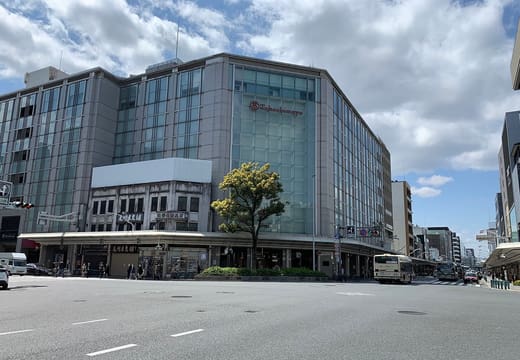
Shopping · Kawaramachi Kyoto Takashimaya Kyoto Takashimaya is the department store on the Shijo-Kawaramachi crossing, next to Kyoto-Kawaramachi Station, together with its T8 specialty building. The 7th-floor restaurant floor, Dining Garden Kyo-Kairo, has a branch of Mishima-tei, the sukiyaki house that's been on Teramachi since 1873.
Shopping · Kawaramachi Kyukyodo Kyukyodo opened in 1663 as a herbal medicine shop in front of Honno-ji's gate, under a name chosen by the Confucian scholar Muro Kyuso. Medicine and incense share raw materials, so by about 1700 it was making incense, and in the late 1700s it took up brushes and ink for the painters and writers it served. The Teramachi main store sells incense, calligraphy brushes, washi, letter paper, postcards and gift envelopes.
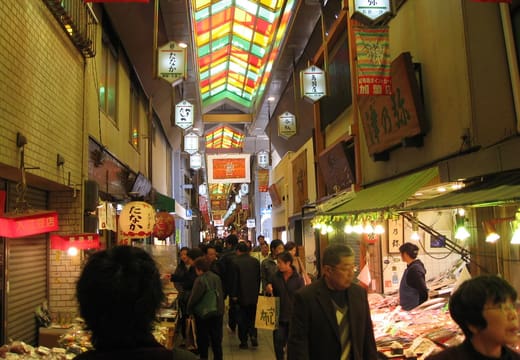
Market · Kawaramachi Nishiki Market Nishiki Market is a 390 m covered lane of food shops just north of Shijo-dori, and it's been trading for about 400 years. This is where you find Kyoto vegetables, Lake Biwa river fish, hamo eel, yuba and fresh fu. The painter Ito Jakuchu was born into a vegetable wholesaler's family on the lane, and copies of his work turn up on the shop shutters.
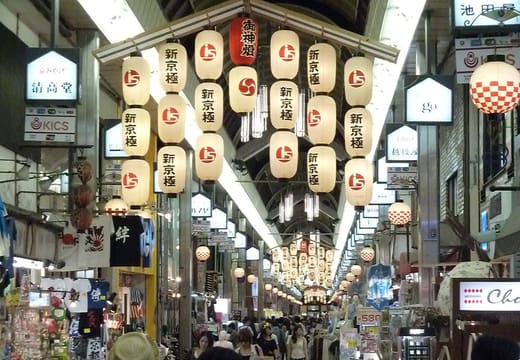
Shopping · Kawaramachi Teramachi and Shinkyogoku Arcades Shinkyogoku was cut through old temple grounds in 1872 and runs from Sanjo to Shijo, with Teramachi parallel one street west. It began as a strip of theatres and variety halls, turned to cinemas, and it's still known for the souvenir shops that opened for school groups in the late 1950s and early 1960s. Seven temples and a shrine still stand along it.
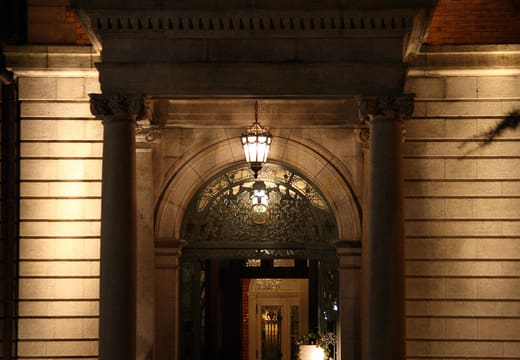
Cafe · Gion Chourakukan Chourakukan is a Western-style mansion that Murai Kichibei, the "tobacco king", built in 1909 to receive guests, and it was named an Important Cultural Property in 2024. Its cafe serves seasonal desserts in six rooms, each in a different style, with a Bösendorfer piano that a pianist plays on some days.
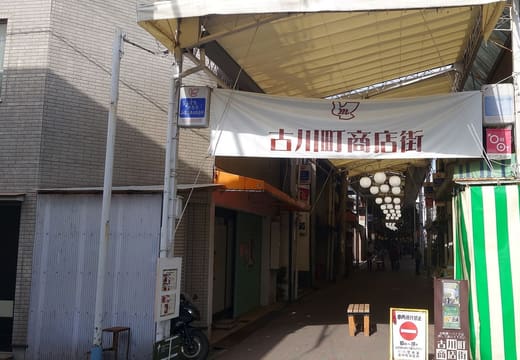
Shopping · Gion Furukawacho Shopping Street Furukawacho is a covered shopping street of about 40 shops over 220 metres, running south from Sanjo-dori on the line of the old Wakasa road, the route that brought mackerel from the Sea of Japan. It's known as the Nishiki of the east, and it was once called eastern Kyoto's kitchen. The arcade went up in 1972, and about 1,000 pastel paper lanterns hang from it now.
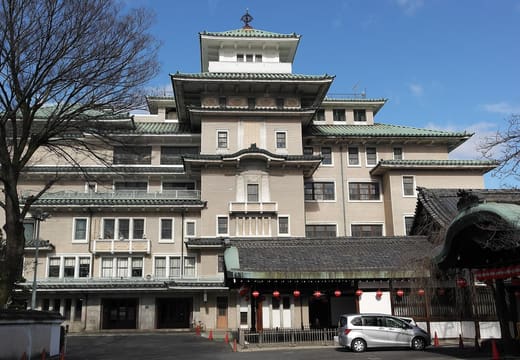
Landmark · Gion Gion Corner Gion Corner, in the annex of the Gion Kobu Kaburenjo, puts seven traditional arts on one stage in about 50 minutes: tea, koto, ikebana, bugaku court dance, kyogen comedy, Kyomai dance by Gion Kobu maiko, and bunraku or noh depending on the month. It's where Gion's own teahouse association sends visitors who want to see Kyoto-style dance.
Museum · Gion Gion Kagai Art Museum The Gion Kagai Art Museum, in the Yasaka Club beside the Kaburenjo, explains the world of Gion Kobu's geiko and maiko through hand-painted Yuzen kimono, Nishijin obi and the kanzashi they change with the seasons. Upstairs, a geiko or maiko dances two Inoue-style pieces several times a day. You can also see the pond garden from 1913 and, when it's open, part of the Kaburenjo's all-hinoki theatre.
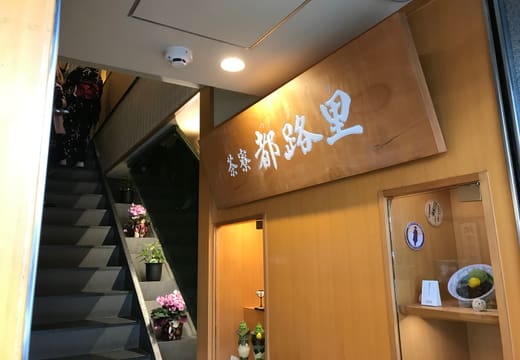
Cafe · Gion Gion Tsujiri Tsujiri started selling tea in Uji in 1860 and opened this Gion shop on Shijo-dori in 1948. The ground floor is the tea shop, which also sells soft serve, and Saryo Tsujiri on the two floors above has served matcha sweets since 1978. Its most popular order is the Tokusen Tsujiri parfait, layered with matcha and vanilla ice cream, shiratama, matcha jelly and azuki.
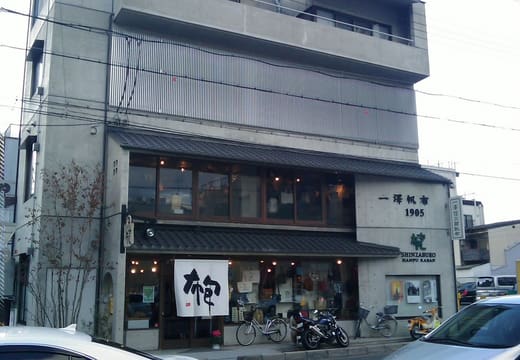
Shopping · Gion Ichizawa Shinzaburo Hanpu Ichizawa Shinzaburo Hanpu sells canvas bags made in its own workshop, from totes to rucksacks, at its only shop anywhere, on Higashioji-dori. The family business goes back to the Meiji era, when Kihee Ichizawa bought a sewing machine and started on tool bags and shirts.
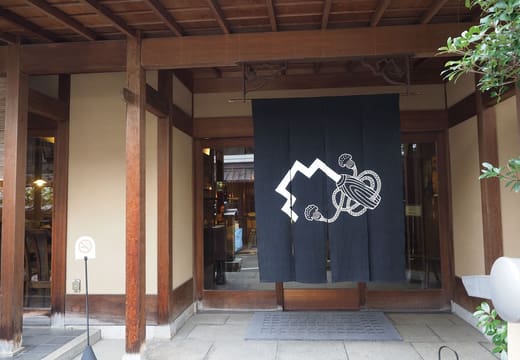
Cafe · Gion Kagizen Yoshifusa Kagizen Yoshifusa has made Kyoto sweets in Gion since the Kyoho era (1716 to 1736). Its tea room is where you try the kuzukiri, made to order from Yoshino kudzu and water and eaten with black sugar syrup, a dessert the shop first delivered to teahouses and Minamiza in the early Showa years. To take home, the Kikujuto, small chrysanthemums of wasanbon sugar, have been made for over 150 years.
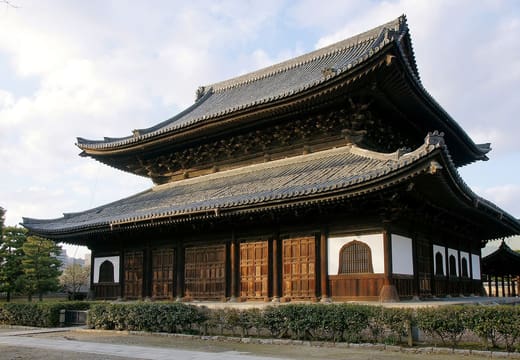
Temple · Gion Kennin-ji Kennin-ji is Kyoto's oldest Zen temple, founded in 1202 with the monk Eisai as its first abbot. Look up in the Dharma Hall at Koizumi Junsaku's twin dragons, finished in 2002 for the 800th anniversary and painted across a ceiling 11.4 by 15.7 metres. The Wind and Thunder Gods screens you see are high-definition copies, because Sotatsu's original is deposited at the Kyoto National Museum.
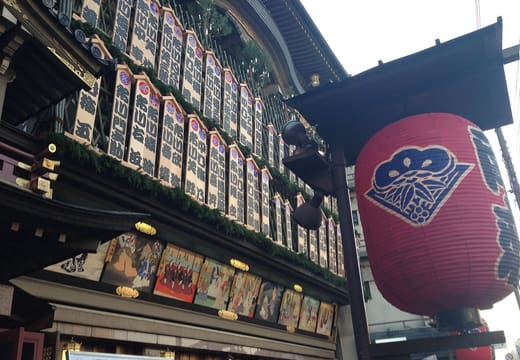
Landmark · Gion Minamiza Minamiza has stood at the east end of Shijo bridge for more than 400 years, since the days when kabuki played on the dry bed of the Kamo River. The current building, with its Momoyama-style gables, dates from 1929 and reopened in November 2018 after earthquake-proofing.
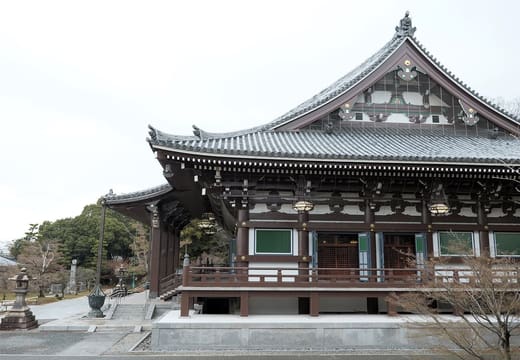
Temple · Higashiyama Chishaku-in Chishaku-in is the head temple of the Chizan branch of Shingon Buddhism, at the east end of Shichijo-dori. Its treasure hall, opened in 2023, always shows the National Treasure panels by Hasegawa Tohaku and his studio, including his Maple and the Cherry Blossoms attributed to his son Kyuzo. The garden is modelled on China's Mount Lu, and its pond runs in under the veranda of the Daishoin hall.
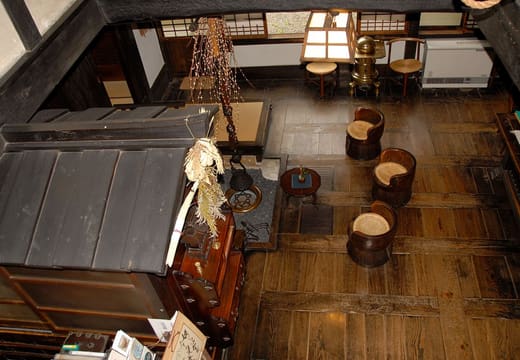
Museum · Higashiyama Kawai Kanjiro's House The potter Kawai Kanjiro set up his home and kiln on this Gojozaka plot in 1920, and in 1937 he built the house you walk through now to his own design. It opened as a museum in 1973. The furniture and fittings are his designs or things he collected, and the quiet rooms still give a feel of how he lived.
Shopping · Higashiyama Kyoto Ceramics Hall Kyoto Ceramics Hall sits at the bottom of Gojozaka, where the climb to Kiyomizu-dera starts. The ground-floor shop sells Kyo-yaki and Kiyomizu-yaki from well-known potters and kilns to young makers, and on demonstration days you can watch a potter at work. The gallery upstairs puts on shows by potters from Kyoto and beyond.
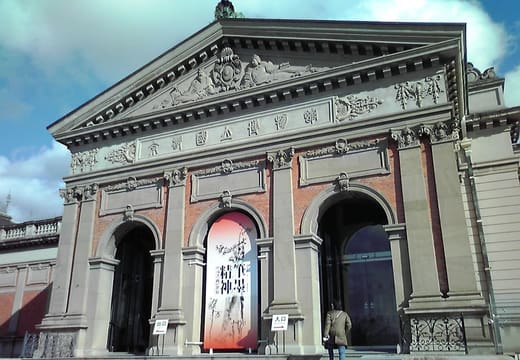
Museum · Higashiyama Kyoto National Museum The Kyoto National Museum opened in 1897 as the Imperial Museum of Kyoto, in the Meiji Kotokan designed by Katayama Tokuma. That building has been closed since 2015 ahead of earthquake-proofing work, so the exhibitions are in the Heisei Chishinkan wing by Taniguchi Yoshio, opened in 2014.
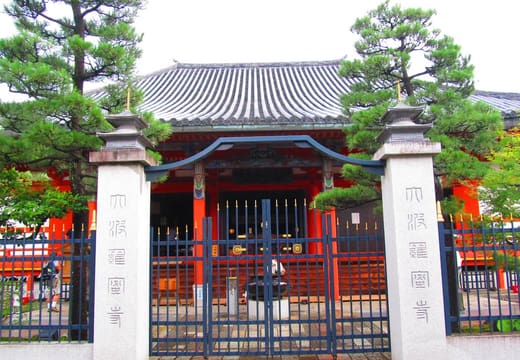
Temple · Higashiyama Rokuharamitsu-ji Rokuharamitsu-ji was founded in 951 by the monk Kuya, and its main hall dates from 1363. Its treasure hall holds Heian and Kamakura sculpture, including Kosho's statue of Kuya with six small Amida Buddhas coming out of his mouth as he chants, and a seated Taira no Kiyomori holding a sutra scroll.
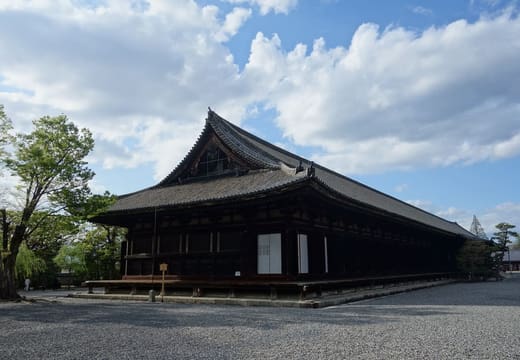
Temple · Higashiyama Sanjusangendo Sanjusangendo, formally Rengeo-in, is a hall 120 metres long, rebuilt in 1266 after the original of 1164 burned down. Inside stand 1,001 statues of the thousand-armed Kannon, a seated one 355 cm tall in the middle and 1,000 standing figures in rows either side. They're all National Treasures, and so are the hall's Wind and Thunder Gods and its 28 guardian deities.
Shopping · Higashiyama Shichijo Kanshundo Shichijo Kanshundo has made Kyoto sweets on Shichijo-dori since 1865, a minute's walk from the Sanjusangendo bus stop. In its sweets class you shape four namagashi by hand, then whisk your own matcha to drink with one of them and take the other three home.
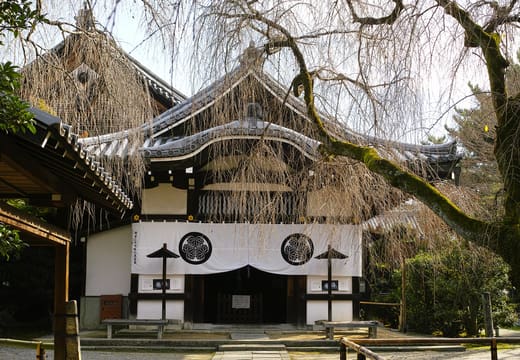
Temple · Higashiyama Yogen-in Yogen-in was built in 1594 by Yodo-dono for her late father, Azai Nagamasa, and rebuilt in 1621 with parts of Fushimi Castle. The corridor ceilings are the castle floorboards where Tokugawa soldiers took their own lives in 1600, still marked with their blood. Tawaraya Sotatsu painted the cedar doors and the sliding screens, his only surviving fusuma.
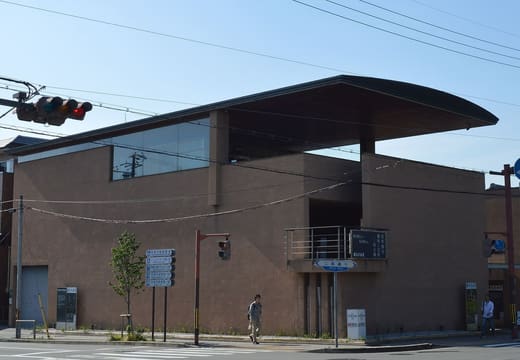
Museum · Okazaki Hosomi Museum The Hosomi Museum opened in 1998 to show what three generations of the Hosomi family collected, from Shinto and Buddhist art and tea utensils to Edo painting such as Rimpa and Ito Jakuchu. Exhibitions change through the year.
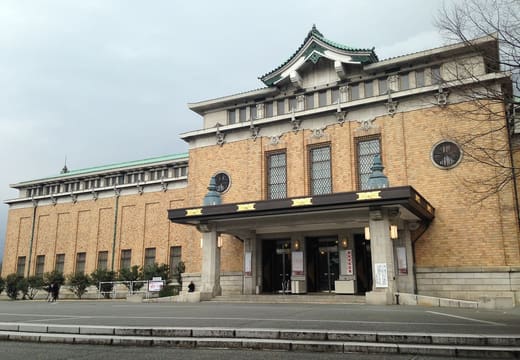
Museum · Okazaki Kyoto City KYOCERA Museum of Art Kyoto's city art museum opened in 1933, and its main building is the oldest public art museum building still standing in Japan. A 2020 renovation tucked a glass-fronted entrance under the front plaza and added Higashiyama Cube, a wing for contemporary shows, while the Collection Room shows Kyoto school painting.
Shopping · Okazaki Kyoto Handicraft Center Kyoto Handicraft Center has sold Japanese crafts to visitors in Shogoin since 1967, from Kyoto damascene and woodblock prints to pottery and kimono.
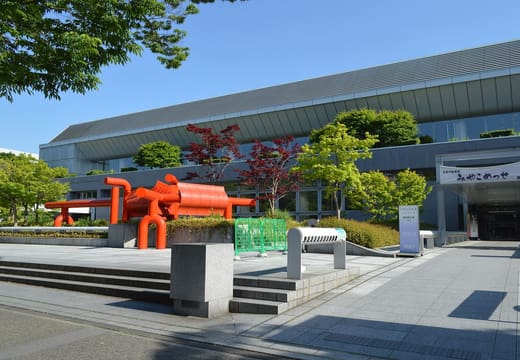
Museum · Okazaki Kyoto Museum of Crafts and Design In the basement of the Miyako Messe hall, this museum lays out all 74 of Kyoto's designated traditional crafts, from textiles and dyeing to lacquer and ceramics, with videos and panels on how each is made. Craftspeople demonstrate their work between 10:30 and 17:30, with a different craft on different days.
Cafe · Okazaki Kyoto Nama Chocolat Kyoto Nama Chocolat is a cafe for its own soft ganache chocolates, set in a machiya on a quiet residential street near Heian Shrine. There are two connected tatami rooms and a veranda, 16 seats in all, and no music, just the wind and the leaves.
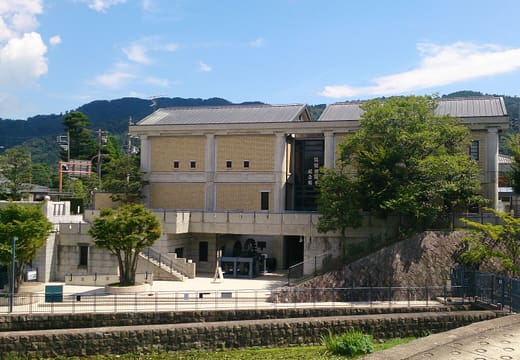
Museum · Okazaki Lake Biwa Canal Museum This free city museum tells the story of the Lake Biwa Canal, dug through the hills from 1885 to 1890 to bring boats, water and later hydroelectric power into Kyoto. There's a model of boats riding up the Keage Incline on their carriages, a diorama of Keage and Okazaki, and the drum house where the winches for the incline's cables were worked.
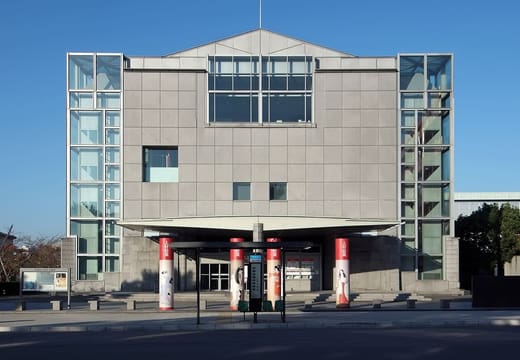
Museum · Okazaki National Museum of Modern Art, Kyoto MoMAK is the national museum of 20th-century art and crafts, with a lean toward Kyoto and Kansai artists such as the Kyoto school of Japanese-style painting. Fumihiko Maki designed its granite-gridded building, which opened in 1986, and the collection holds 425 works by the potter Kawai Kanjiro.
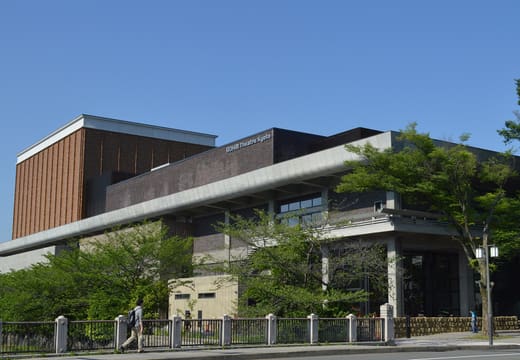
Landmark · Okazaki ROHM Theatre Kyoto ROHM Theatre Kyoto is the old Kyoto Kaikan, a modernist hall by Kunio Maekawa that opened in 1960, rebuilt and reopened under its new name in 2016. It holds a 2,000-seat main hall, a 700-seat South Hall and a black-box North Hall, round a courtyard called ROHM Square.
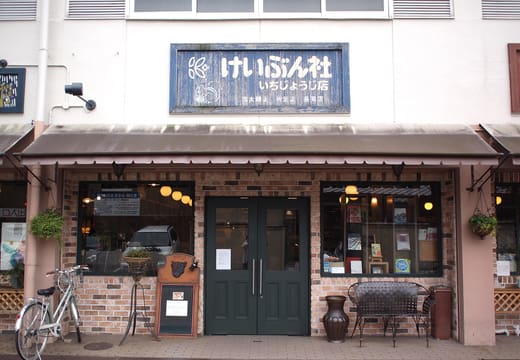
Shopping · Ginkakuji Keibunsha Ichijoji Keibunsha calls itself a shop of all sorts of things to do with books. Beside the bookshop there's the Seikatsukan, with books on clothes, food and the home and the household goods that go with them, the Gallery Annfair, which hosts shows and a yearly used-book fair, and Cottage, an event space with a kitchen at the back of the bookshop.
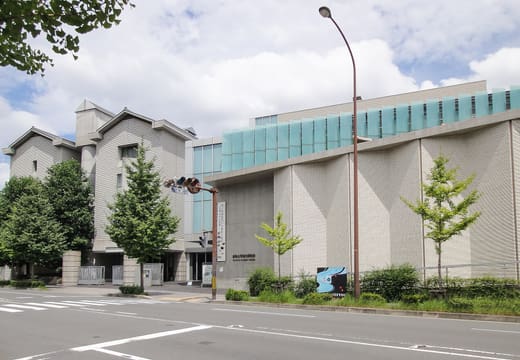
Museum · Ginkakuji Kyoto University Museum Kyoto University's museum holds about 2.6 million specimens and objects, and its permanent galleries cover natural history, cultural history and the history of technology. On some Saturdays graduate students run the Children's Museum, explaining the exhibits in conversation with visitors, and adults are welcome too.
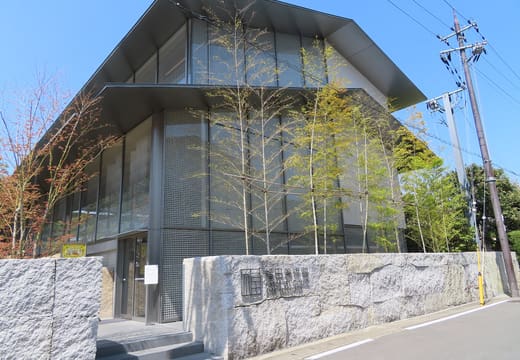
Museum · Arashiyama Fukuda Art Museum This museum by Togetsukyo shows Japanese painting, mostly from the Edo period to the modern era, in seasonal exhibitions. Its café looks straight out at the bridge and the Oi River, and only museum visitors can use it.
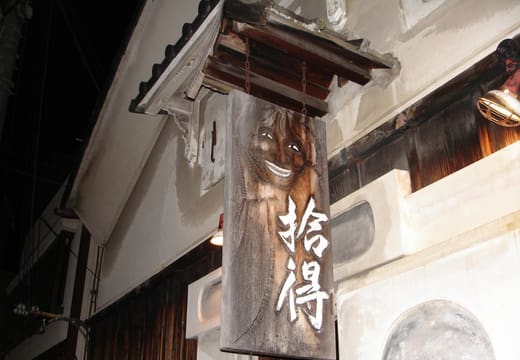
Nightlife · Nijo Coffee House Jittoku Jittoku has put on live music since 1973 in a converted sake storehouse on Omiya-dori, north of Nijo Castle, with room for 80 to 100 people. It's mostly rock and jazz, plus an open-mic acoustic night, mostly on Mondays, and rakugo at noon on the first Sunday of the month.
Museum · Nijo Kyoto Shibori Museum The Kyoto Shibori Museum opened in 2001 and calls itself the only museum in Japan devoted to shibori tie-dye. Its director, Kenji Yoshioka, is the second generation of Yoshioka Jin Shoten, a shibori maker founded in 1939 across the lane. The special exhibitions of large shibori pieces change several times a year, with the tools of the craft on display alongside.
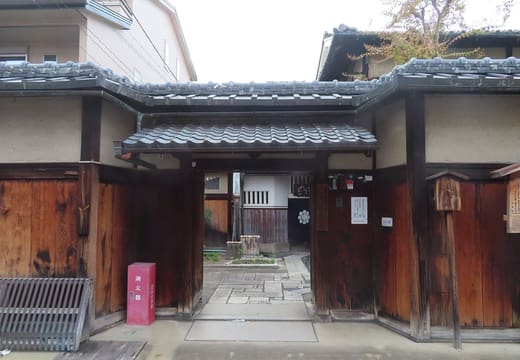
Landmark · Nijo Nijo Jinya Nijo Jinya is a merchant's house just south of Nijo Castle, rebuilt between 1848 and 1854, where a rice dealer and money changer put up feudal lords and people waiting on the shogunate's courts nearby. It was built with an ambush in mind, so there's a lookout room hidden above the main hall, a staircase disguised as a tea-jar shelf and a door that locks from behind.
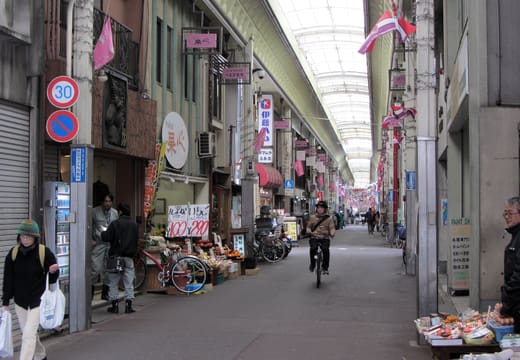
Shopping · Nijo Sanjo-kai Shopping Street Sanjo-kai is a covered shopping street running about 800 m along Sanjo-dori from Horikawa to Senbon, one of the longest arcades in western Japan. It started in 1914 with 72 shops and still has a butcher, greengrocers, bakeries and a rice-ball shop next to cafes and shops in done-up machiya. The Matabi-sha, a small Yasaka Shrine site tied to the start of the Gion Festival, stands inside it.
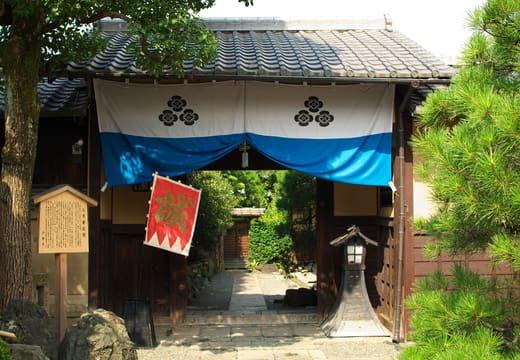
Landmark · Nijo Yagi House The Yagi family's house in Mibu is where the Shinsengumi made their first headquarters in 1863, and that September Serizawa Kamo was cut down in its back room on a night of pouring rain, with some of the sword cuts still there. The gatehouse dates from 1804 and the main house from 1809, and the family, here for 15 generations, now runs the Kyoto Tsuruya sweet shop.
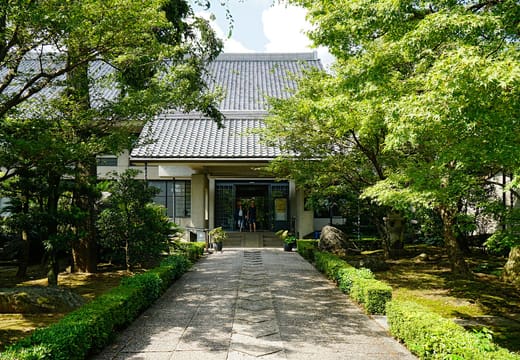
Museum · Imperial Palace Jotenkaku Museum Shokoku-ji opened this museum in 1984 for the treasures of its own temples, Kinkaku-ji and Ginkaku-ji, five National Treasures and 145 Important Cultural Properties among them. The permanent rooms show part of Ito Jakuchu's ink screen paintings from Kinkaku-ji and a reconstruction of the Sekka-tei tea house.
Museum · Imperial Palace Kaninnomiya Residence Site This was the residence of the Kan'in, one of the four princely houses of the Edo period, founded in 1710, and the present building went up in 1883 as an Imperial Household office. Its free exhibition, renewed in 2022, covers the Gyoen's history, its court nobles and its nature, and a VR theatre shows the old nobles' town on a 10K screen.
Museum · Imperial Palace Kyogashi Shiryokan Tawaraya Yoshitomi, a Kyoto confectioner since 1755, opened this small museum in 1978 to tell the story of Kyoto sweets. The pieces to see are the togei-gashi, flowers and birds modelled in sugar, along with old documents, paintings, models of sweets and the tools used to make them.
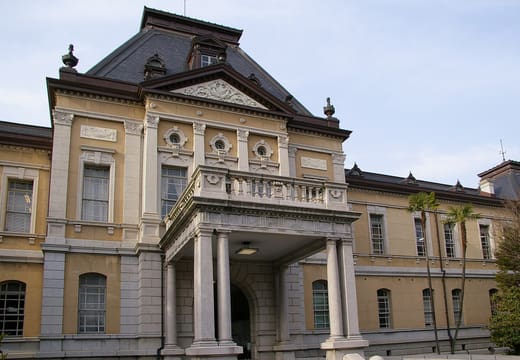
Landmark · Imperial Palace Kyoto Prefectural Old Main Building Finished in 1904, this brick Renaissance-style building was the prefecture's headquarters until 1971 and still has working offices, which makes it the oldest government building in Japan in use in its original form. You can walk into the main hall, the old governor's office, the old dining room and the old assembly chamber, and it's free.
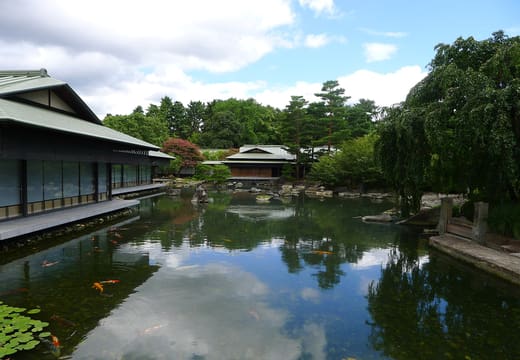
Landmark · Imperial Palace Kyoto State Guest House The government opened this guest house inside Kyoto Gyoen in 2005 to receive state and official guests from abroad. It was built with sukiya carpentry, plasterwork, kirikane gold leaf, Nishijin weaving and maki-e lacquer, and the tour takes you through the Juraku-no-Ma, the Yubae-no-Ma, the Fuji-no-Ma banquet hall and the Kiri-no-Ma.
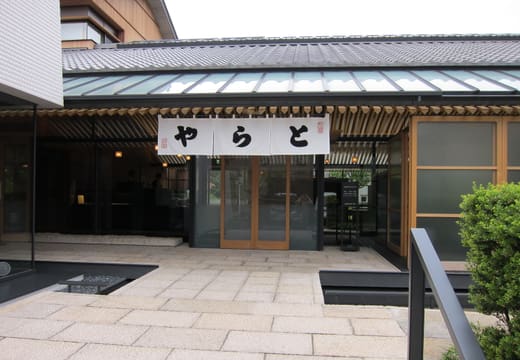
Cafe · Imperial Palace Toraya Karyo Kyoto Ichijo Toraya, the wagashi maker founded in Kyoto in the late Muromachi period, has kept a shop here since before 1628, back when it supplied the palace. Its tea room, a short way west along Ichijo-dori, looks onto a garden with a small Inari shrine and an Edo-period storehouse, and you can read any of its 600 books on wagashi and Japanese culture.
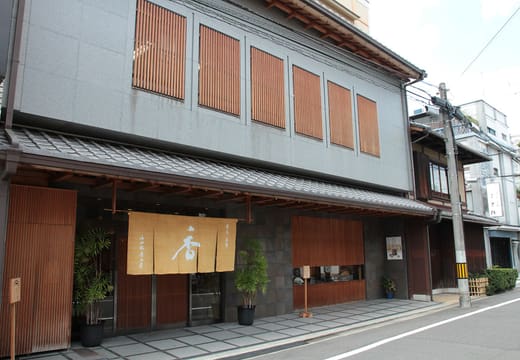
Shopping · Imperial Palace Yamadamatsu Kobokuten Yamadamatsu has been an incense wood specialist since the Edo period, and its main shop is on Muromachi-dori, west of the palace. Besides fragrant woods you'll find incense shaped like Kyoto's seasonal flowers, cream incense and an electric burner for warming incense wood.
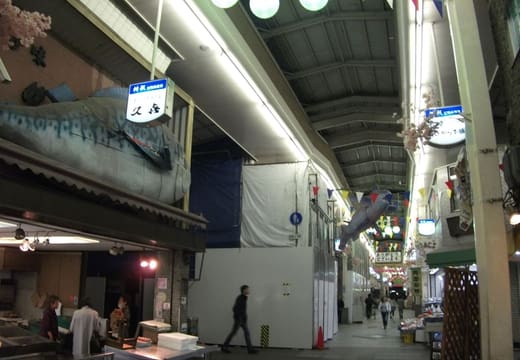
Shopping · Demachiyanagi Demachi Masugata Shopping Street Demachi Masugata is the covered arcade on Masugata-dori between Kawaramachi and Teramachi, across the river from Demachiyanagi. It's mostly fresh food, the street the neighbourhood does its daily shopping on, and Demachiza's cinema and bookshop is inside it. On 18 May the three huge mikoshi of the Goryo Matsuri are carried right through the arcade.
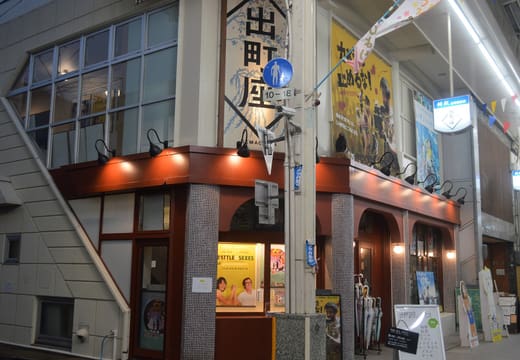
Landmark · Demachiyanagi Demachiza Demachiza is a small cinema in the Demachi Masugata arcade, with two screens of 42 and 48 seats in the basement and on the second floor. The ground floor holds a cafe, Demachiza no Soko, and CAVA BOOKS, a bookshop.
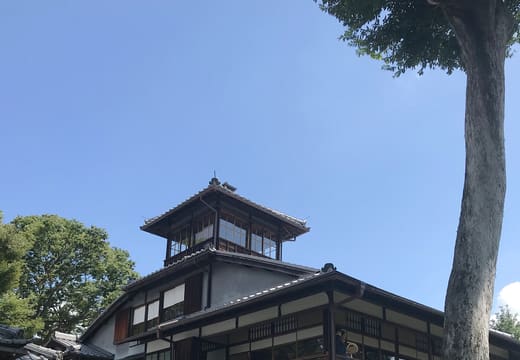
Landmark · Demachiyanagi Former Mitsui Family Shimogamo Villa The Mitsui merchant family built this villa in 1925 as a rest house for visits to its ancestral shrine, which had been moved to this site in 1909. The main house is older. It went up on Kiyamachi in 1880 and was moved here, with a third-floor lookout for views of the Higashiyama hills. You can walk through the house and a moss garden with a gourd-shaped pond fed by the Izumi river.
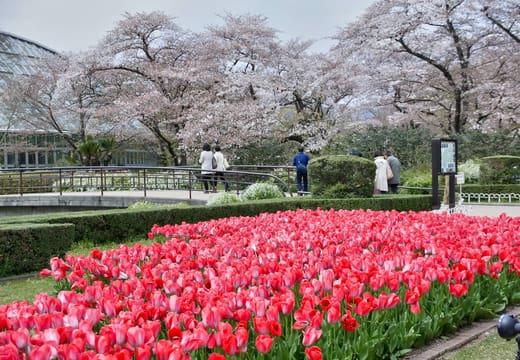
Park · Demachiyanagi Kyoto Botanical Gardens Opened in 1924, this is Japan's oldest public botanical garden, 24 hectares with about 10,000 kinds of plants, 7,000 of them garden varieties. The glass conservatory, one of the largest in the country, holds about 4,500. About 500 cherry trees flower in spring, and in autumn the maples, sweetgums and ginkgos turn.
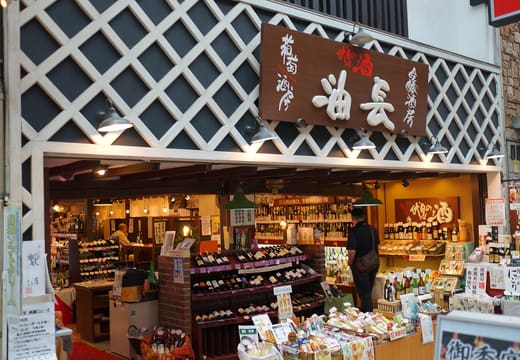
Shopping · Fushimi Aburacho Aburacho is a sake shop on the Otesuji arcade that specialises in Fushimi sake, mostly ginjo and daiginjo. At its bar counter you can taste 80 to 90 of them from the town's breweries before you buy.
Nightlife · Fushimi Fushimi Sakagura Koji Fushimi Sakagura Koji is an alley of eight restaurants (sushi, kushikatsu and oden, teppanyaki, ramen and more) in the block between the Otesuji and Nayamachi arcades, plus Sakagura, a counter over 23 m long pouring more than 120 sakes from the 18 breweries of the Fushimi Sake Brewers Association.
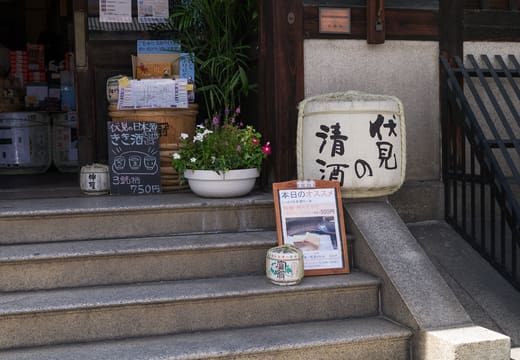
Cafe · Fushimi Fushimi Yume Hyakushu Fushimi Yume Hyakushu is a cafe and souvenir shop in Gekkeikan's old head office, a 1919 building with Western details. The Fushimi Tourism Association runs it, so it's also an information point, and the shop sells sake from 15 Fushimi breweries.
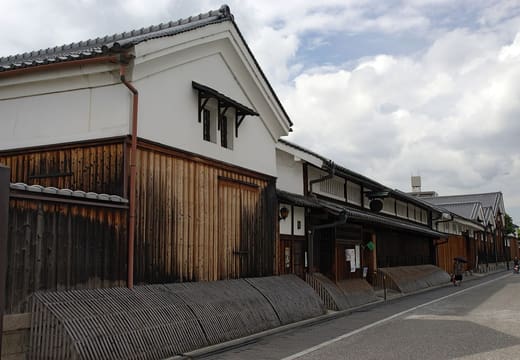
Museum · Fushimi Gekkeikan Okura Sake Museum Gekkeikan, founded in Fushimi in 1637, runs this museum in one of its sake storehouses, built in 1909. Old brewing tools listed as Kyoto City folk cultural property fill one room and the brewery's history another. A well here draws the groundwater used in the brewery next door, and you finish at the tasting counter.
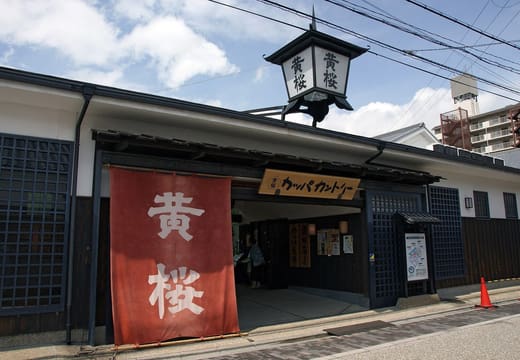
Food · Fushimi Kizakura Kappa Country Kizakura Kappa Country is the Fushimi brewer Kizakura's complex, with a restaurant pouring its sake and beer brewed on site. The free Kappa Gallery covers sake making and the kappa, the river imp that's been the brewer's mascot, with its TV ads from the late 1950s on and original drawings by Shimizu Kon and Kojima Ko.
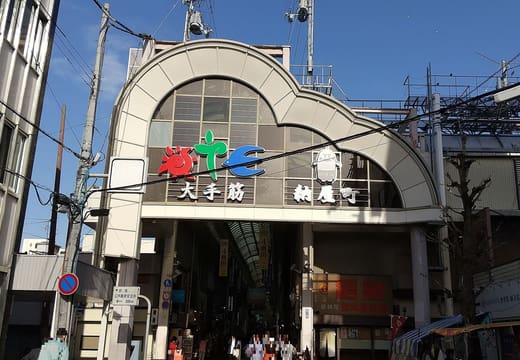
Shopping · Fushimi Otesuji Shopping Arcade Otesuji is Fushimi's main covered shopping street, running east to west, with Fushimi-Momoyama Station right on it and Momoyama-Goryomae a minute away. The road was laid out in 1594 from the main gate of Toyotomi Hideyoshi's Fushimi Castle, which is where the name comes from. It's had a roof since 1971, and the current solar-panelled arcade went up in 1997.
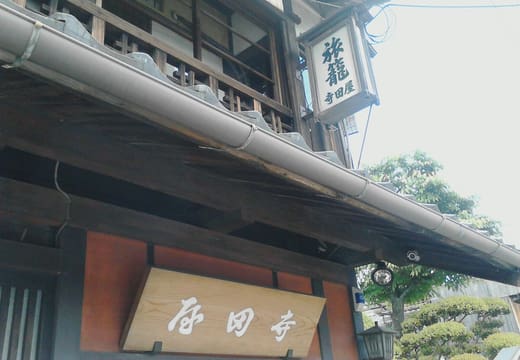
Landmark · Fushimi Teradaya Teradaya was an inn for passengers on Fushimi's river boats. Nine Satsuma samurai died in a clash here in 1862, and in 1866 Sakamoto Ryoma escaped an attack by the Fushimi magistrate's men. The inn burned in the Battle of Toba-Fushimi in 1868, and today's building went up afterwards.
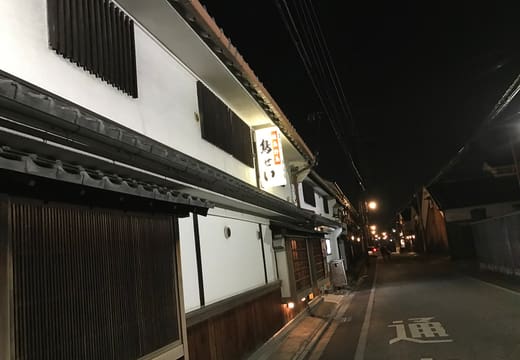
Food · Fushimi Torisei Honten Torisei is the chicken restaurant of Yamamoto Honke, the Fushimi brewer of Shinsei sake, and it's been open since 23 January 1976. It's set in a sake storehouse around 100 years old, and the drink people come for is unpasteurised genshu poured straight from a tank.
Food · Fushimi Tsuki no Kurabito Tsuki no Kurabito serves Japanese food with Gekkeikan sake in a building Gekkeikan put up in 1913, once its rice-polishing mill, and you eat under its old beams. The house special is a hotpot whose broth is made with a whole bottle of Gekkeikan daiginjo, and the tofu is made in house.
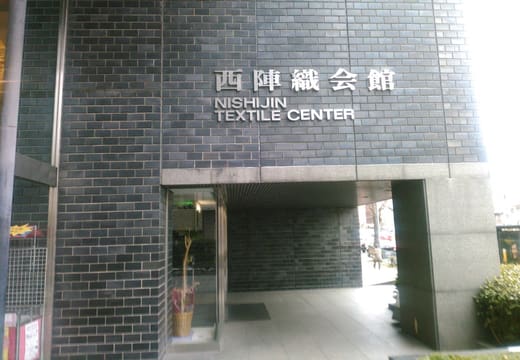
Museum · Kitano Nishijin Textile Center The Nishijin Textile Center is the weaving industry association's showroom on Horikawa-dori. Its third-floor archive keeps Japan's first home-built wooden Jacquard loom, a Kyoto City cultural property, and puts on three or four themed shows a year of obi, kimono and folding screens.
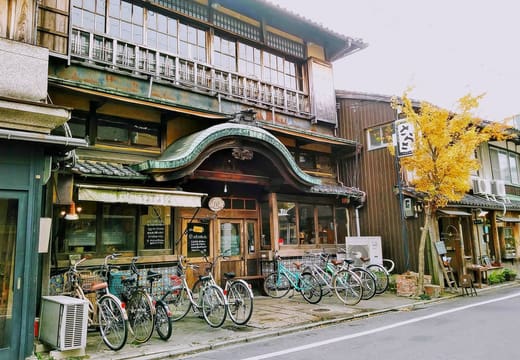
Cafe · Kitano Sarasa Nishijin Sarasa Nishijin is a cafe in the old Fujinomori-yu bathhouse, which closed in 1999. The coffered ceiling and the walls of Japanese majolica tiles are still there, and in the evening you can sit where the baths were with a beer or a glass of wine.
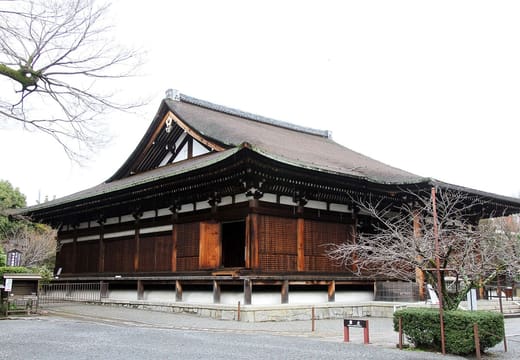
Temple · Kitano Senbon Shakado Senbon Shakado's main hall went up in 1227 and came through centuries of wars and fires, so it's the oldest building in central Kyoto and a National Treasure. The treasure hall holds Kaikei's Ten Great Disciples and Jokei's Six Kannon of 1224. Look for the Okame mound, a memorial to the master carpenter's wife, whose idea saved the hall after he cut a pillar too short.
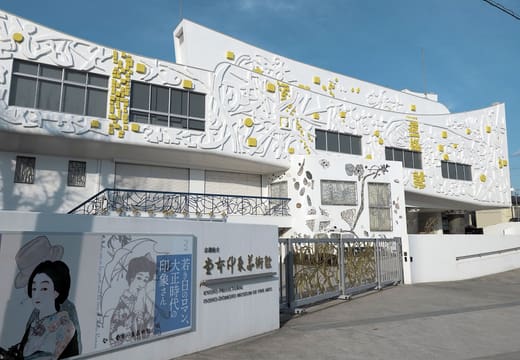
Museum · Kinkakuji Insho-Domoto Museum of Fine Arts The painter Domoto Insho designed this museum himself, inside and out, and opened it in 1966. His patterns cover the outer walls, the door handles, the stained glass and 18 kinds of garden chairs, and the building became a registered Tangible Cultural Property in 2025. The shows rotate through his own work, made on the idea that true tradition means breaking with it.
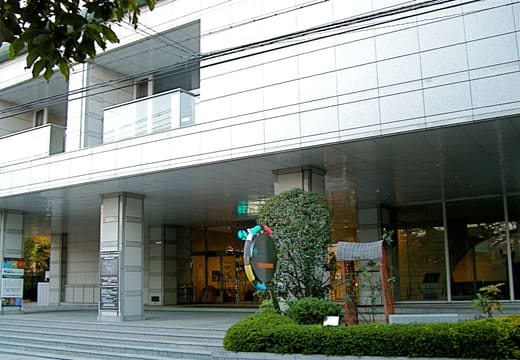
Museum · Kinkakuji Kyoto Museum for World Peace Ritsumeikan University opened this museum in 1992 and calls it the world's first peace museum run by a university. The permanent exhibition, rebuilt for the reopening in September 2023, starts with a timeline, then turns to four themes, from Japan's colonies and occupied lands and the harm Japan both did and suffered in the Fifteen Years' War to human security and world peace.
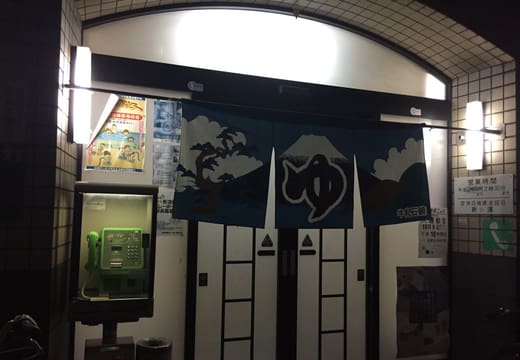
Sento · Gion Atarashi-yu Atarashi-yu has been open for more than a century on Furumonzen-dori, near Yasaka Shrine, Chion-in and Tatsumi Inari. It has a sauna, a cold bath, an electric bath, a jet bath and a herbal bath, and it stays open until midnight.
Sento · Kitano Choja-yu Choja-yu opened in 1917 and keeps its early Showa look, from the curved gable over the entrance to the koi pond, stone lanterns, coffered ceiling and wicker clothes baskets inside. The tile pictures show Kinkaku-ji in snow on the men's side and Kiyomizu-dera in cherry blossom on the women's, and the water is well water heated over a wood fire. Kyoto City named the building a historic landscape building in August 2025.
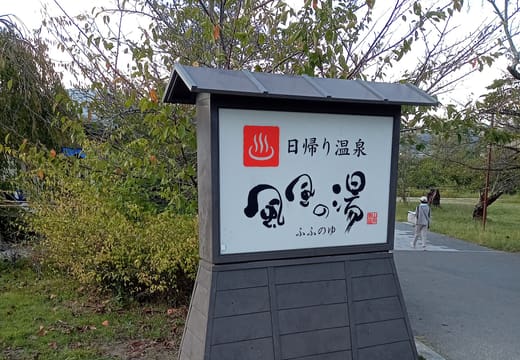
Onsen · Arashiyama Fufu no Yu Fufu no Yu is a day spa a minute's walk from Hankyu Arashiyama Station. Its water is Arashiyama Onsen, a simple, weakly alkaline hot spring at 35.2°C at the source. Each side has an indoor bath of the spring water, an outdoor bath, a silky bath, a cold bath and a hot sauna with a view, and the women's side adds a mist sauna. The outdoor cooling-off area has reclining chairs within earshot of the Katsura River.
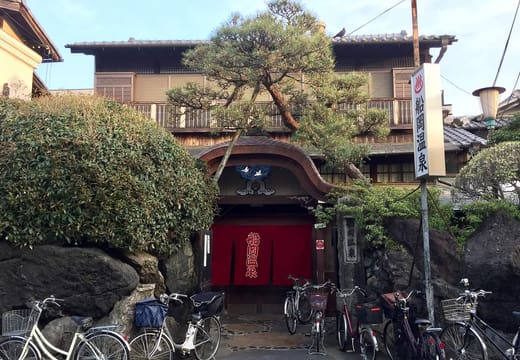
Sento · Kitano Funaoka Onsen Funaoka Onsen was built as the bathhouse of Funaoka-ro, a restaurant inn, and its 1923 changing room and the old inn building have been registered Tangible Cultural Properties since 2003. Look up in the changing room, where the transoms and ceiling are decorated with unusual wood carvings, and at the curved gable on the Kuramaguchi-dori front, added in 1928. It's still a working neighbourhood sento, with an open-air bath, a sauna, an electric bath and a cold plunge.
Sento · Ginkakuji Ginsui-yu Ginsui-yu is the neighbourhood sento in Jodoji, a couple of minutes' walk from the Philosopher's Path. It runs on fully softened water, which the bath recommends for sensitive skin, and has a sauna with a TV, a cold bath, an electric bath, a jet bath and a herbal bath.
Sento · Kyoto Station Goko-yu Goko-yu is a two-floor sento near Omiya-Gojo. Upstairs are a hot steam sauna and a far-infrared one, a cold bath of well water, and a bath with Bad Gastein radium ore sunk in the tub, indoors but open to the outside air, so it feels like an outdoor bath. Downstairs there are six more baths. The herbal bath changes about once a week, and a snack counter sells draught beer for afterwards.
Sento · Demachiyanagi Kamogawa-yu Kamogawa-yu opened on Kitaoji-dori in 1926, and Yutonamisha took it over in 2023. The bathing room is small and tiled in light blue, brown and pink, with a big tub in the middle, which you don't often see in Kyoto. The water is groundwater heated over a wood fire, and both sides have a sauna and a cold bath.
Sento · Kawaramachi Kyoto Tamanoyu Tamanoyu has been the neighbourhood bath on Oshikoji-dori since 1894, about five minutes' jog from the Kamo River and the Imperial Palace grounds. It's small, with a sauna, a cold bath, a jet bath, an electric bath and deep and shallow tubs. You can bathe here with tattoos, which the bath says plainly on its own site.
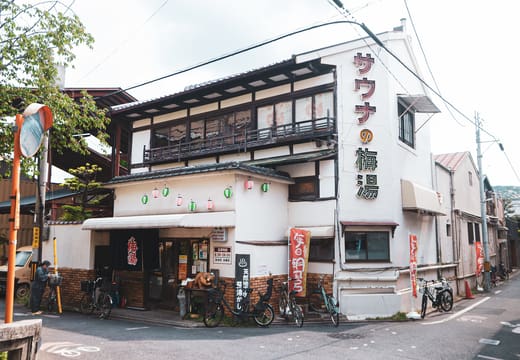
Sento · Kyoto Station Sauna no Umeyu Umeyu sits on the Takase canal, a 15-minute walk from Kyoto Station, under a big neon sign that lights up red, yellow and green at night. The "sauna" in its name supposedly dates from when the sign went up and a sento with a sauna was still rare. Yutonamisha, a company that takes over sento to keep them open, has run it since 2015, when it was about to close, and both sides have a dry sauna, a cold bath, an electric bath and a herbal bath.
Sento · Fushimi Shinchi-yu Shinchi-yu opened in 1931 near Chushojima Station, and its old building still catches the eye from the street. The water is groundwater from Fushimi's sake-brewing district, which regulars say feels soft. There are three tubs including a jet bath, plus a cold bath and a steam sauna.
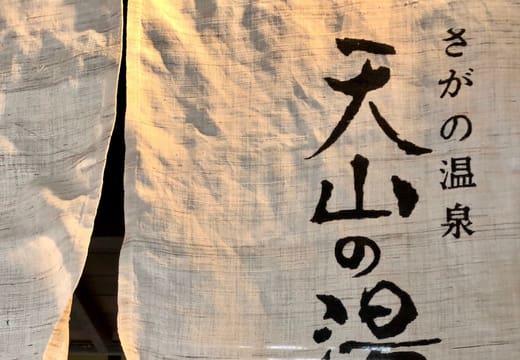
Onsen · Arashiyama Tenzan no Yu Tenzan no Yu is a hot spring complex three minutes' walk from Arisugawa on the Randen tram, on a natural spring that rises in Sagano. The Kinkaku no Yu outdoor bath uses the spring water untouched, and it's rich enough in iron to turn brown in the air, while the Ginkaku no Yu has the iron taken out. Both sides have saunas with aufguss sessions every two hours from 1pm to 11pm, and there's a restaurant and a tatami lounge for afterwards.
Sento · Nijo Tron Onsen Inari-yu Inari-yu is a neighbourhood sento just south of Sanjo-dori, a short walk south of Shinsen-en garden and Nijo Castle. It runs on mineral-rich groundwater and has a far-infrared sauna, a cold bath, a jet bath and a herbal bath.
More collections
Kyoto Autumn Leaves Where the maples turn, and when to go Kyoto Cherry Blossom Map Where to see sakura in Kyoto, and the nights they're lit  Free Things to Do in Kyoto Big sights that cost nothing, and when to catch them
  Kyoto Early in the Morning The city before the crowds arrive Kyoto with Kids Places to break up the temples
Free Things to Do in Kyoto Big sights that cost nothing, and when to catch them Kyoto Early in the Morning The city before the crowds arrive Kyoto with Kids Places to break up the temples