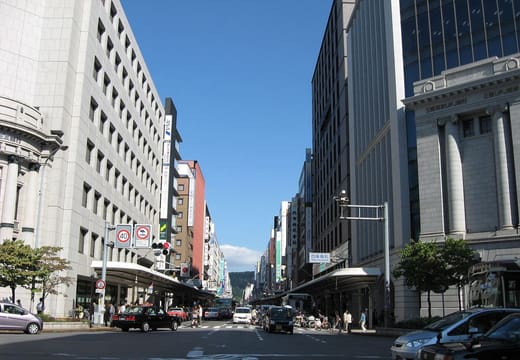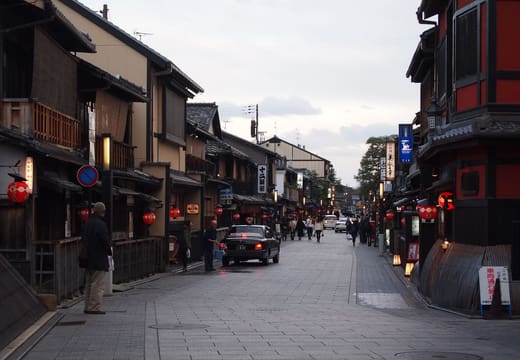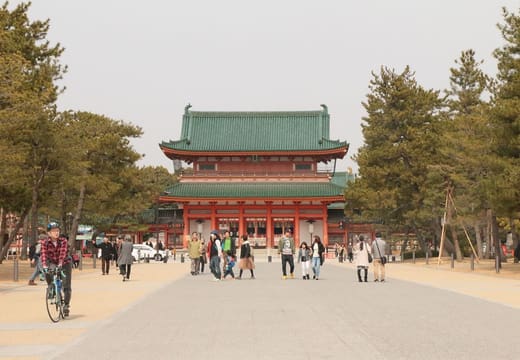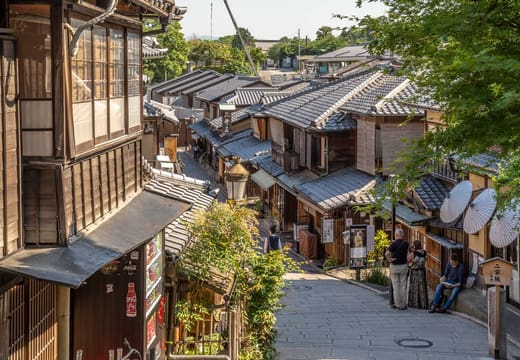
Kawaramachi, Kyoto
Photo: Izu navi / Flickr (CC BY 2.0)
Neighbourhood guide

Kawaramachi

Downtown Kyoto, between Nishiki Market and the Kamo River

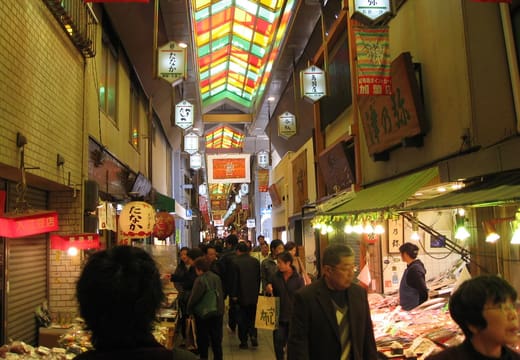
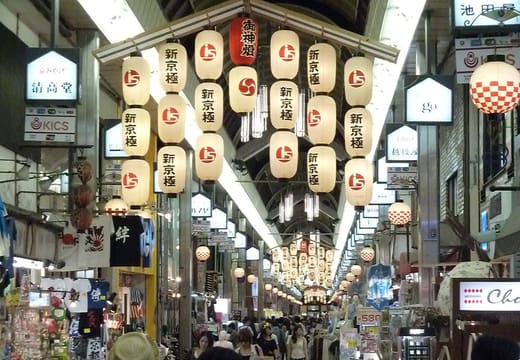
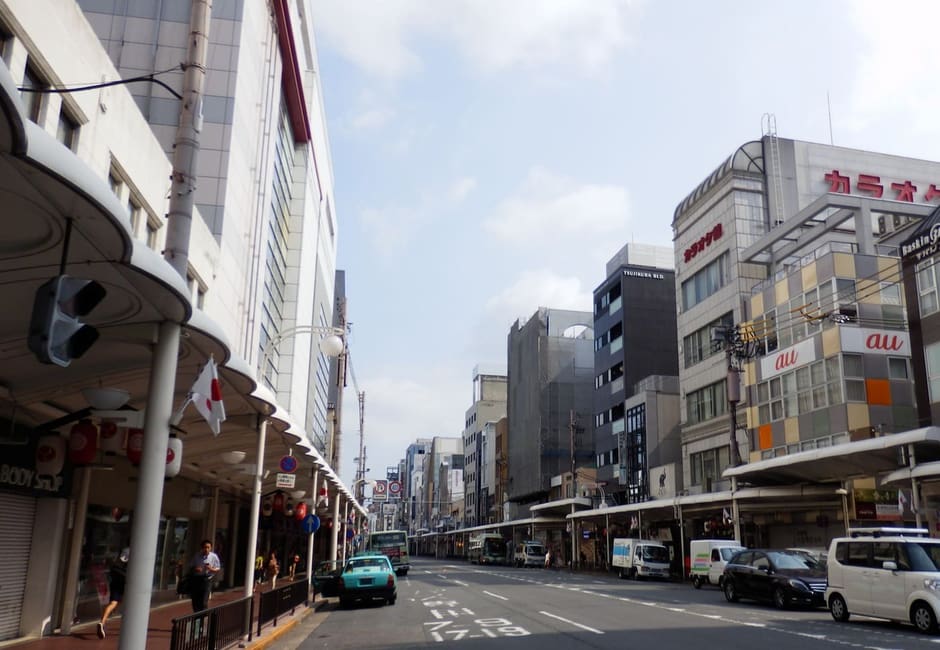
Kawaramachi is downtown Kyoto, the shopping streets round the Shijo-Kawaramachi crossing. The Teramachi and Shinkyogoku Arcades run north from Shijo-dori, Nishiki Market runs west from them, and east of Kawaramachi-dori the Takase canal and Pontocho squeeze in before the Kamo River. You'll come here to eat, mostly. Some of the tea, incense and paper shops date from the Edo period.

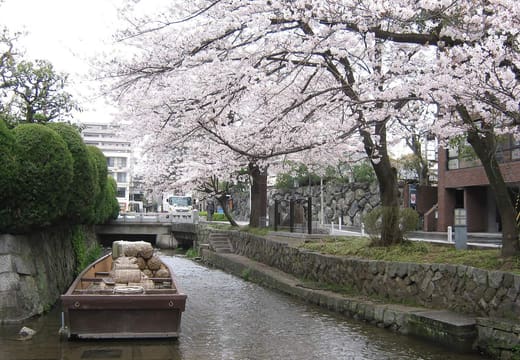
Toyotomi Hideyoshi moved Honno-ji onto Teramachi, and Nishiki Tenmangu came here in 1587 when he replanned the city. Shinkyogoku was cut through old temple grounds in 1872, and seven temples and a shrine still stand on it. Further east, Suminokura Ryoi dug the Takase canal in the 1610s, and Kiyamachi-dori is named for the timber merchants who set up beside it.

It's a good place to be when it rains, since Nishiki Market has a roof and Shinkyogoku's a pedestrian-only arcade. Don't come on a Wednesday, though. Many Nishiki shops close, and so do Rokuyosha Coffee and Kaneyo. From 1 May to 15 October, restaurants on the Kamo River's west bank put out noryo-yuka dining platforms.

Getting there

From Kyoto Station, take the Karasuma Line 4 minutes to Shijo and change to Hankyu at Karasuma for the 2-minute hop to Kyoto-Kawaramachi, beside Kyoto Takashimaya, or stay on to Karasuma Oike (6 minutes) and take the Tozai Line 2 minutes to Kyoto Shiyakusho-mae for Teramachi and Sanjo. From Osaka-umeda, Hankyu limited expresses take about 43 minutes.

26 places
Kyoto Shiyakusho-mae (Tozai Line) · Kyoto-Kawaramachi (Hankyu) stations
Tap to open the interactive map

What to see

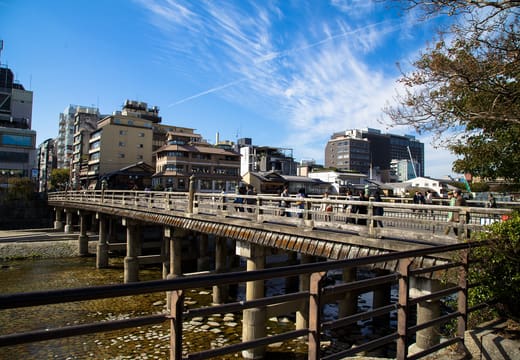
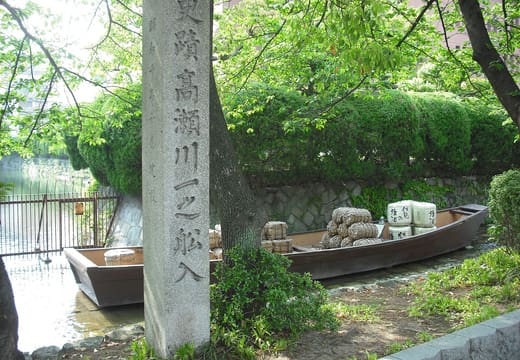
Start at the top of the canal. Takase River Ichinofunairi, just south of Nijo-dori, is the basin where boats unloaded goods brought up from Fushimi and Osaka, and you won't need more than five minutes there. Then follow Kiyamachi-dori south under the willows. Mori Ogai set his story Takasebune on one of the canal's boats. At Sanjo-dori, step onto Sanjo Ohashi and look on the north side of its west end for stone pillars from Hideyoshi's 1590 rebuilding.

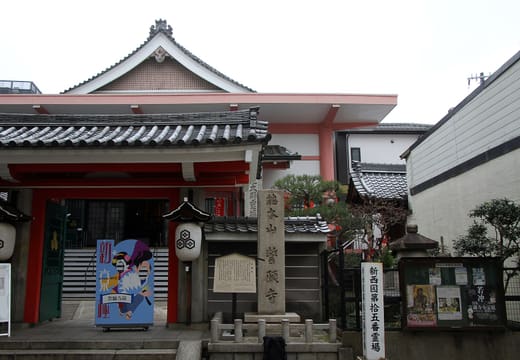
The Teramachi and Shinkyogoku Arcades mix temples in with the shops. Honno-ji is the temple of the 1582 incident in which Oda Nobunaga died, though it stood elsewhere then. Seigan-ji's linked to Sakuden, the priest called the founder of rakugo, so performers pray there. At Nishiki Tenmangu, stroke the reclining cow, then walk up to the mechanical omikuji and its lion starts to dance. A coin gets you your fortune.

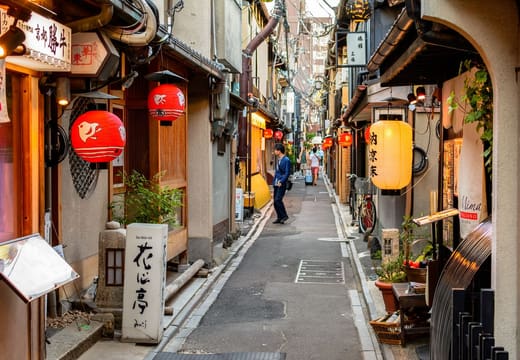
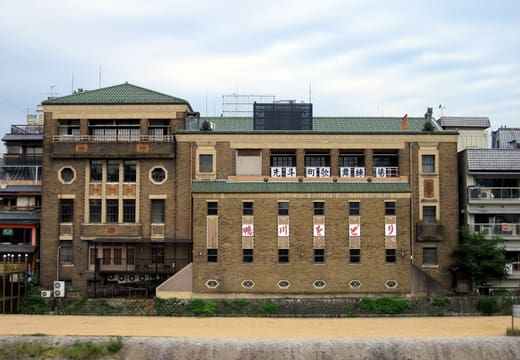
Pontocho is a lane about 500 m long between the river and the canal, and one of Kyoto's five geisha districts. At its Sanjo end, look up at the Pontocho Kaburenjo's roof and you'll see a tile modelled on the Ranryo-o mask. The geiko and maiko dance the Kamogawa Odori there every spring (5 to 22 May in 2026), and the autumn Suimeikai recital runs from 15 to 20 October 2026.

Where to eat and drink

Kaneyo has grilled eel on Rokkaku-dori since 1912. Order the kinshi-don, eel on rice under a rolled omelette, at ¥3,000 small or ¥4,000 medium. At Katsukura Sanjo, the Kyoto tonkatsu chain's main store, you can refill your rice and cabbage for free. Mishima-tei has served sukiyaki at Teramachi and Sanjo since 1873, and its lunch course is ¥8,591, or you can take away its menchi-katsu. In Nishiki Market, look for hamo eel, yuba and fresh fu.

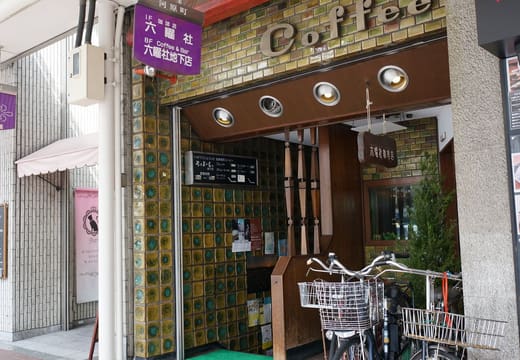
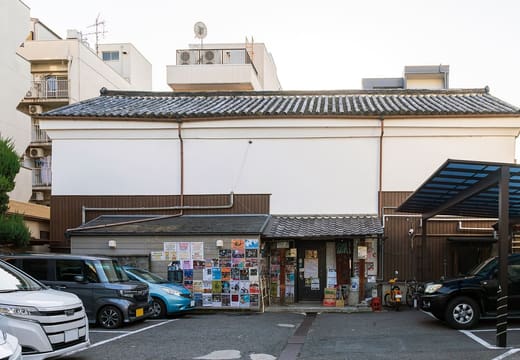
Smart Coffee opens at 8:00 and has roasted its own beans since 1932. A hotcake set with coffee is ¥1,400. At Rokuyosha Coffee the doughnuts come out at 12:00 and aren't sold to take away, and the green-tiled basement turns into a bar at 17:00. In Ippodo Tea's Kaboku Tearoom the staff will talk you through making your own. Francois Coffee House is open until 22:00, Bar K6 pours until 2:00, and Taku Taku puts on shows in a 1917 sake storehouse (book by email by the day before).

Where to stay

Hotel Okura Kyoto, at Kawaramachi and Oike, connects to Kyoto Shiyakusho-mae on the Tozai Line, so your cases come straight off the subway. The Royal Park Hotel Kyoto Sanjo is about 3 minutes' walk from Keihan's Sanjo Station. The Gate Hotel Kyoto Takasegawa is 3 minutes from Kyoto-Kawaramachi's Kiyamachi north exit.

Stay here if it's your first trip, or if you'd like to eat out every night and walk home. Yasaka Shrine's gate is about 13 minutes on foot, east along Shijo-dori and over the Kamo River, and you're about 43 minutes from Osaka-umeda.

How to do it in a day

Come Thursday to Saturday, and not on a public holiday. On every other day something below is shut. Have a hotcake at Smart Coffee at 8:00, then walk up Teramachi to Honno-ji and Kyukyodo, which opens at 10:00. Carry on past Nijo to Ippodo Tea and Murakami Kaishindo (take-away only until about spring 2027), then cut east to Takase River Ichinofunairi and follow Kiyamachi-dori south for lunch at Kaneyo or Katsukura Sanjo.

After lunch, walk Shinkyogoku south past Seigan-ji to Nishiki Tenmangu and Nishiki Market, then head back up to Rokuyosha Coffee. Be on Sanjo Ohashi at sunset and walk Pontocho as it gets dark. Dinner's at Ganko Takasegawa Nijoen, by Suminokura Ryoi's 1611 garden (book by phone, courses from ¥9,000), and you're a short walk from Bar K6.

Nightlife · ¥¥ Bar K6 Bar K6 is a second-floor bar in the Vals Building, just east of the corner of Kiyamachi and Nijo, up at the north end of the Takase canal. It opens at 18:00 and pours until 2:00.
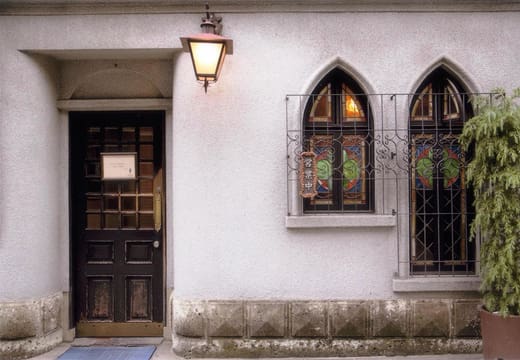
Cafe · ¥ Francois Coffee House Francois opened in 1934 in a lane by the Takase canal just south of Shijo, a salon-style coffee house its owner Tateno Shoichi meant as a place to talk about art and against the war. Stained-glass windows, a white ceiling, red velvet chairs and a copy of the Mona Lisa set the tone. The north half, remodelled in 1941 to a design by Bencivenni, an Italian studying at Kyoto University, was registered as a Tangible Cultural Property in 2003.
Food · ¥¥¥ Ganko Takasegawa Nijoen Takasegawa Nijoen is a Ganko restaurant in an old mansion at Kiyamachi and Nijo, set round a garden that Suminokura Ryoi, the merchant who dug the Takase canal, made in 1611. You eat looking out at plum blossom in early spring and red leaves in autumn, and in the noryo-yuka season it puts out a dining platform beside the Kamo River.
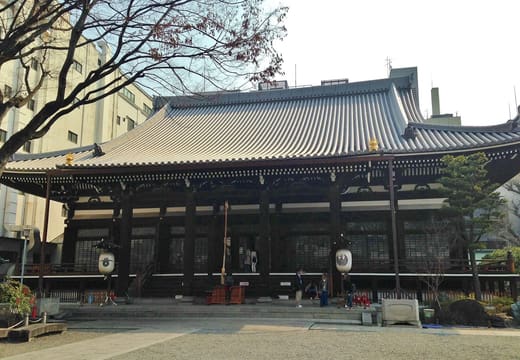
Temple · Free Honno-ji Honno-ji is a head temple of the Hokke school, known around the world for the Honno-ji Incident of 1582, when Oda Nobunaga died after his general Akechi Mitsuhide turned on him. That temple stood elsewhere, and Toyotomi Hideyoshi later moved Honno-ji to this site on Teramachi. Its Daihoden museum shows what came through five fires, from a tea bowl Nobunaga owned to the three-legged frog incense burner said to have croaked a warning the night before.
Shopping · ¥ Ippodo Tea Ippodo's main store has stood on Teramachi-dori, just north of Nijo, since 1864, when it was rebuilt here after the fire of the Hamaguri Gate Incident. The business began in 1717 as Omiya, selling tea and ceramics, and Prince Yamashina gave it the name Ippodo in 1846. Inside there's a big counter under a board listing every tea, a wall of old tea jars and the 44-seat Kaboku Tearoom.
Shopping · ¥ Kamiji Kakimoto Kamiji Kakimoto is a paper shop whose roots go back to 1716, when the family ran a bamboo business on Teramachi at Nijo. It turned to paper in 1845 and has followed it from washi to Western paper and paper goods. While a new building goes up on its Teramachi site, the shop trades from a temporary store on Fuyacho-dori just north of Sanjo.
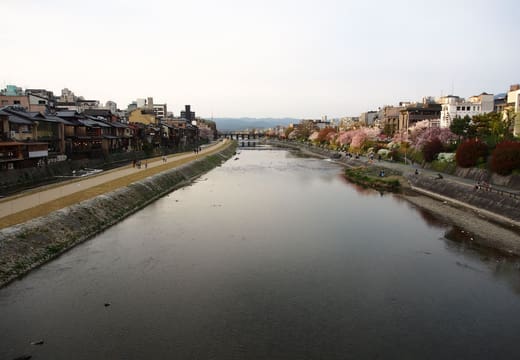
Park · Free Kamo River The Kamo River runs about 27 km through Kyoto, and between the Sanjo and Shijo bridges the low Pontocho houses on the west bank face the water. From 1 May to 15 October restaurants on the west bank between Nijo and Gojo build noryo-yuka dining platforms out on the riverbank, a custom said to go back to the Momoyama period.
Food · ¥¥ Kaneyo Kaneyo has grilled eel on Rokkaku-dori, just east of Shinkyogoku, since 1912, in a building from the early Taisho years that lost its third floor to a fire before the war. The eel is done the Edo way, split down the back, steamed and then grilled in a sauce topped up since the start. Order the kinshi-don, eel on rice under a Kyoto-style rolled omelette.
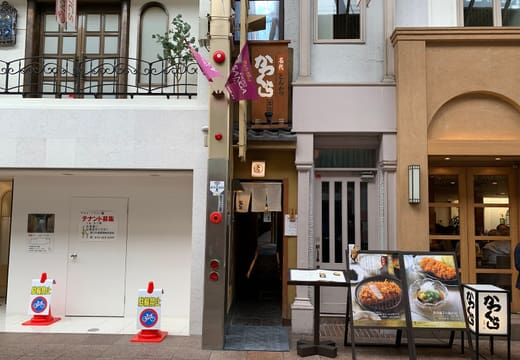
Food · ¥¥ Katsukura Sanjo Katsukura is the Kyoto-born tonkatsu chain, and this is its main store on Sanjo-dori just east of Teramachi, set back down a long entrance passage. The cutlets come in a coarse panko of its own, with a house sauce of red wine, apple and dates.
Neighbourhood · Free Kiyamachi-dori Kiyamachi-dori follows the Takase canal, which Suminokura Ryoi dug in the 1610s so flat-bottomed boats could carry freight between central Kyoto and Fushimi. The street is named for the timber merchants who set up along it, and willows now line both banks of a canal that stopped carrying boats in 1920. Mori Ogai set his story Takasebune on one of those boats.
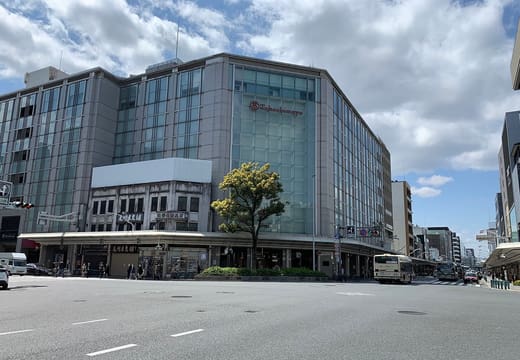
Shopping · ¥¥ Kyoto Takashimaya Kyoto Takashimaya is the department store on the Shijo-Kawaramachi crossing, next to Kyoto-Kawaramachi Station, together with its T8 specialty building. The 7th-floor restaurant floor, Dining Garden Kyo-Kairo, has a branch of Mishima-tei, the sukiyaki house that's been on Teramachi since 1873.
Shopping · ¥ Kyukyodo Kyukyodo opened in 1663 as a herbal medicine shop in front of Honno-ji's gate, under a name chosen by the Confucian scholar Muro Kyuso. Medicine and incense share raw materials, so by about 1700 it was making incense, and in the late 1700s it took up brushes and ink for the painters and writers it served. The Teramachi main store sells incense, calligraphy brushes, washi, letter paper, postcards and gift envelopes.
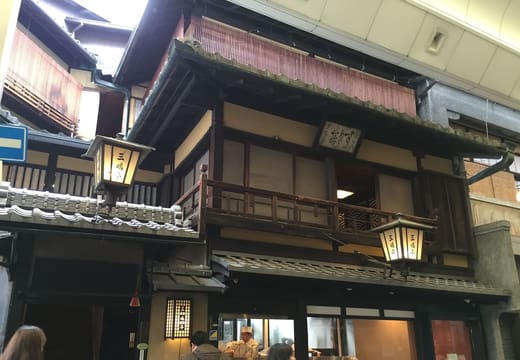
Food · ¥¥¥ Mishima-tei Mishima-tei has served sukiyaki on the corner of Teramachi and Sanjo since 1873, when its founder came back from learning beef hot pot in Nagasaki. The machiya with its andon lantern keeps most of its Meiji rooms, ceilings and lattices, and the black wagyu is aged the house's own way.
Cafe · ¥ Murakami Kaishindo Murakami Kaishindo has sold Western-style sweets on Teramachi, just north of Nijo, since 1907. The early Showa shop keeps its glass-panelled doors, curved display window, high ceiling and marble columns, and the Kaishindo calligraphy hanging inside is by Kusakabe Meikaku. Its Russian cakes, biscuits in five kinds from apricot and raisin to yuzu jam and chocolate, are sold by the piece or boxed.
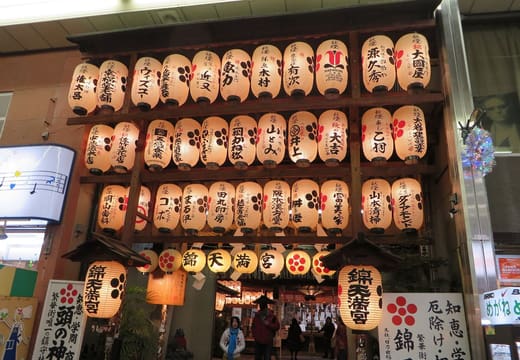
Market · ¥ Nishiki Market Nishiki Market is a 390 m covered lane of food shops just north of Shijo-dori, and it's been trading for about 400 years. This is where you find Kyoto vegetables, Lake Biwa river fish, hamo eel, yuba and fresh fu. The painter Ito Jakuchu was born into a vegetable wholesaler's family on the lane, and copies of his work turn up on the shop shutters.
Shrine · Free Nishiki Tenmangu Nishiki Tenmangu stands on Shinkyogoku at the east end of Nishikikoji, the street Nishiki Market runs along, and it's the only shrine in the shopping district. It honours Sugawara no Michizane, the god of learning, and moved here in 1587 when Toyotomi Hideyoshi replanned the city. Nishiki-no-mizu, spring water from more than 30 m underground, flows in the small grounds.
Neighbourhood · Free Pontocho Pontocho is a narrow lane about 500 m long between the Kamo River and the Takase canal, running from just south of Sanjo-dori to Shijo-dori, and it's one of Kyoto's five geisha districts. It was a sandbank until the river embankment of 1670, tea houses opened around 1712, and its Edo-period houses came through the great fire of 1864. Restaurants and shops now fill many of the old tea house buildings.
Landmark · ¥¥ Pontocho Kaburenjo The Pontocho Kaburenjo is the geisha district's own theatre at the Sanjo end of Pontocho, finished in 1927 and praised then as a modern building with an Eastern touch. Look up at the roof for the onigawara tile modelled on the Ranryo-o bugaku mask. Every spring the geiko and maiko stage the Kamogawa Odori here, a dance first performed in 1872.
Cafe · ¥ Rokuyosha Coffee Rokuyosha is two separate coffee rooms on Kawaramachi-dori just south of Sanjo. The basement opened in 1950 and the ground floor 15 years later, and the basement's green tiles are said to come from a Kiyomizu-ware tile shop. The basement has roasted its own beans since the early 1980s, serving coffee by day and turning into a bar at 17:00.
Landmark · Free Sanjo Ohashi Sanjo Ohashi carries Sanjo-dori over the Kamo River, and in the Edo period it was the western end of the Tokaido road from Edo. Toyotomi Hideyoshi had it rebuilt as a proper bridge in 1590, and some of the giboshi caps on its wooden railings still date from then. Today's bridge, 73 m long, is from 1950.
Temple · Free Seigan-ji Seigan-ji, halfway along Shinkyogoku, is the head temple of the Jodo Seizan Fukakusa school, founded more than 1,300 years ago at Emperor Tenji's wish and moved several times before it settled here. Sei Shonagon and Izumi Shikibu were followers, and it's linked to Sakuden, the priest called the founder of rakugo, so performers come to pray to get better at their art. Outside the gate stands a stone signpost from 1882 where people pinned notes about lost children and lost things.
Cafe · ¥ Smart Coffee Smart Coffee, on Teramachi just north of Sanjo, opened in 1932 as Smart Lunch, and it still roasts its own beans the way it did then. Downstairs is the coffee shop, with hotcakes, French toast and egg sandwiches at ¥800 to ¥850, and upstairs is a lunch room serving Western-style plates.
Landmark · Free Takase River Ichinofunairi Ichinofunairi is the boat basin at the head of the Takase canal, where flat-bottomed takasebune unloaded goods brought up from Fushimi and Osaka. Suminokura Ryoi dug the canal around 1611, and his family lived beside this basin, running the boats and taking a fee from every carrier. At its busiest more than a hundred boats worked the canal, and the basin is now a designated historic site.
Nightlife · ¥¥ Taku Taku Taku Taku is a live house in a wooden sake storehouse built in May 1917, a few steps south of the Tominokoji and Bukkoji corner. It opened in 1974 as a record cafe, and RC Succession, Dr. John, Albert King and Quruli have all played its small stage.
Shopping · Free Teramachi and Shinkyogoku Arcades Shinkyogoku was cut through old temple grounds in 1872 and runs from Sanjo to Shijo, with Teramachi parallel one street west. It began as a strip of theatres and variety halls, turned to cinemas, and it's still known for the souvenir shops that opened for school groups in the late 1950s and early 1960s. Seven temples and a shrine still stand along it.
Sento · ¥ Kyoto Tamanoyu Tamanoyu has been the neighbourhood bath on Oshikoji-dori since 1894, about five minutes' jog from the Kamo River and the Imperial Palace grounds. It's small, with a sauna, a cold bath, a jet bath, an electric bath and deep and shallow tubs. You can bathe here with tattoos, which the bath says plainly on its own site.

Stay in Kawaramachi

Browse live availability and compare prices around the neighbourhood.

See hotels near Kawaramachi on Booking.comPrices are for the night of Saturday 17 October. You can change the dates on Booking.com. If you book, Roam Kyoto earns a small commission from Stay22 at no extra cost to you.