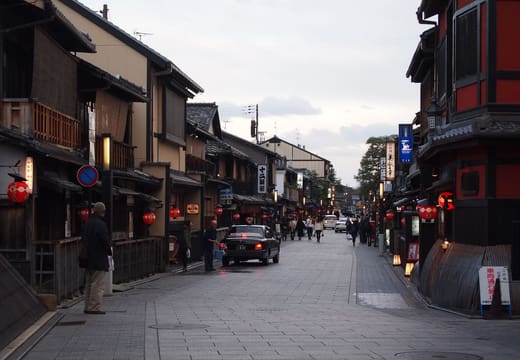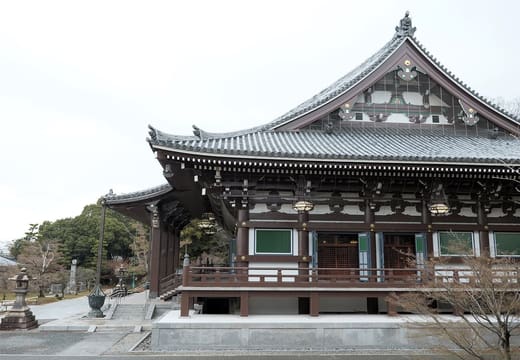
Higashiyama, Kyoto
Photo: Domenico Convertini / Flickr (CC BY-SA 2.0)
Neighbourhood guide

Higashiyama

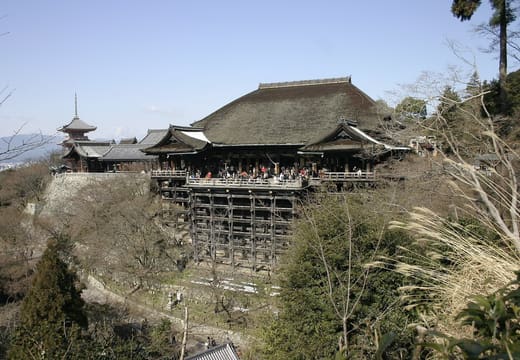
Kiyomizu-dera at opening, then the temples and pottery below it

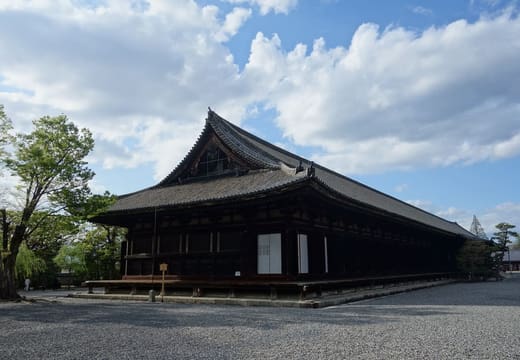
Higashiyama is a whole ward, but this guide covers the slope from Kiyomizu-dera down to Shichijo-dori. Go early. The temple's gates open at 6:00, and if you're there then, you'll reach its wooden stage long before the day's crowds. Later, walk down past the pottery shops of Gojozaka to Sanjusangendo, where 1,001 statues of Kannon stand in a hall 120 metres long.

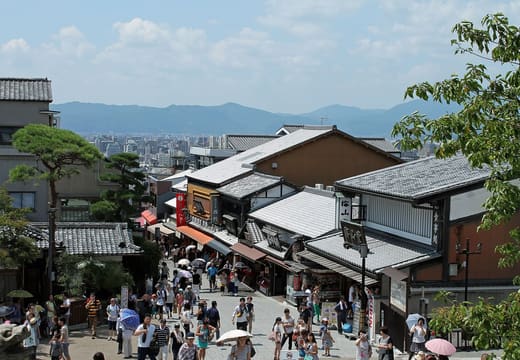
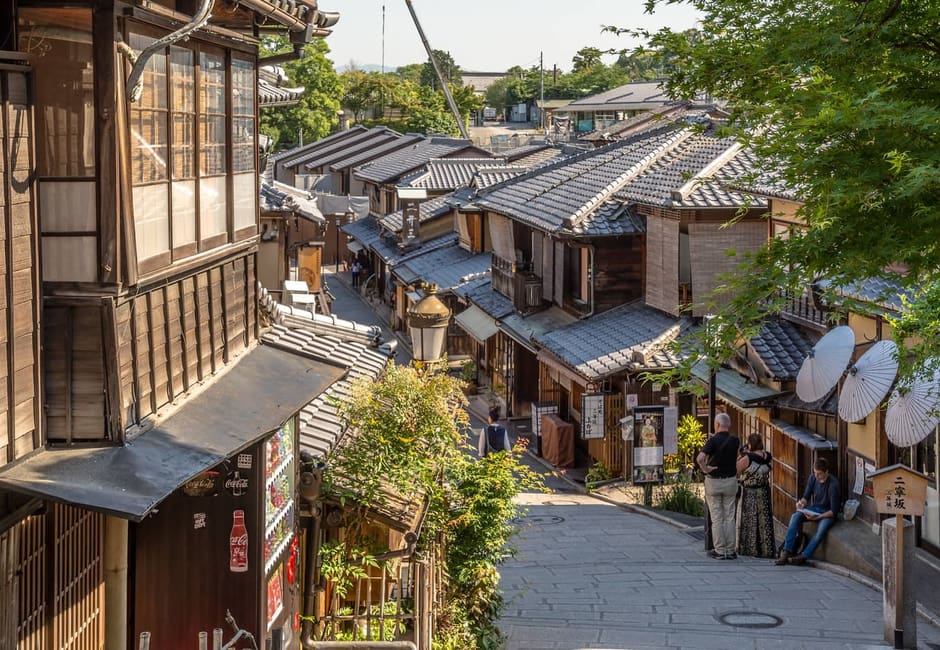
The top of the hill is the old pilgrims' road. Pilgrims have climbed Sannenzaka and Ninenzaka to Kiyomizu-dera and Yasaka Shrine for centuries, and the townhouses along them, from the late Edo to Taisho eras, sit in what's now a protected historic district. Lower down, potters' houses on Gojozaka made Kiyomizu-yaki famous from the 1600s, and you can still buy it at Asahido and the Kyoto Ceramics Hall.

Down on Shichijo-dori, Toyokuni Shrine enshrines Toyotomi Hideyoshi on the site of Hoko-ji's Great Buddha Hall, once the biggest building in Japan. Nearly everything here shuts by 18:00, so if you're after an evening up here, come for a night viewing, when Kiyomizu-dera stays open to 21:30 (21 to 30 November in 2026).

Getting there

On weekends and holidays the EX100 and EX101 buses run from Kyoto Station to Gojozaka for ¥500, and it's a 10-minute walk from there up to Kiyomizu-dera. Keihan's Shichijo Station is about 6 minutes on foot from Sanjusangendo, and you can walk there from Kyoto Station in about 18 minutes.

22 places
Gojozaka bus stop (City Bus 100, 206) · Kiyomizu-michi bus stop (City Bus 206, 207) stations
Tap to open the interactive map

What to see

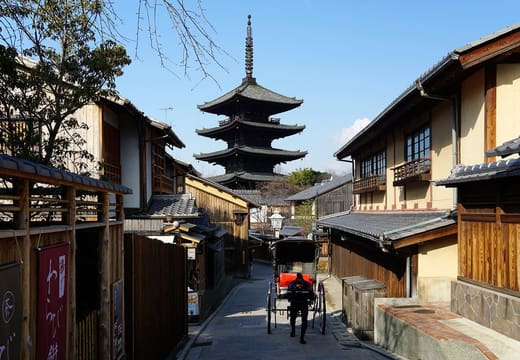
Kiyomizu-dera's main hall, rebuilt in 1633, sits on a wooden stage about 13 metres high, held up by 18 zelkova pillars without a single nail. Jishu Shrine isn't open, as it's been under restoration since August 2022. Downhill, the 46-metre Yasaka Pagoda is free to see from Yasaka-dori, and a few steps away, Yasaka Koshindo's charm is the kukurizaru, a monkey with its hands and feet tied. You give up one desire in return for a wish.

On Shichijo-dori, all 1,001 Kannon statues in Sanjusangendo are National Treasures. Next door, Yogen-in's corridor ceilings are Fushimi Castle floorboards still marked with the blood of soldiers who took their own lives there in 1600. It doesn't open every day, so check its Instagram. The Kyoto National Museum has The Tale of Genji until 29 November 2026 (¥2,200), and Chishaku-in's treasure hall always shows the panels by Hasegawa Tohaku and his studio.

In between, Rokuharamitsu-ji's treasure hall (¥700) has a statue of the monk Kuya with six small Amida Buddhas coming out of his mouth as he chants. Nearby, Rokudo Chinnoji keeps the well the courtier Ono no Takamura is said to have used to reach the underworld every night. You'll find Sakamoto Ryoma's grave up the hill at Kyoto Ryozen Gokoku Shrine (¥300, cash only).

Where to eat and drink

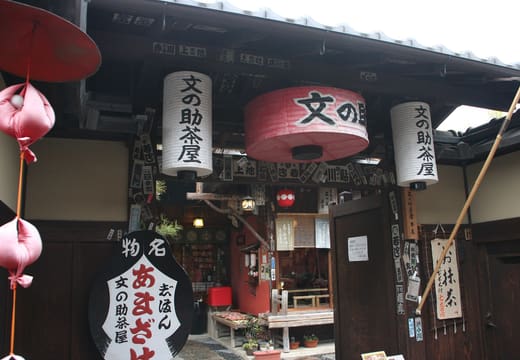
You can't eat on Kiyomizu-dera's grounds (a drink with a lid is fine), so save lunch for the way down. Ukiya Kiyomizu Kisseian makes soba by hand in a Taisho-era storehouse facing Sannenzaka, with the Kyo-yuba set at ¥1,450 and cold soba with tempura at ¥1,880. You can't book a table. Bunnosuke Chaya has served amazake since 1909, and adds shaved ice in summer and grilled mitarashi dango in winter.

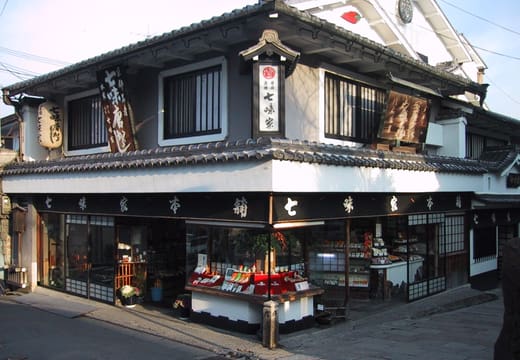
Shichimiya Honpo has been on the corner of Sannenzaka since 1655, and its shichimi goes easy on the heat. Get the sansho too. Asahido has a cafe, Saryo Kiraku, above its pottery shop. In Shichijo Kanshundo's class (¥3,300, for two or more, booked ahead) you'll shape four namagashi and whisk your own matcha. Most places close by 18:00, so eat dinner in Gion, a walk north, unless there's a light-up and Ukiya reopens 17:00 to 20:00.

Where to stay

Stay on these slopes and you'll be able to walk to Kiyomizu-dera for the 6:00 opening. Kyoto's tourism site splits the city's stays into ryokan, Western-style hotels and unique stays like machiya, wooden townhouses renovated for the night. Wherever you book, check how far up the hill it is. Keihan's Kiyomizu-Gojo Station is at the bottom, about 25 minutes' walk below the temple.

It suits early risers, night-viewing visitors and anyone who'd rather have a calm evening than a bar crawl. It's harder with heavy bags. The lanes near the top are stepped, Kiyomizu-zaka is closed to cars from 8:00 to 19:00, and the city bus route to Gojozaka is often congested. Check kyoto.travel's congestion forecast and live camera for Gion and Kiyomizu before you go.

How to do it in a day

Skip Mondays (unless it's a holiday), when Kawai Kanjiro's House, Ukiya Kiyomizu Kisseian and the Kyoto National Museum close. Be at Kiyomizu-dera for 6:00, then walk down Sannenzaka and Ninenzaka before the shops open. Rokuharamitsu-ji's treasure hall opens at 9:00 and Kawai Kanjiro's House at 10:00. Walk back up Gojozaka, buy shichimi at Shichimiya Honpo and be at Ukiya when it opens at 11:00.

Have warabimochi at Bunnosuke Chaya, then head down to Shichijo-dori. On the 8th, 18th or 28th there's a market at Toyokuni Shrine unless it rains. Give Sanjusangendo 45 minutes, and on an open day get to Yogen-in before its 14:30 last entry. Chishaku-in's last entry is 16:00. On a Friday, finish at the Kyoto National Museum, open to 20:00.

Shopping · ¥¥ Asahido Asahido has sold Kyo-yaki and Kiyomizu-yaki pottery on Kiyomizu-zaka, by the temple gate, since 1870. Along with pieces from the old kilns it stocks handmade and hand-painted ceramics and crafts from all over Japan, and upstairs there's a gallery and the Saryo Kiraku cafe.
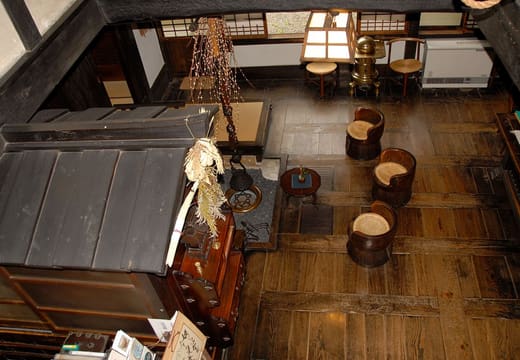
Cafe · ¥ Bunnosuke Chaya Bunnosuke Chaya was opened in 1909 by the rakugo storyteller Katsura Bunnosuke II as an amazake stop for people walking between Yasaka Shrine and Kiyomizu-dera. Amazake is still on the menu, next to the warabimochi it's known for, with shaved ice in summer and grilled mitarashi dango and zenzai in winter.
Temple · ¥ Chishaku-in Chishaku-in is the head temple of the Chizan branch of Shingon Buddhism, at the east end of Shichijo-dori. Its treasure hall, opened in 2023, always shows the National Treasure panels by Hasegawa Tohaku and his studio, including his Maple and the Cherry Blossoms attributed to his son Kyuzo. The garden is modelled on China's Mount Lu, and its pond runs in under the veranda of the Daishoin hall.
Museum · ¥ Kawai Kanjiro's House The potter Kawai Kanjiro set up his home and kiln on this Gojozaka plot in 1920, and in 1937 he built the house you walk through now to his own design. It opened as a museum in 1973. The furniture and fittings are his designs or things he collected, and the quiet rooms still give a feel of how he lived.
Temple · ¥ Kiyomizu-dera Kiyomizu-dera was founded in 778 on Mount Otowa, and its main hall, rebuilt in 1633, juts out over the slope on a wooden stage about 13 metres high. Eighteen zelkova pillars hold it up, and the joints don't use a single nail. The grounds have about 1,500 cherry trees and 1,000 maples, and they've been part of the Historic Monuments of Ancient Kyoto World Heritage site since 1994.
Neighbourhood · Free Kiyomizu-zaka Kiyomizu-zaka is the main slope up to Kiyomizu-dera's Niomon gate, and its shops, many of them long-established, make up the Kiyomizu Monzen-kai. Gojozaka, which climbs to meet it from Yamato-oji-dori, is where potters' houses made Kiyomizu-yaki famous from the 1600s, and Asahido and the Kyoto Ceramics Hall still sell it.
Shopping · Free Kyoto Ceramics Hall Kyoto Ceramics Hall sits at the bottom of Gojozaka, where the climb to Kiyomizu-dera starts. The ground-floor shop sells Kyo-yaki and Kiyomizu-yaki from well-known potters and kilns to young makers, and on demonstration days you can watch a potter at work. The gallery upstairs puts on shows by potters from Kyoto and beyond.
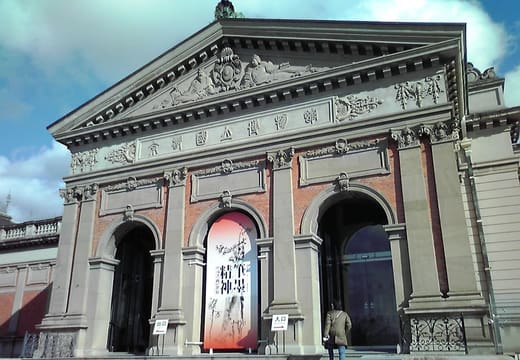
Museum · ¥ Kyoto National Museum The Kyoto National Museum opened in 1897 as the Imperial Museum of Kyoto, in the Meiji Kotokan designed by Katayama Tokuma. That building has been closed since 2015 ahead of earthquake-proofing work, so the exhibitions are in the Heisei Chishinkan wing by Taniguchi Yoshio, opened in 2014.
Shrine · ¥ Kyoto Ryozen Gokoku Shrine Kyoto Ryozen Gokoku Shrine was founded in 1868 on Emperor Meiji's order to honour the men who died fighting for the Meiji Restoration. On the hill above it, the Ryozen graves honour 1,043 of them, Sakamoto Ryoma and Nakaoka Shintaro among them, with bronze statues of the pair. The road up from Higashioji-dori is called Ishin no Michi, the Restoration Road.
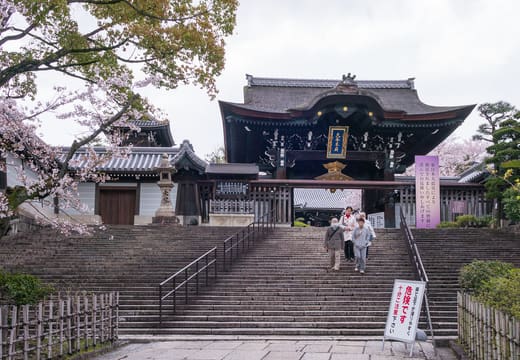
Temple · Free Otani Hombyo Otani Hombyo is the mausoleum of Shinran, founder of Jodo Shinshu Buddhism, moved here, to Higashiyama-Gojo, in 1603. You come in over the Entsukyo, a stone bridge of 1856 with two arches that's nicknamed the spectacles bridge, above a pond of Oga lotus said to be grown from a 2,000-year-old seed.
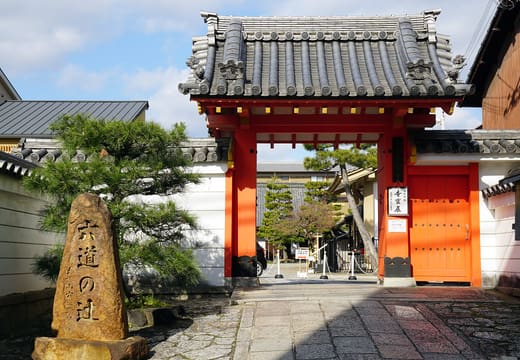
Temple · Free Rokudo Chinnoji Rokudo Chinnoji stands at Rokudo no Tsuji, on the old road to the Toribeno burial ground, where Kyoto once sent off its dead. The legend is that the courtier Ono no Takamura used the well behind the main hall to travel to the underworld every night. From 7 to 10 August, for Rokudo Mairi, people come to ring the mukaegane bell and call their ancestors home for Obon.
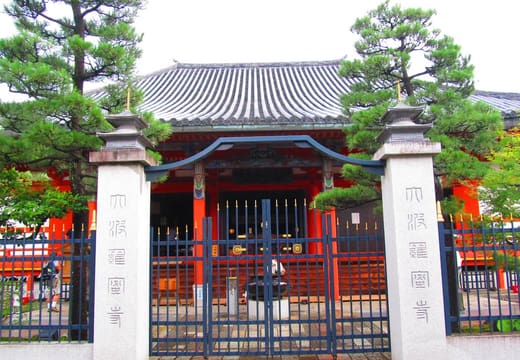
Temple · ¥ Rokuharamitsu-ji Rokuharamitsu-ji was founded in 951 by the monk Kuya, and its main hall dates from 1363. Its treasure hall holds Heian and Kamakura sculpture, including Kosho's statue of Kuya with six small Amida Buddhas coming out of his mouth as he chants, and a seated Taira no Kiyomori holding a sutra scroll.
Temple · ¥ Sanjusangendo Sanjusangendo, formally Rengeo-in, is a hall 120 metres long, rebuilt in 1266 after the original of 1164 burned down. Inside stand 1,001 statues of the thousand-armed Kannon, a seated one 355 cm tall in the middle and 1,000 standing figures in rows either side. They're all National Treasures, and so are the hall's Wind and Thunder Gods and its 28 guardian deities.
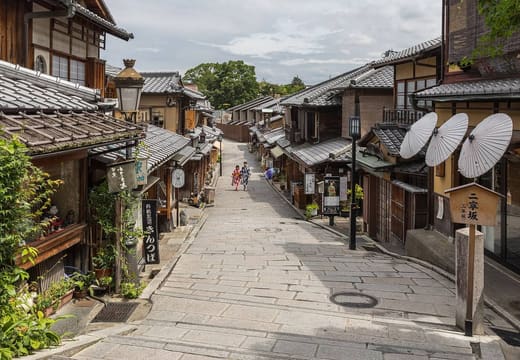
Neighbourhood · Free Sannenzaka and Ninenzaka Sannenzaka and Ninenzaka are the stone-stepped, bending lanes that pilgrims have used for centuries to reach Kiyomizu-dera and Yasaka Shrine. The townhouses along them date from the late Edo period to the Taisho era, and with the Yasaka Pagoda and Kodai-ji close by, the whole area is a protected historic district.
Shopping · ¥ Shichijo Kanshundo Shichijo Kanshundo has made Kyoto sweets on Shichijo-dori since 1865, a minute's walk from the Sanjusangendo bus stop. In its sweets class you shape four namagashi by hand, then whisk your own matcha to drink with one of them and take the other three home.
Shopping · ¥ Shichimiya Honpo Shichimiya has been on the corner where Sannenzaka meets Kiyomizu-zaka since 1655. It started as a tea stall called Kawachiya that served karashi-yu to people walking up to the temple, and later turned it into the seven-spice shichimi togarashi it's named after.
Viewpoint · ¥ Shogunzuka Seiryuden Shogunzuka is the mound on the Higashiyama ridge where Emperor Kanmu is said to have buried a clay general in armour to guard his new capital in 794. Beside it, Shoren-in's Seiryuden has a wooden stage of 1,046 square metres, 4.6 times the size of Kiyomizu-dera's, looking over the whole city, and from the west viewpoint you can see as far as the towers of Osaka. The National Treasure Ao Fudo painting is kept in its inner hall, and you pray before a detailed copy.
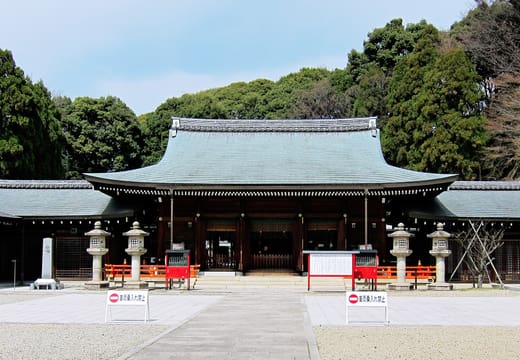
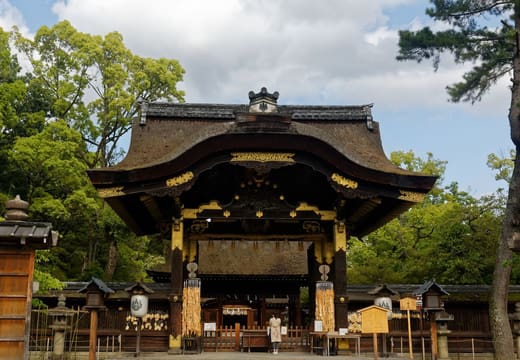
Shrine · Free Toyokuni Shrine Toyokuni Shrine enshrines Toyotomi Hideyoshi and was rebuilt in 1880 on the site of Hoko-ji's Great Buddha Hall, which was the largest building in Japan in its day. The National Treasure Karamon gate in front is said to come from Fushimi Castle. Next door hangs Hoko-ji's bell of 1614, whose inscription Tokugawa Ieyasu used as a pretext to turn on the Toyotomi.
Food · ¥¥ Ukiya Kiyomizu Kisseian Ukiya opened in Pontocho in 1929, and it has served hand-made soba since 1980, when the third-generation owner came home from training at a Tokyo soba shop. The Kiyomizu branch faces Sannenzaka from a Taisho-era storehouse in the Seiryu-en garden, and its menu leans on yuba and tempura.
Temple · Free Yasaka Koshindo Yasaka Koshindo, formally Kongo-ji, is a Tendai temple near the Yasaka Pagoda, and it's counted with Shitenno-ji in Osaka and Senso-ji in Tokyo as one of Japan's three great Koshin temples. Its charm is the kukurizaru, a monkey with its hands and feet tied, made to keep your own selfish wants in check.
Landmark · Free Yasaka Pagoda The Yasaka Pagoda is the five-storey, 46-metre tower of Hokan-ji, a temple said to have been founded in the Asuka period. The shogun Ashikaga Yoshinori rebuilt it in 1440, and inside are five Buddhas of the Five Wisdoms, with a big old foundation stone under their altar. Only the pagoda and two halls, the Yakushi-do and the Taishi-do, are left of the temple.
Temple · ¥ Yogen-in Yogen-in was built in 1594 by Yodo-dono for her late father, Azai Nagamasa, and rebuilt in 1621 with parts of Fushimi Castle. The corridor ceilings are the castle floorboards where Tokugawa soldiers took their own lives in 1600, still marked with their blood. Tawaraya Sotatsu painted the cedar doors and the sliding screens, his only surviving fusuma.

Stay in Higashiyama

Browse live availability and compare prices around the neighbourhood.

See hotels near Higashiyama on Booking.comPrices are for the night of Saturday 17 October. You can change the dates on Booking.com. If you book, Roam Kyoto earns a small commission from Stay22 at no extra cost to you.