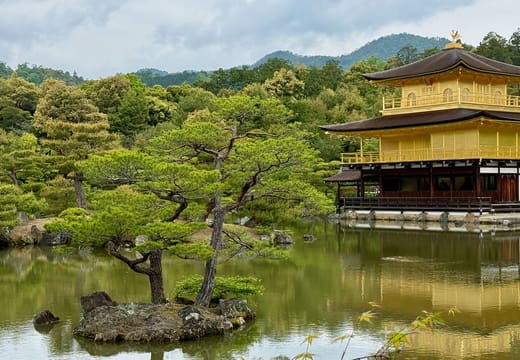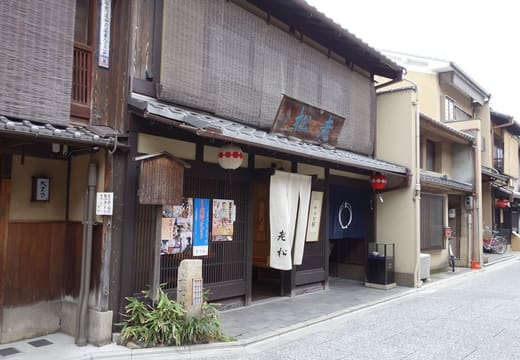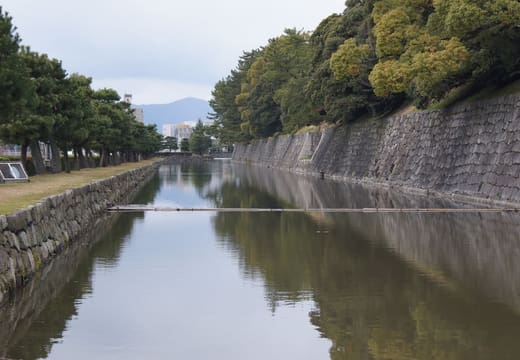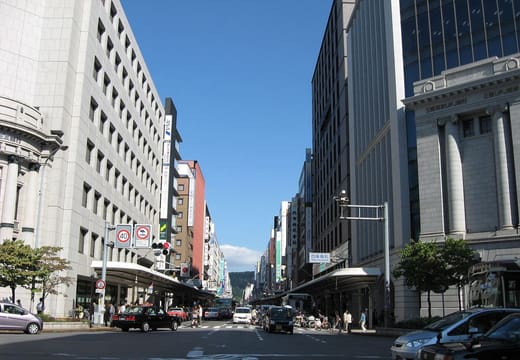
Arashiyama, Kyoto
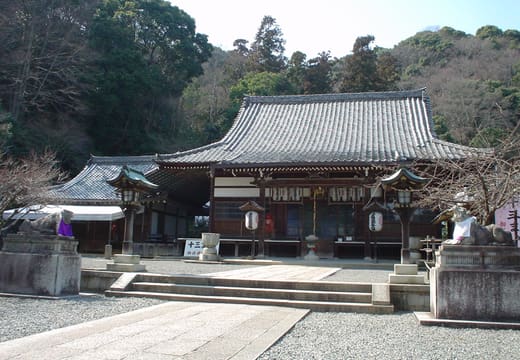
Photo: othree / Flickr (CC BY 2.0)
Neighbourhood guide

Arashiyama

Bamboo at first light, then the maple temples under Mount Ogura

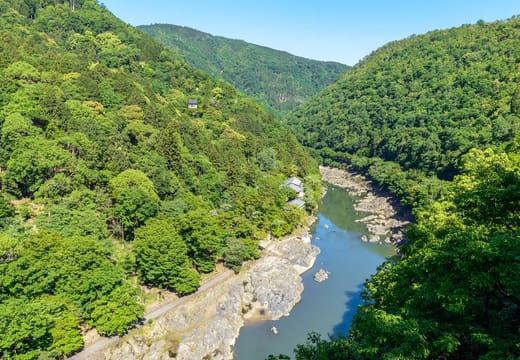
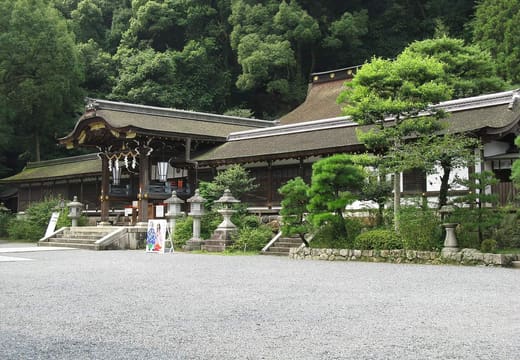
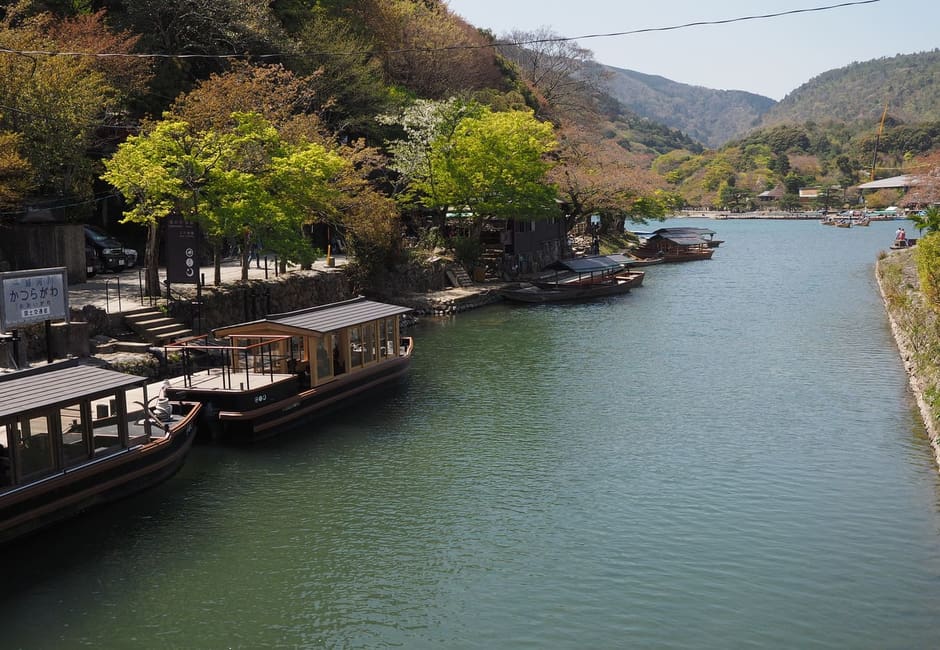
Arashiyama is on Kyoto's north-western edge, where Togetsukyo Bridge crosses the Oi River with wooded hills right behind it. You'll want the bridge, Tenryu-ji and the Arashiyama Bamboo Grove, and so will everyone else. Go early. Then walk north into Sagano. Its temples line the foot of Mount Ogura, and it's quieter at the far end, which Kyoto's official tourism site calls Okusaga.

Arashiyama has been a beauty spot since the Heian period. Emperor Saga built a country palace here in the early 800s, where Daikaku-ji stands now. Strictly, Arashiyama is the mountain across the river, with Horin-ji halfway up. Most of what you'll see is on the north bank, in Saga, and Sagano runs north from there to Saga-Toriimoto and the old pilgrim road to Atago Shrine.

Plan round the gates. Tenryu-ji opens at 8:30, and most Sagano temples open at 9:00 and stop letting you in by 16:30. There's no charge and no opening hours on the bamboo path, and Kyoto City streams a live camera of it, so you'll know the crowd before you set off. Otagi Nenbutsu-ji shuts on Wednesdays and Saturdays, Saga Tofu Morika on Wednesdays and Shigetsu on Thursdays.

Getting there

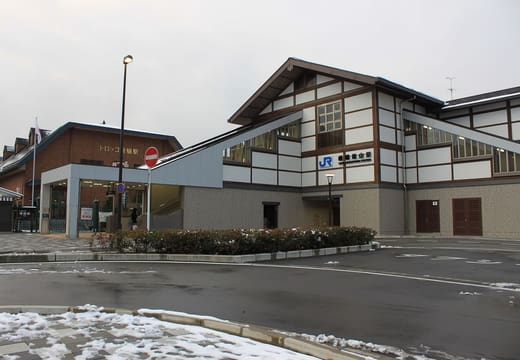
JR Sagano Line rapid trains reach Saga-Arashiyama from Kyoto Station in about 11 minutes, 8 minutes' walk from Togetsukyo, or if it's packed, take the subway to Uzumasa Tenjingawa (about 20 minutes) and the Randen tram to Arashiyama (about 15). From downtown, take the Hankyu from Kyoto-Kawaramachi and change at Katsura for Arashiyama.

30 places
Saga-Arashiyama (JR Sagano Line) · Arashiyama (Randen) stations
Tap to open the interactive map

What to see

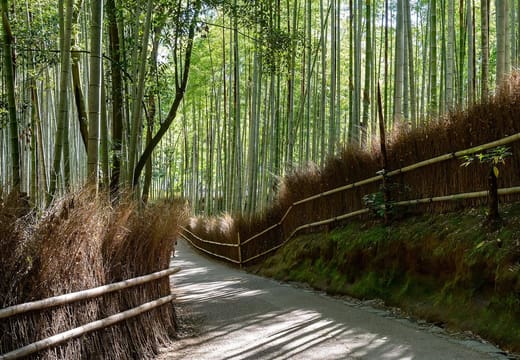
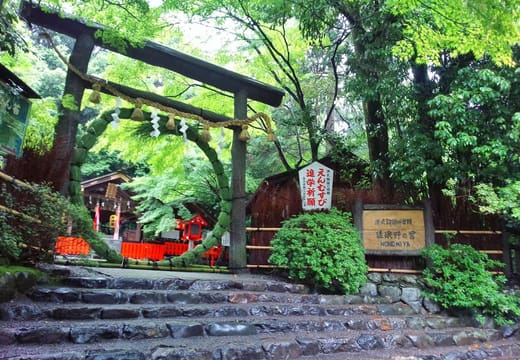
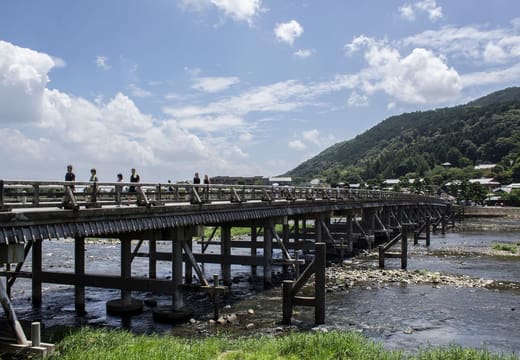
Start at Togetsukyo, the 155 m bridge finished in 1934, and walk north to Tenryu-ji. Its subtemple Hogon-in opens only in spring and autumn, for a garden built round a huge lion rock under maples. Leave Tenryu-ji by the north gate and you're in the Arashiyama Bamboo Grove. The path runs about 400 m from Nonomiya Shrine, whose torii is oak with the bark left on, to Okochi Sanso, the hillside garden the film star Okochi Denjiro spent 30 years building.

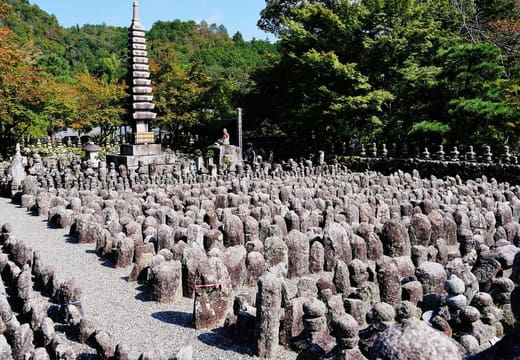
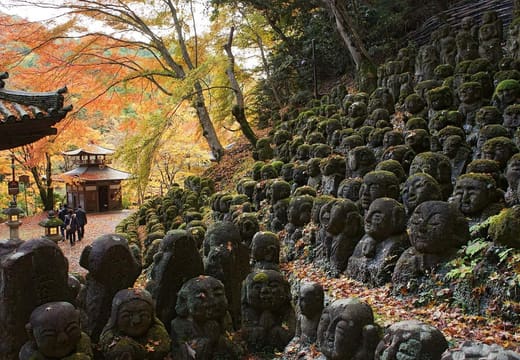
North of the bamboo, the Sagano temples come one after another. Jojakko-ji's steps climb Mount Ogura, and Rakushisha, the thatched hut where Basho wrote his Saga Diary in 1691, is a few minutes away. Gio-ji is a small thatched nunnery with a round window the temple calls the rainbow window. Further up, you'll find about 8,000 stone markers in rows at Adashino Nenbutsu-ji, and at the top of the Saga-Toriimoto Preserved Street, Otagi Nenbutsu-ji has about 1,200 stone rakan that visitors carved in the 1980s.

North of the JR station, Seiryo-ji keeps a sandalwood Shaka brought from Song China in 987, and Daikaku-ji has Osawa Pond, which the temple calls Japan's oldest surviving garden pond. Across the river, Horin-ji's terrace looks back over Togetsukyo to the city, and Daihikaku Senko-ji sits about 200 steps above the river path, a kilometre upstream. It's one Hankyu stop south to Matsuo Taisha, the sake brewers' shrine.

Where to eat and drink

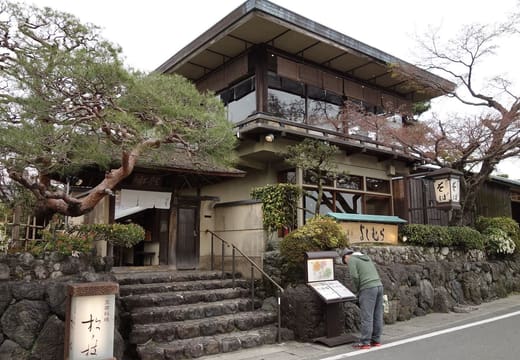
Lunch is the meal you'll need to plan. Shigetsu serves Tenryu-ji's shojin ryori, Zen cooking with no animal products, from 11:00 to 14:00, and you pay the ¥500 garden fee on top. If you haven't booked, try Arashiyama Yoshimura, two doors west of the bridge's north end. It makes its own soba (from ¥1,440), has an English menu and closes at 16:00 on most weekdays.

In Sagano, Saga Tofu Morika has made tofu since about the 1850s. It's takeaway only, so pick up hirosu fritters or karashi tofu, with very hot mustard hidden inside, for a picnic. At the top of the Saga-Toriimoto road, Ayu Chaya Hiranoya has served tea to pilgrims for about 400 years. You get shinko, twisted rice-flour dumplings, with tea for ¥1,200. Its closing days change monthly, so check its website.

Where to stay

Kyoto City's register of licensed places to stay (end of July 2026) lists 39 within a kilometre of Togetsukyo, and 15 of its 16 ryokan and hotels are within 500 m of the bridge, on both banks. Three of those are company or association retreats. The rest hold the simple-lodging licence that guesthouses, hostels and rented houses use. A couple of minshuku sit further out, near Nison-in and Seiryo-ji.

Stay here if you want the bamboo at first light. Kyoto Station's about 11 minutes away by JR, but getting downtown means changing trains, so if you'd rather walk home from dinner in Gion, sleep downtown.

How to do it in a day

Catch an early JR train and walk the bamboo from Nonomiya Shrine before Tenryu-ji opens at 8:30. After the garden, leave by the north gate for Okochi Sanso (open from 9:00), then do Jojakko-ji, Rakushisha, Nison-in and Gio-ji. If it isn't a Wednesday or a Saturday, carry on up to Otagi Nenbutsu-ji and stop for shinko at Ayu Chaya Hiranoya on your way down.

Walk back to the river for lunch at Arashiyama Yoshimura, then cross Togetsukyo to Iwatayama Monkey Park, which lets you in until 16:00, or climb to Horin-ji's terrace. In the rain, the Fukuda Art Museum takes its last visitors at 16:30. Leave on the Randen, past the Kimono Forest's 600 or so pillars wrapped in Kyo-yuzen fabric. For the Sagano Romantic Train, book online a month ahead, and don't miss the last hourly train from Torokko Saga at 16:02.

Temple · ¥ Adashino Nenbutsu-ji Adashino was a burial ground from the Heian period on, and in the middle of the Meiji era local people gathered up the stone markers scattered across its hills. About 8,000 of them now stand in rows in the temple's Sai no Kawara enclosure, facing a seated Amida and a 13-tier pagoda. At the back of the grounds, steps climb through a grove of moso bamboo.
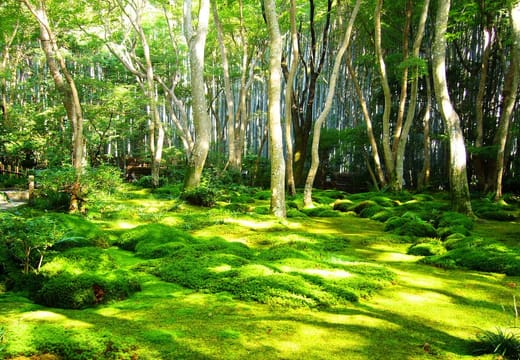
Park · Free Arashiyama Bamboo Grove This bamboo path is one of the sights Kyoto is best known for. It runs about 400 m from Nonomiya Shrine past Tenryu-ji's north gate to Okochi Sanso, with tended bamboo on both sides, and on a cloudy day it's dim even at noon.
Food · ¥¥ Arashiyama Yoshimura Yoshimura makes its own soba in the former home of the painter Kawamura Manshu, two doors west of the north end of Togetsukyo, with the bridge and the Oi River right in front. Every bowl comes with a small Kyoto obanzai side, plain soba starts at ¥1,440, and the Arashiyama set of zaru soba, buckwheat salad and rice is ¥1,980.
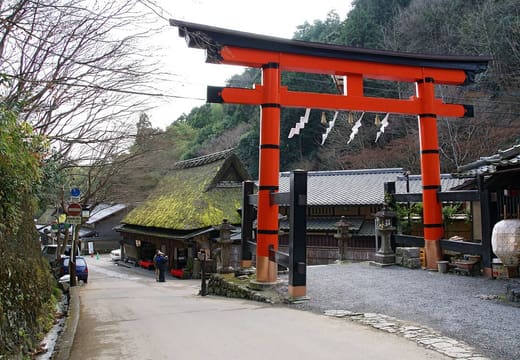
Cafe · ¥ Ayu Chaya Hiranoya Hiranoya has stood at the foot of Atago Shrine's first torii for about 400 years, dealing in sweetfish from the Hozu River and serving tea to pilgrims on their way up the mountain. Stop for shinko, twisted rice-flour dumplings in three colours shaped like the winding path to the summit, steamed over a wood-fired kamado and dusted with kinako and brown sugar.
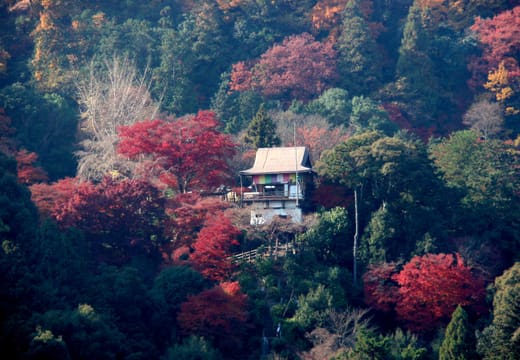
Temple · ¥ Daihikaku Senko-ji About 1 km upstream from Togetsukyo, some 200 stone steps climb from the river to this small temple. The merchant Suminokura Ryoi, who opened the Hozu River to boats, moved it here in 1606 for the workers who died on his river works, and a statue of him sits inside. The Daihikaku hall is built out over the rock face, with a view down the gorge and across the city.
Temple · ¥ Daikaku-ji Emperor Saga built a detached palace here in the early 800s, and it became a temple in 876, headed by emperors and imperial princes until the start of the Meiji era. Beside the halls lies Osawa Pond, which the temple calls the oldest surviving garden pond in Japan. It's also the home of the Saga Goryu school of ikebana, which traces itself to Emperor Saga arranging wild chrysanthemums picked on the pond's island.
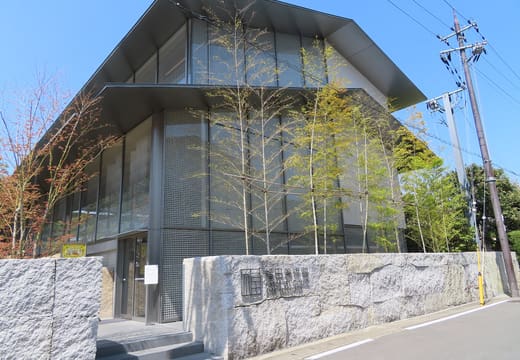
Museum · ¥¥ Fukuda Art Museum This museum by Togetsukyo shows Japanese painting, mostly from the Edo period to the modern era, in seasonal exhibitions. Its café looks straight out at the bridge and the Oi River, and only museum visitors can use it.
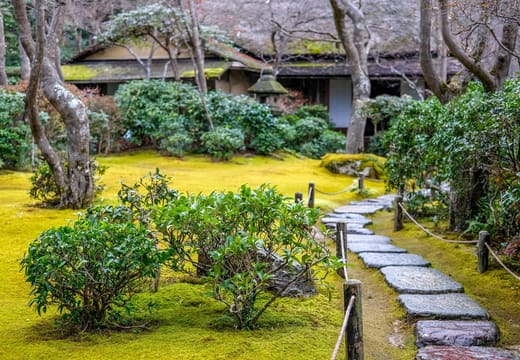
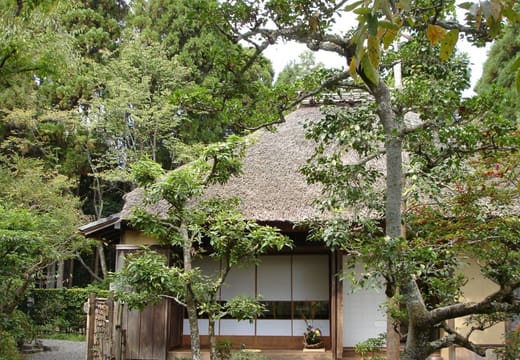
Temple · ¥ Gio-ji Gio-ji is a small thatched nunnery hidden in bamboo and maples, with a story straight out of The Tale of the Heike. Gio, a dancer favoured by Taira no Kiyomori, was pushed out when he tired of her and became a nun here with her mother and sister. In the hut, a big round window glows with the colours of the garden outside, and the temple calls it the rainbow window.
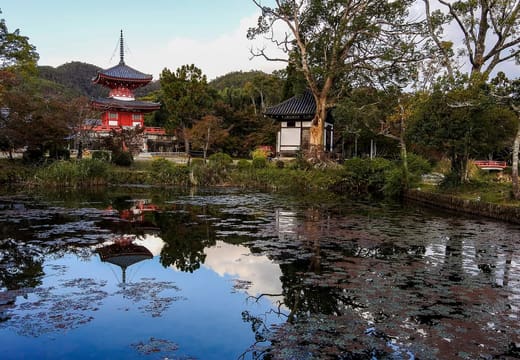
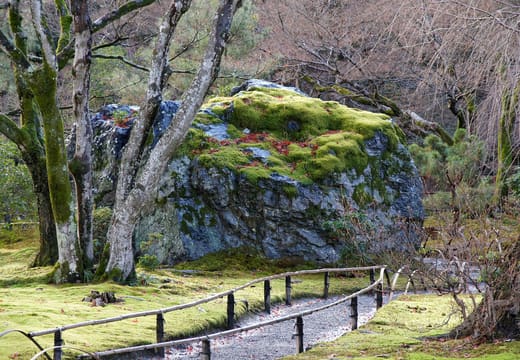
Temple · ¥ Hogon-in Hogon-in is a subtemple of Tenryu-ji that only opens in spring and autumn. Its Shishiku garden, laid out by the Zen monk Sakugen Shuryo, borrows Arashiyama as a backdrop and centres on a huge lion rock under a canopy of maples. The temple was founded in 1461 and moved to this site in 2002.
Temple · Free Horin-ji Horin-ji sits halfway up Arashiyama on the far side of the river, and the monk Gyoki founded it in 713. From the stage-like terrace beside the main hall you look out over Togetsukyo, Sagano, the Higashiyama hills and the city. On the way up, the little Denden-gu shrine guards electricity and radio waves.
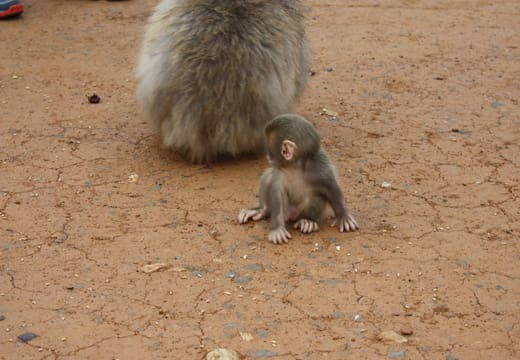
Park · ¥ Iwatayama Monkey Park About 120 wild Japanese macaques live on Mount Iwata, just across the river from central Arashiyama. A 20-minute climb, starting with 120 steps, takes you up to the rest hut at 160 m, where the monkeys hang around and the whole city spreads out below. On a clear day you can pick out Kyoto Tower.
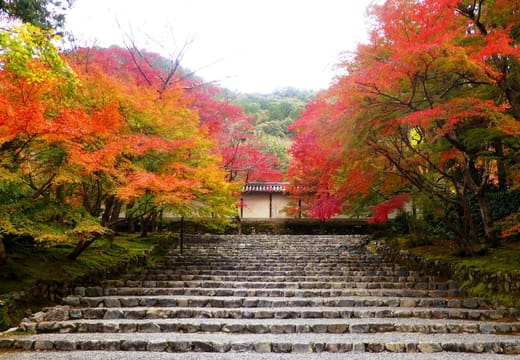
Temple · ¥ Jojakko-ji Jojakko-ji climbs the lower slope of Mount Ogura in flights of stone steps under the maples. The priest Nisshin founded it in 1596, and its main hall was the guest hall of Fushimi Momoyama Castle, moved here with help from Kobayakawa Hideaki. The thatched Niomon gate, built in the 1340s and brought here in 1616, is the oldest building on the grounds, and its guardian statues are attributed to Unkei.
Viewpoint · Free Kameyama Park Kameyama is the hillside section of Arashiyama Park, upstream from Togetsukyo on the north bank, a slope of red pines, cherries and maples with wild azaleas underneath. Paths wind up through it to rest spots and a viewing deck.
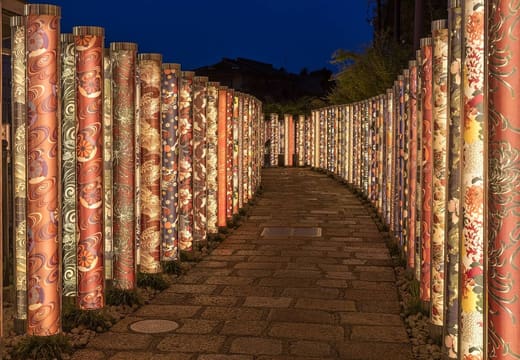
Landmark · Free Kimono Forest About 600 pillars wrapped in fabric dyed in the Kyo-yuzen kimono style stand in rows around Randen's Arashiyama terminus. The railway put them up in 2013 as part of a push to keep visitors in Arashiyama into the evening.
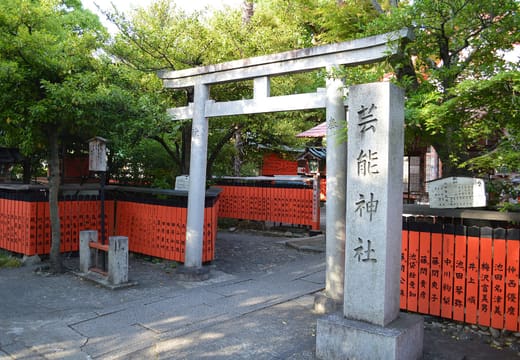
Shrine · Free Kurumazaki Shrine Kurumazaki honours Kiyohara no Yorinari, a late Heian scholar buried here in 1189, and takes its name from the day Emperor Go-Saga's ox cart broke its shaft in front of it. Inside the grounds, the Geino Shrine for performers is ringed by more than 4,000 red fence boards painted with stage names, pen names and the names of theatre troupes.
Shrine · Free Matsuo Taisha Hata no Imiki Tori built the first hall of Matsuo Taisha at the foot of Mount Matsuo in 701, before Kyoto became the capital, and since the late Muromachi period it's been revered as the leading god of sake brewing in Japan. Its three Shofuen gardens, finished in 1975 by Shigemori Mirei, are laid with some 200 blue stones from the Yoshino River in Shikoku.
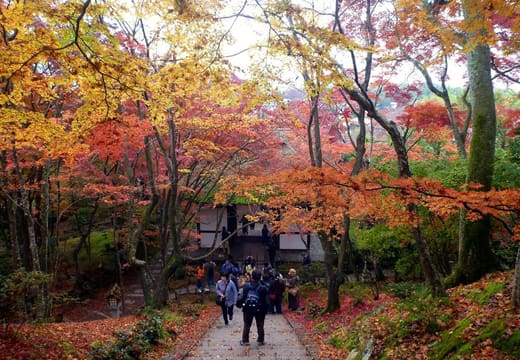
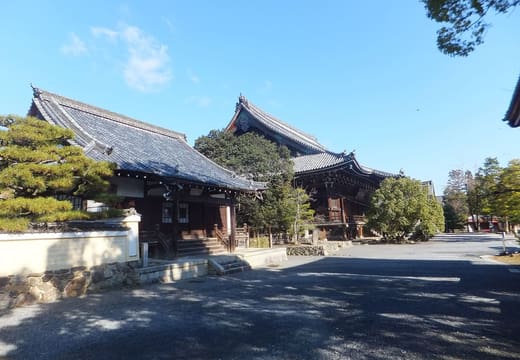
Temple · ¥ Nison-in Nison-in is named for its two main images, a Shaka who sends souls off and an Amida who welcomes them, a gilded pair carved in the mid-Kamakura period. Past the gate, the Momiji no Baba approach runs about 100 m between alternating maples and cherries. The temple dates to the 830s or 840s and sits at the foot of Mount Ogura.
Shrine · Free Nonomiya Shrine Nonomiya is a small shrine on the bamboo path, on the site where imperial princesses once stayed before going to serve at the Grand Shrine of Ise, and it turns up in The Tale of Genji. Its black torii is sawtooth oak with the bark left on, the oldest style of torii in Japan, set in a low brushwood fence.
Park · ¥ Okochi Sanso Okochi Denjiro, a period-film star of the early Showa years, fell for the view from Mount Ogura and spent 30 years building this hillside garden at the far end of the bamboo path. Its paths wind through cherries and maples to views of the Hozu River, Mount Hiei and the city. Four of its structures, the Daijokaku house among them, are registered cultural properties.
Temple · ¥ Otagi Nenbutsu-ji About 1,200 stone rakan crowd the hillside at Otagi Nenbutsu-ji, at the top end of the Saga-Toriimoto road, each with its own expression. Ordinary visitors carved them in the 1980s, learning under the sculptor-priest Kocho Nishimura while he rebuilt the temple. The hall and gate themselves were moved here in 1922.
Landmark · ¥ Rakushisha Rakushisha is the thatched hut of Mukai Kyorai (1651 to 1704), the disciple Matsuo Basho trusted most. Basho stayed here three times, and in early summer 1691 he used it as his base for touring Saga and Arashiyama and wrote his Saga Diary here.
Shopping · ¥ Saga Tofu Morika Morika has been making tofu in Saga since around the Ansei era of the 1850s. It's a takeaway counter, not a restaurant, so come for the plain Saga tofu, the hirosu fritters, or karashi tofu with very hot mustard hidden in the middle.
Neighbourhood · Free Saga-Toriimoto Preserved Street Saga-Toriimoto grew up as both the gateway town for pilgrims heading to Atago Shrine and a farming village, and the road still shows both. Townhouses with mushiko windows stand next to thatched farmhouses as it climbs from Adashino Nenbutsu-ji to Atago's first torii.
Landmark · ¥ Sagano Romantic Train This slow, old-style train covers about 7 km of the Hozu River gorge in 25 minutes, from Torokko Saga next to JR Saga-Arashiyama Station to Torokko Kameoka. It runs on track left over when the JR line was double-tracked, and it's been carrying sightseers since 1991. Car 5, the Rich, has no window glass, so you get the wind and the river noise.
Temple · ¥ Seiryo-ji It also goes by Saga Shakado, after its main image, a sandalwood Shaka that the monk Chonen brought back from Song China in 987. The statue is a National Treasure, and model internal organs, prayers and sutras were later found sealed inside it. Its two-storey Niomon gate, rebuilt in the 1780s, stands right in the middle of Sagano.
Food · ¥¥ Shigetsu Shigetsu is Tenryu-ji's own restaurant, serving shojin ryori, the Zen vegetarian cooking made with no animal products at all, in a hall just south of the Sogen Pond. The Michelin Guide Kyoto Osaka 2026 gave it a Bib Gourmand and a Green Star.
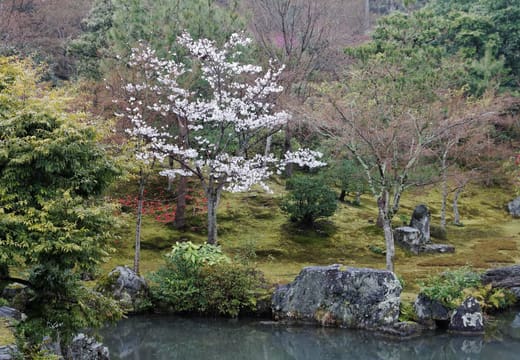
Temple · ¥ Tenryu-ji The shogun Ashikaga Takauji founded Tenryu-ji in 1339 in memory of Emperor Go-Daigo, and it still ranks first among Kyoto's five great Zen temples. You come for the Sogen Pond garden, laid out by Muso Soseki nearly 700 years ago and still close to how he left it, with the Arashiyama hills borrowed as its backdrop. It's one of the UNESCO-listed monuments of ancient Kyoto.
Landmark · Free Togetsukyo Bridge The 155 m bridge over the Oi River, with wooded hills rising right behind it, is the picture most people carry of Arashiyama. A monk named Dosho first bridged the river near here in the 830s or 840s, and the bridge you walk across today was finished in 1934. Its name, the moon-crossing bridge, comes from the retired Emperor Kameyama, who watched the moon move over it.
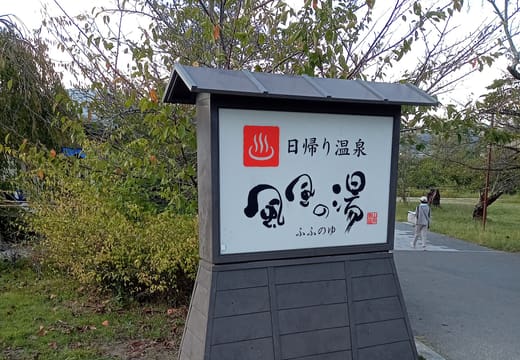
Onsen · ¥ Fufu no Yu Fufu no Yu is a day spa a minute's walk from Hankyu Arashiyama Station. Its water is Arashiyama Onsen, a simple, weakly alkaline hot spring at 35.2°C at the source. Each side has an indoor bath of the spring water, an outdoor bath, a silky bath, a cold bath and a hot sauna with a view, and the women's side adds a mist sauna. The outdoor cooling-off area has reclining chairs within earshot of the Katsura River.
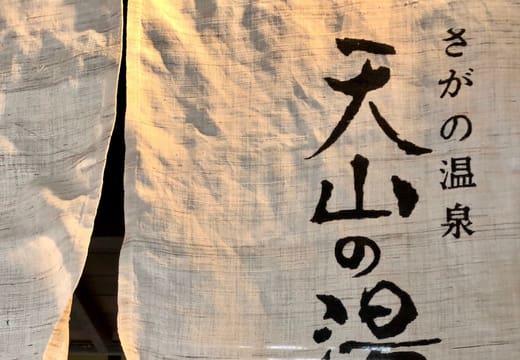
Onsen · ¥ Tenzan no Yu Tenzan no Yu is a hot spring complex three minutes' walk from Arisugawa on the Randen tram, on a natural spring that rises in Sagano. The Kinkaku no Yu outdoor bath uses the spring water untouched, and it's rich enough in iron to turn brown in the air, while the Ginkaku no Yu has the iron taken out. Both sides have saunas with aufguss sessions every two hours from 1pm to 11pm, and there's a restaurant and a tatami lounge for afterwards.

Stay in Arashiyama

Browse live availability and compare prices around the neighbourhood.

See hotels near Arashiyama on Booking.comPrices are for the night of Saturday 17 October. You can change the dates on Booking.com. If you book, Roam Kyoto earns a small commission from Stay22 at no extra cost to you.