Nijo, Kyoto
Photo: Fredrik Rubensson / Flickr (CC BY-SA 2.0)
Neighbourhood guide

Nijo

The shogun's castle, with the Shinsengumi's Mibu a walk south

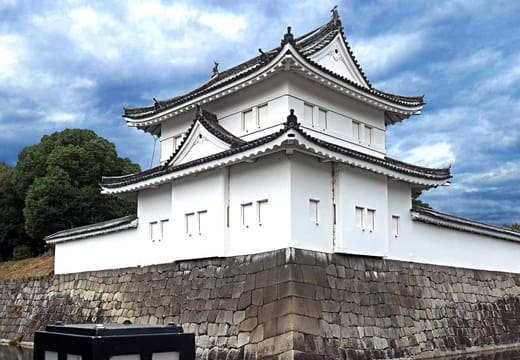
Most people come for Nijo Castle, and it's worth its two hours. Tokugawa Ieyasu built it in 1603, and its Ninomaru Palace is the only palace complex still standing inside a Japanese castle. Then walk south, past a pond garden first laid out in 794 and an 800 m covered shopping street, to the temple in Mibu where the Shinsengumi trained.

This part of town is older than the castle. Shinsen-en is what remains of the imperial garden beside the Heian palace, and the Gion Festival began there, with a rite in 869 to ward off disaster. That same year the god Susanoo was first enshrined where Nagi Shrine stands, and the Matabi-sha, a small Yasaka Shrine site tied to the festival's start, is inside the Sanjo-kai arcade.

Mibu, about a kilometre south of the castle, is Shinsengumi ground. They made Yagi House their first headquarters in 1863 and trained at Mibu-dera, and 11 of them are buried on an island in its pond. Daniel, who makes Roam Kyoto, lived for a while near Shijo-Omiya station, about ten minutes on foot from Mibu-dera. The castle, Mibu-dera and Yagi House all shut by 17:00, so for the evening you've got Menbaka Fire Ramen, open until 22:00, and live music at Coffee House Jittoku.

Getting there

From Kyoto Station, take the Karasuma Line about 6 minutes to Karasuma Oike, then the Tozai Line about 2 minutes to Nijojo-mae, right by the castle. JR Nijo, about 5 minutes out on the Sagano Line, is a 17-minute walk from the castle, and Mibu-dera's about 10 minutes on foot from Hankyu's Omiya Station.

17 places
Horikawa Marutamachi bus stop (City Bus 9, 10, 12) · Nijojo-mae (Tozai Line) stations
Tap to open the interactive map

What to see

In 1867 the 15th shogun, Tokugawa Yoshinobu, announced the return of power to the emperor in Nijo Castle's great hall. For the Honmaru Palace you'll pay ¥1,000 more on a timed web ticket that goes on sale 30 days ahead, and it's a 15 to 20 minute walk from the east gate. About 300 cherry trees flower from late March into April, and an evening light-up runs from 23 October to 5 December 2026 on its own ticket.

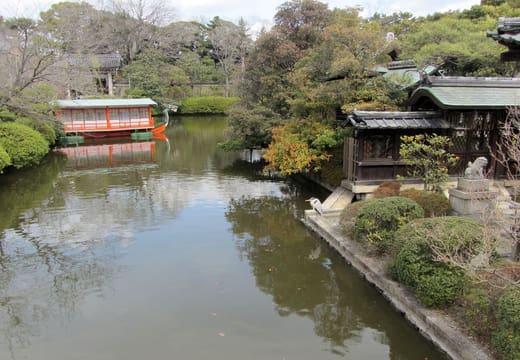
Shinsen-en is just south, a spring-fed pond where Kukai is said to have prayed for rain in 824. Nearby Nijo Jinya, a merchant's house that put up feudal lords, was rebuilt between 1848 and 1854 with a lookout room hidden above the main hall and a staircase disguised as a tea-jar shelf. You'll only get in on the family's 10:00 tour, Friday to Sunday and holidays, booked online about a month ahead and given in Japanese.

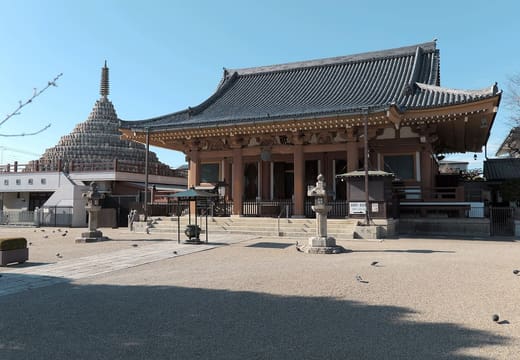
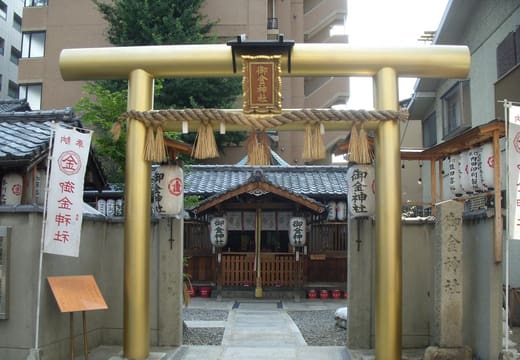
East toward Karasuma, people come to Mikane Shrine's gold torii to pray about money, and the Kyoto Shibori Museum shows large tie-dye pieces (entry's free if you take a dyeing class). Mibu-dera has a cone of 1,000 stone Buddhas built to look like a Myanmar pagoda, with Yagi House across Bojo-dori and Nagi Shrine just north. Its masked Mibu Kyogen plays run from 29 April to 5 May and over the Sports Day weekend in October.

Where to eat and drink

Book lunch. Kyo-Yuba Seike Nijo Castle makes its own yuba and serves it as courses on Oike-dori, with last orders at 14:30. Menbaka Fire Ramen has poured flaming oil over the green onions on its shoyu ramen since 1985, with vegan, gluten-free and pork-free bowls. Book its set course on TableCheck, or you could wait outside a long time.

Coffee Kobo Teramachi roasts its own beans in a row house about 110 years old on the Sanjo-kai arcade, where you'll also find a butcher, bakeries and a rice-ball shop. Nijo Wakasaya has made sweets since 1917, and its yakiguri, a whole chestnut wrapped in chestnut paste, keeps about 10 days. Coffee House Jittoku puts on rock and jazz in a converted sake storehouse for about ¥1,000 to ¥4,000 plus a drink or food order.

Where to stay

Stay near Nijojo-mae and you're about 2 minutes from Karasuma Oike on the Tozai Line, where you change for Kyoto Station, and about 6 from Sanjo Keihan. HOTEL THE MITSUI KYOTO, on Aburanokoji-dori, is 3 minutes from the station's exit 2. Somewhere near JR Nijo works too.

It suits you if you want to be at the castle gate at 8:45 and don't mind the subway home. If you've got kids, Menbaka Fire Ramen seats them safely during the fire and has a no-fire kids' meal. If you want to walk home from the bars, stay nearer Kawaramachi.

How to do it in a day

Come on a Saturday, since the Kyoto Shibori Museum shuts on Sundays and Nijo Wakasaya on Wednesdays. Have coffee at Coffee Kobo Teramachi when it opens at 8:00, walk round Shinsen-en and be at Nijo Castle for 8:45. If you've booked Nijo Jinya's 10:00 tour, see the castle after it. Lunch is Kyo-Yuba Seike Nijo Castle, from 11:30.

After lunch, pick up yakiguri at Nijo Wakasaya, stop at Mikane Shrine and dye a scarf at the Kyoto Shibori Museum. Walk back west along Sanjo-kai Shopping Street, car-free from 14:00, via Takenobu Inari Shrine. Be at Mibu-dera by 15:00, as the Mibu-zuka closes at 16:00 and that's Yagi House's last entry too. End with a set course at Menbaka Fire Ramen and a show at Coffee House Jittoku, a few minutes away.

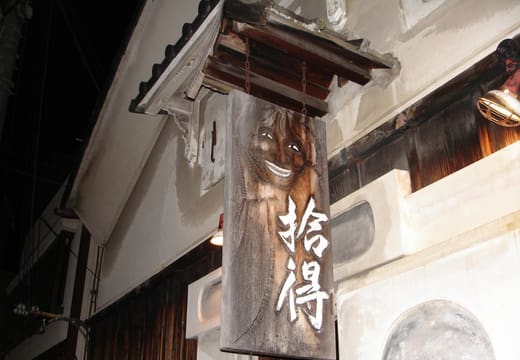
Nightlife · ¥¥ Coffee House Jittoku Jittoku has put on live music since 1973 in a converted sake storehouse on Omiya-dori, north of Nijo Castle, with room for 80 to 100 people. It's mostly rock and jazz, plus an open-mic acoustic night, mostly on Mondays, and rakugo at noon on the first Sunday of the month.
Cafe · ¥ Coffee Kobo Teramachi Coffee Kobo Teramachi roasts its own beans in a hot-air roaster, in a two-storey row house about 110 years old on the Sanjo-kai arcade. Coffee is brewed one cup at a time and served in Kyoto-ware cups, and about 20 kinds of freshly roasted beans are on sale.
Food · ¥¥ Kyo-Yuba Seike Nijo Castle Seike makes its own yuba from Japanese soybeans in Miyama, and this nine-seat counter on Oike-dori near Nijo Castle, its first shop in Kyoto city when it opened in 1999, serves it as yuba kaiseki courses at lunch and dinner. The Horikawa course is vegetarian, with no meat, fish or bonito stock, egg or dairy.
Museum · ¥ Kyoto Shibori Museum The Kyoto Shibori Museum opened in 2001 and calls itself the only museum in Japan devoted to shibori tie-dye. Its director, Kenji Yoshioka, is the second generation of Yoshioka Jin Shoten, a shibori maker founded in 1939 across the lane. The special exhibitions of large shibori pieces change several times a year, with the tools of the craft on display alongside.
Food · ¥¥ Menbaka Fire Ramen Menbaka has served ramen on Marutamachi-dori since 1984, and a year after opening it hit on its trick, pouring flaming oil over the green onions on a bowl of shoyu ramen right at the counter. The broth is a light soy sauce one with Kyoto's Kujo onions, and there are vegan, gluten-free (rice noodles) and pork-free versions.
Temple · ¥ Mibu-dera Mibu-dera is a Ritsu sect temple founded in 991, visited for centuries to ward off bad luck, and in the 1860s the Shinsengumi trained in martial arts and with cannon in its grounds. On an island in the pond, the Mibu-zuka holds the graves of 11 Shinsengumi members, with busts of Kondo Isami and Hijikata Toshizo. A cone of 1,000 stone Buddhas, gathered from around the city in the Meiji era, is built to look like a Myanmar pagoda.
Shrine · Free Mikane Shrine Mikane Shrine is a small neighbourhood shrine to Kanayamahiko, god of metals and minerals, and people come from all over Japan and abroad to pray about money. Its torii is painted gold with a finish from Hori Kinpaku, a Kyoto gold-leaf maker founded in 1711, and its sacred ginkgo is over 200 years old and about 22 m tall.
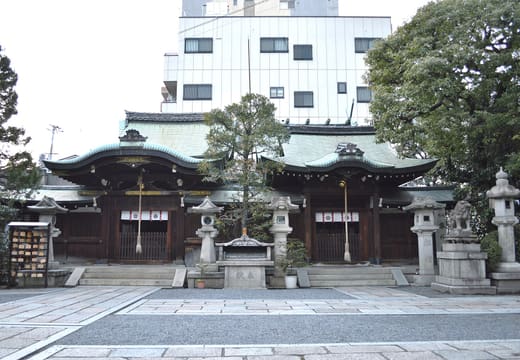
Shrine · Free Nagi Shrine Nagi Shrine, also called Moto-Gion, marks where the god Susanoo was first enshrined in 869, in a wood of tens of thousands of nagi trees, during a plague. When the deity moved on to Yasaka, locals saw it off with decorated parasols and music, said to be the origin of the Gion Festival's kasahoko parasol floats. Two main halls stand side by side, its own and the Hayabusa Shrine's.
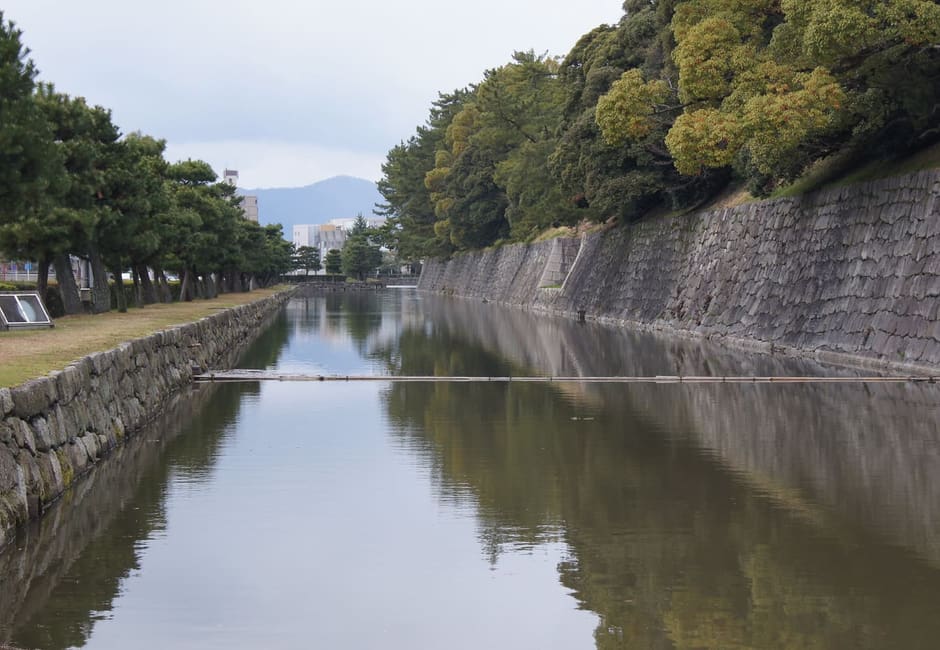
Landmark · ¥ Nijo Castle Tokugawa Ieyasu built Nijo Castle in 1603 to guard the Imperial Palace and to lodge the shogun on his visits to Kyoto. Its Ninomaru Palace, six buildings lined with Kano school paintings, is the only palace complex still standing inside a Japanese castle. In 1867 the 15th shogun, Tokugawa Yoshinobu, announced the return of power to the emperor in its great hall.
Landmark · ¥ Nijo Jinya Nijo Jinya is a merchant's house just south of Nijo Castle, rebuilt between 1848 and 1854, where a rice dealer and money changer put up feudal lords and people waiting on the shogunate's courts nearby. It was built with an ambush in mind, so there's a lookout room hidden above the main hall, a staircase disguised as a tea-jar shelf and a door that locks from behind.
Shopping · ¥ Nijo Wakasaya Nijo Wakasaya has made Kyoto sweets on the corner of Nijo-dori and Ogawa-dori since 1917, four generations so far. The founder's first hit was Furosen, kuzu-yu in tiny picture boxes that turns thick when you pour on hot water, and the standbys now are yakiguri, a whole chestnut wrapped in chestnut paste and baked, and fukuguri, finished with a coat of yokan.
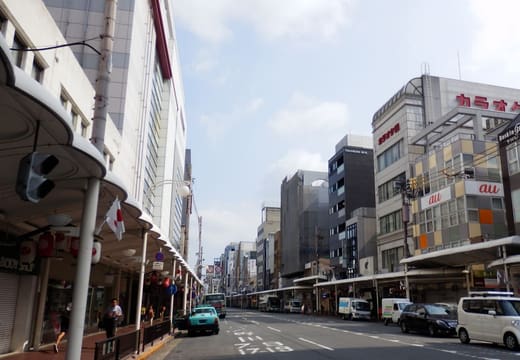
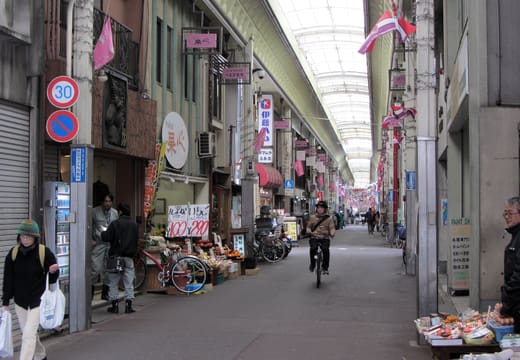
Shopping · Free Sanjo-kai Shopping Street Sanjo-kai is a covered shopping street running about 800 m along Sanjo-dori from Horikawa to Senbon, one of the longest arcades in western Japan. It started in 1914 with 72 shops and still has a butcher, greengrocers, bakeries and a rice-ball shop next to cafes and shops in done-up machiya. The Matabi-sha, a small Yasaka Shrine site tied to the start of the Gion Festival, stands inside it.
Temple · Free Shinsen-en Shinsen-en is what's left of the imperial garden laid out in 794 beside the Heian palace, a spring-fed pond with a shrine to the dragon king Zennyo Ryuo, now a Toji Shingon temple just south of Nijo Castle. Kukai is said to have prayed for rain on its shore in 824, and the rite held here in 869 to ward off disaster, with 66 halberds, one for each province, grew into the Gion Festival. When Tokugawa Ieyasu built the castle he took the spring to fill his moats, and the garden lost its northern grounds.
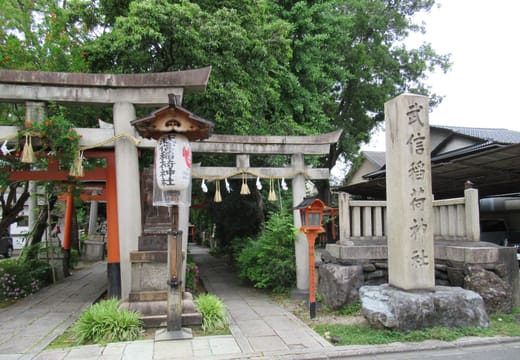
Shrine · Free Takenobu Inari Shrine Takenobu Inari is a shrine founded in 859, a few steps south of the Sanjo-kai arcade, where people pray for business and for winning. Sakamoto Ryoma and his wife Oryo are tied to its sacred enoki tree, said to be 850 years old, which fell in May 2025, and the shrine is also linked to the folk tale of Issun-boshi.
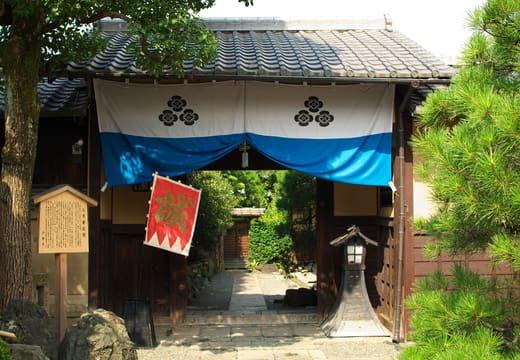
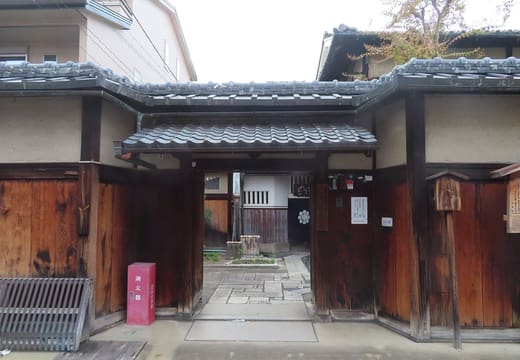
Landmark · ¥ Yagi House The Yagi family's house in Mibu is where the Shinsengumi made their first headquarters in 1863, and that September Serizawa Kamo was cut down in its back room on a night of pouring rain, with some of the sword cuts still there. The gatehouse dates from 1804 and the main house from 1809, and the family, here for 15 generations, now runs the Kyoto Tsuruya sweet shop.
Shopping · ¥ Yamanaka Aburaten Yamanaka Aburaten has sold oil on Shimodachiuri-dori since the Bunsei era (1818 to 1830), and it's one of the few oil specialists left in Japan. The shop building is a registered tangible cultural property, and the shelves hold cooking oils from Japan and abroad next to natural oils for wood and for skin.
Sento · ¥ Tron Onsen Inari-yu Inari-yu is a neighbourhood sento just south of Sanjo-dori, a short walk south of Shinsen-en garden and Nijo Castle. It runs on mineral-rich groundwater and has a far-infrared sauna, a cold bath, a jet bath and a herbal bath.

Stay in Nijo

Browse live availability and compare prices around the neighbourhood.

See hotels near Nijo on Booking.comPrices are for the night of Saturday 17 October. You can change the dates on Booking.com. If you book, Roam Kyoto earns a small commission from Stay22 at no extra cost to you.