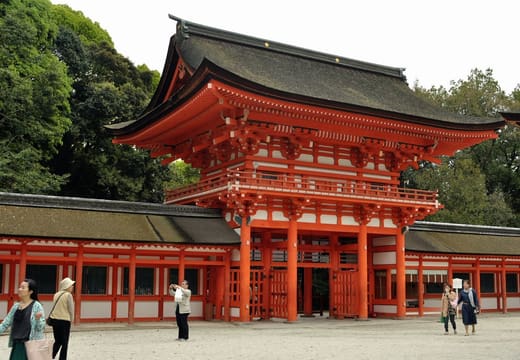
Imperial Palace, Kyoto
Photo: Jason Riedy / Flickr (CC BY 2.0)
Neighbourhood guide

Imperial Palace

Free palace walks, a park that never shuts, and the court's old shops

Kyoto Gyoen, a park 1.3 km long in central Kyoto, never closes. The Kyoto Imperial Palace sits inside it, and you can walk round it for free without booking. Around the edges you'll find Shokoku-ji (head of the Zen branch that takes in Kinkaku-ji), the house site where The Tale of Genji was written, and shops that once supplied the court.

Emperors lived here for about 500 years, until the Meiji era, and in the Edo period more than 140 princely and noble houses stood where the lawns are now. You can still walk into Shusuitei, the only building the Kujo family left, and the Kaninnomiya Residence Site, the park's information centre. To the west, Toraya has kept a shop since before 1628, and Honda Miso Honten began supplying the palace kitchens in 1830.

It's a daytime area, and most sights shut by 17:00. Festivals are the exception, such as Shimogoryo Shrine's Fujibakama Matsuri, with evening lanterns from 16 to 19 October 2026. Otherwise it's dinner at Hatakaku or Hachikian, then Club Metro, the oldest club still running in Kyoto, in a basement by Jingu-Marutamachi Station.

Getting there

From Kyoto Station the Karasuma Line takes about 10 minutes to Marutamachi, about 5 minutes' walk from the park (exit 1). For the palace entrance, ride one stop on to Imadegawa (exit 3, about 5 minutes). Keihan's Jingu-Marutamachi is about 15 minutes on foot.

23 places
Jingu-Marutamachi (Keihan) · Furitsu-Idai-Byoin-mae bus stop (City Bus 4, 17, 205) stations
Tap to open the interactive map

What to see

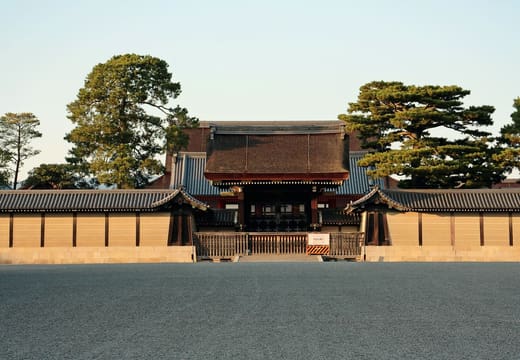
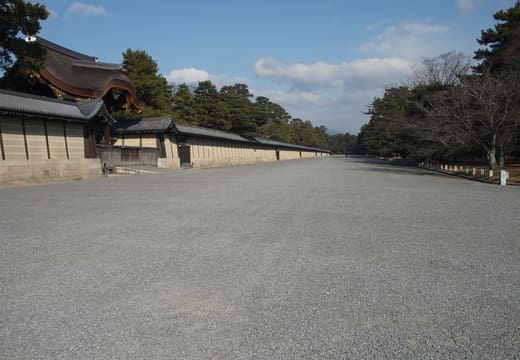
Enter the Kyoto Imperial Palace by the Seishomon gate on the west side, where bags are checked, and follow the gravel route past the Shishinden throne hall, the Kogosho and the gardens. You can't go inside, and most buildings date from 1855. From October 2026 the Shishinden is under a repair of about nine years, with a temporary steel roof going up over it. Last entry from October to February is 15:20.

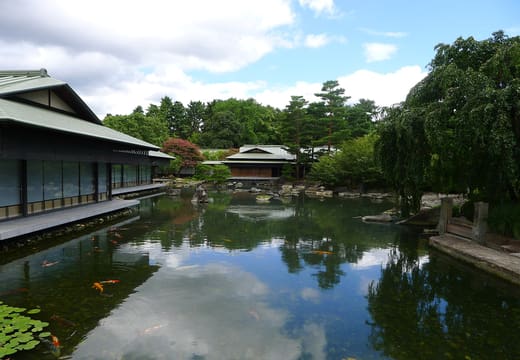
The Sento Imperial Palace was built in the early 1600s for the retired Emperor Go-Mizunoo, and since a fire in 1854 it's mostly garden, with tea houses and a shore of about 110,000 flat stones. Tours are in Japanese, but you get a free English audio guide. Just east of the palace, Kyoto State Guest House (2005) shows off Nishijin weaving and maki-e lacquer on a 90-minute tour for ¥2,000, in English at 11:45 on scheduled days.

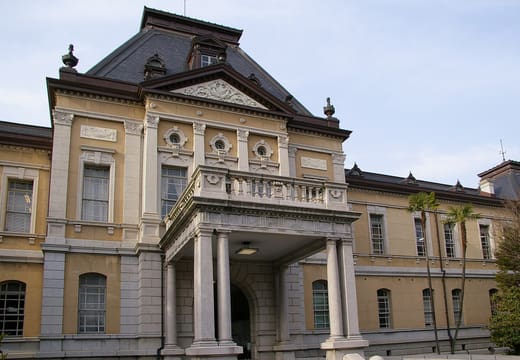
East of the park, Rozan-ji stands where Murasaki Shikibu's house was, and purple bellflowers bloom in its Genji garden from late June to early September. The Jotenkaku Museum, north of Imadegawa-dori, shows Maruyama Okyo and Ito Jakuchu from 17 October 2026 to 14 February 2027. Out west, boars guard Goo Shrine where you'd expect dogs, and the 1904 Kyoto Prefectural Old Main Building is free to walk into, Tuesday to Friday.

Where to eat and drink

Hachikian does oyakodon with Kyo-aka jidori chicken for ¥2,750 at lunch (last orders 14:00), and the Nakadachiuri rest house inside the park has a restaurant. The ¥700 ticket at Kyogashi Shiryokan gets you matcha and a sweet made that day next door. Coffee Base Nashinoki, inside Nashinoki Shrine, makes every drink and ice cube with the shrine's Somei well water, so order the cold brew.

Hatakaku has served botan nabe, wild boar simmered in white miso, since 1918. From 15 November to about 20 March it's the only dish (¥12,000 a person), and you eat it in a private room. Hachikian's mizutaki, chicken in a broth simmered for hours, is ¥9,900. After dinner there's Club Metro, where Daft Punk and Aphex Twin have played. Start times vary, so check the schedule before you go.

Where to stay

At the end of July 2026, Kyoto City listed 281 licensed places to stay in Kamigyo Ward, which takes in the palace, and only 16 of them were hotels or ryokan. Kyoto Garden Palace, with 99 rooms, faces the Hamaguri Gomon gate across Karasuma-dori, 8 minutes' walk from Marutamachi. Kyoto Brighton Hotel, west of the park, takes its last guests on 29 November 2026 and is due to reopen around winter 2028.

Stay here if you want to be first through the gates, since the park never closes and the Sento queue starts at 8:40. Kids get lawns to run on, though the Sento tours don't admit under-18s and the State Guest House turns away children 12 and under. If you want bars you can walk home from, sleep near Kawaramachi.

How to do it in a day

Go on a Tuesday, Friday or Saturday. On Mondays the palace and Hatakaku close and there are no Sento tours, Kyogashi Shiryokan shuts on Wednesdays and Thursdays, and Honda Miso Honten on Sundays. Be at the Sento Imperial Palace gate by 8:40 for the 9:30 tour, then get a cold brew at Coffee Base Nashinoki and walk the Kyoto Imperial Palace route (about an hour).

Lunch at the Nakadachiuri rest house, then have yokan at Toraya Karyo Kyoto Ichijo and buy Ichiwan misoshiru, soup sealed in a wafer shell, at Honda Miso Honten. Head north for tea at Kyogashi Shiryokan and the halls of Shokoku-ji, both with last entry at 16:00. From 15 November, eat botan nabe at Hatakaku, a short walk north, and on a Friday or Saturday see what's on at Club Metro.

Nightlife · ¥¥ Club Metro Metro is a basement club you reach from Exit 2 of Jingu-Marutamachi Station, and it has the longest history of any club still open in Kyoto. It holds about 300 people, yet Daft Punk, Aphex Twin, Jeff Mills and Thundercat have all played here, and the Diamond Night party has run for about 30 years. It books club nights and live shows across most genres.
Cafe · ¥ Coffee Base Nashinoki This coffee stand opened in 2022 in a former tea room inside Nashinoki Shrine, and every drink and ice cube is made with the shrine's Somei well water. The beans are specialty coffee roasted at the company's Kanondo shop near Shijo-Karasuma, and you drink on the veranda or in the garden.
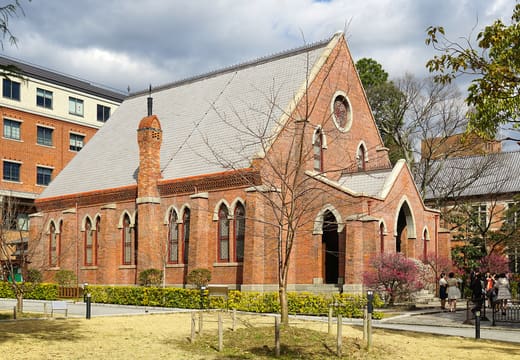
Landmark · Free Doshisha University Imadegawa Campus Doshisha grew from the English school Niijima Jo opened in 1875, and its campus across Imadegawa-dori from the palace keeps a row of Meiji-era Western-style buildings, five of them Important Cultural Properties, including the 1886 chapel and the 1890 Harris Science Hall. The Harris hall is now a free gallery on Niijima and the school's history.
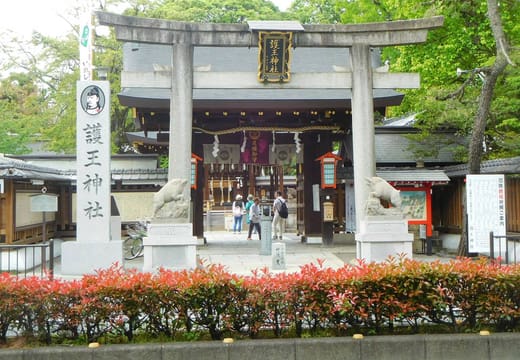
Shrine · Free Goo Shrine Goo Shrine stands on Karasuma-dori, west of the palace, and honours Wake no Kiyomaro, who urged Emperor Kanmu to move the capital to Heian-kyo, and his sister Hiromushi, who raised war orphans. A legend says 300 wild boars guarded Kiyomaro on his way to Usa, so boars stand where you'd expect guardian dogs. The shrine moved here from Jingo-ji in 1886.
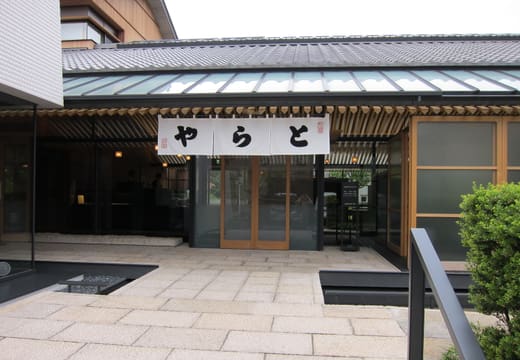
Food · ¥¥ Hachikian Hachikian has been a chicken restaurant on Kawabata-dori since 1970. Lunch brings oyakodon made with Kyo-aka jidori for ¥2,750 or kamo nanban with duck and Kujo leeks, and the house dish is mizutaki, big pieces of chicken in a broth simmered for hours, with house ponzu, finished as rice porridge.
Food · ¥¥¥ Hatakaku Hatakaku has served botan nabe, wild boar hotpot, since 1918. The man who first served it grew up at an inn by the palace hunting grounds and built the dish from a country boar stew. Here the boar simmers in white miso rather than the usual red, and every room is private, looking onto a garden.
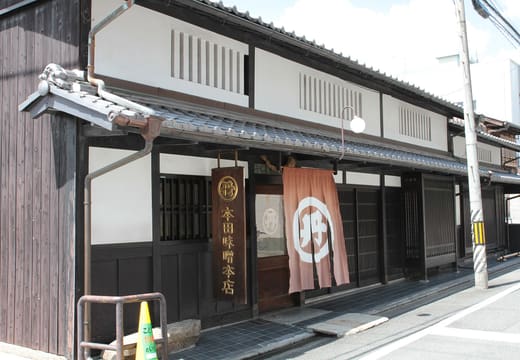
Shopping · ¥ Honda Miso Honten Honda Miso has made miso since 1830, when its founder, a Tanba brewer known for his koji, began supplying the palace kitchens. Its sweet white miso is the one the family named Saikyo miso, miso of the western capital. Pick up a few Ichiwan misoshiru, miso and fillings sealed in a wafer shell that turn into soup when you add hot water.
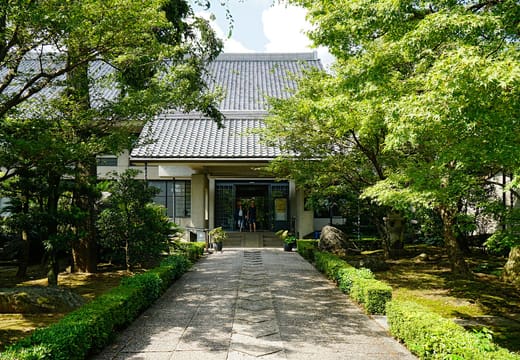
Museum · ¥ Jotenkaku Museum Shokoku-ji opened this museum in 1984 for the treasures of its own temples, Kinkaku-ji and Ginkaku-ji, five National Treasures and 145 Important Cultural Properties among them. The permanent rooms show part of Ito Jakuchu's ink screen paintings from Kinkaku-ji and a reconstruction of the Sekka-tei tea house.
Shrine · Free Kamigoryo Shrine Kamigoryo Shrine traces its start to 794, when rites were held for the spirit of Emperor Sudo, and seven more spirits were added later. The wood in its grounds, the Goryo no Mori, is where the Onin War broke out.
Museum · Free Kaninnomiya Residence Site This was the residence of the Kan'in, one of the four princely houses of the Edo period, founded in 1710, and the present building went up in 1883 as an Imperial Household office. Its free exhibition, renewed in 2022, covers the Gyoen's history, its court nobles and its nature, and a VR theatre shows the old nobles' town on a 10K screen.
Museum · ¥ Kyogashi Shiryokan Tawaraya Yoshitomi, a Kyoto confectioner since 1755, opened this small museum in 1978 to tell the story of Kyoto sweets. The pieces to see are the togei-gashi, flowers and birds modelled in sugar, along with old documents, paintings, models of sweets and the tools used to make them.
Park · Free Kyoto Gyoen Kyoto Gyoen is the park around the Imperial Palace, 1.3 km long and 700 m wide. More than 140 princely and noble houses stood here in the Edo period, and what's left is lawns, woods more than a century old and the remains of a few old gardens, among about 100,000 trees. It never closes and it's free.
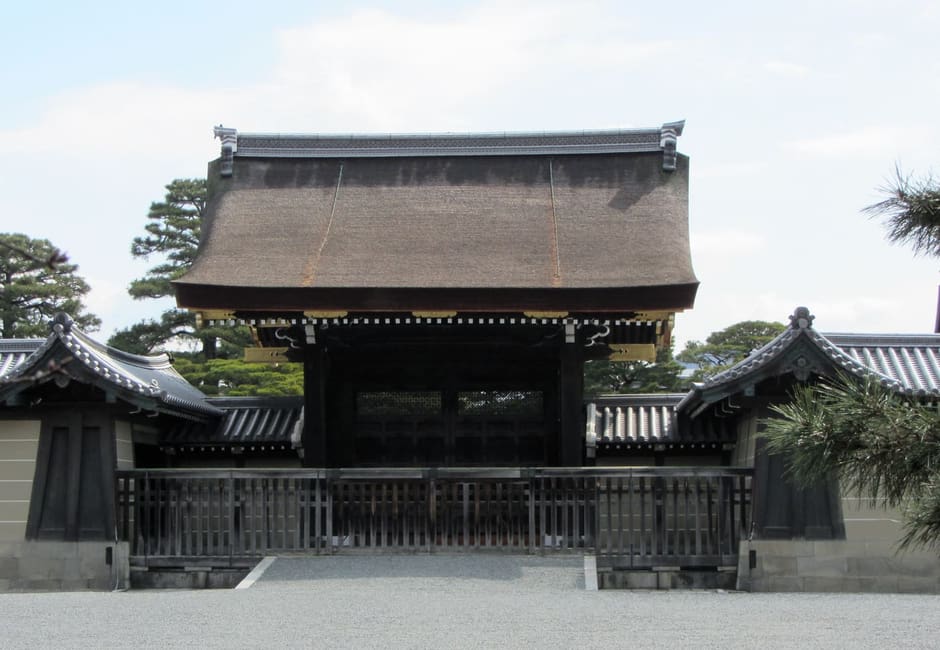
Landmark · Free Kyoto Imperial Palace Emperors lived here for about 500 years, from the 14th century until the Meiji era, and most of the buildings you see went up in 1855. You can't go inside any of them, but the walking route takes you past the Shishinden throne hall, the Kogosho and the gardens, and entry is free with no booking.
Landmark · Free Kyoto Prefectural Old Main Building Finished in 1904, this brick Renaissance-style building was the prefecture's headquarters until 1971 and still has working offices, which makes it the oldest government building in Japan in use in its original form. You can walk into the main hall, the old governor's office, the old dining room and the old assembly chamber, and it's free.
Landmark · ¥¥ Kyoto State Guest House The government opened this guest house inside Kyoto Gyoen in 2005 to receive state and official guests from abroad. It was built with sukiya carpentry, plasterwork, kirikane gold leaf, Nishijin weaving and maki-e lacquer, and the tour takes you through the Juraku-no-Ma, the Yubae-no-Ma, the Fuji-no-Ma banquet hall and the Kiri-no-Ma.
Shrine · Free Nashinoki Shrine Nashinoki Shrine was founded in 1885 for Sanjo Sanetsumu and his son Sanetomi, both statesmen of the Meiji Restoration. Its Somei well is one of Kyoto's three famous waters, and people still come to fill bottles. In late September the shrine's bush clover flowers for the Hagi Matsuri, with archery, iai sword drawing, dance and traditional music.
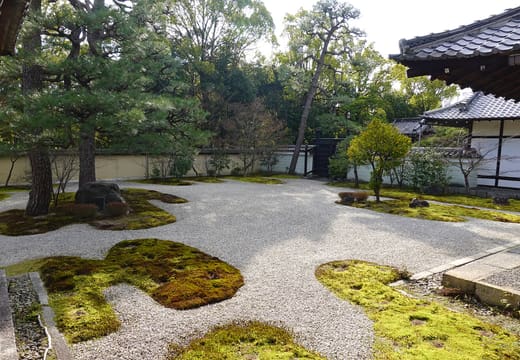
Temple · ¥ Rozan-ji Rozan-ji stands on the site of the house where Murasaki Shikibu grew up, married, raised her daughter and wrote The Tale of Genji. Its Genji garden is white sand and curving moss, and from late June to early September 1,500 to 2,000 purple bellflowers bloom in it. The temple traces its founding to 938.
Park · Free Sento Imperial Palace This second palace was built in the early 1600s for the retired Emperor Go-Mizunoo, and a fire in 1854 took most of its buildings. What's left is the big stroll garden, its tea houses and a pebble shore laid with about 110,000 flat stones, each roughly 10 cm across.
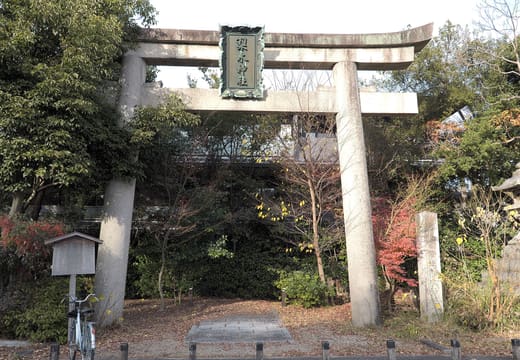
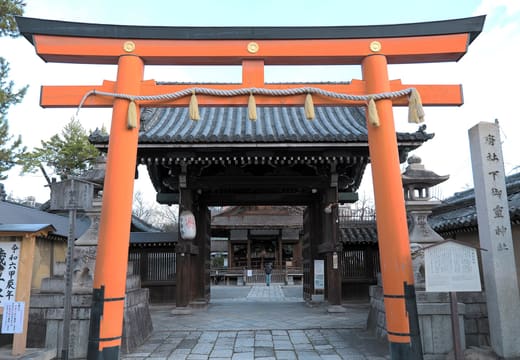
Shrine · Free Shimogoryo Shrine Shimogoryo Shrine guarded the Imperial Palace and honours eight spirits of Heian nobles who died under false charges, enshrined to calm them and keep plague away. It moved to this spot in 1590. The main hall was once the sanctuary of a temporary palace, and the front gate came from that palace's Kenreimon.
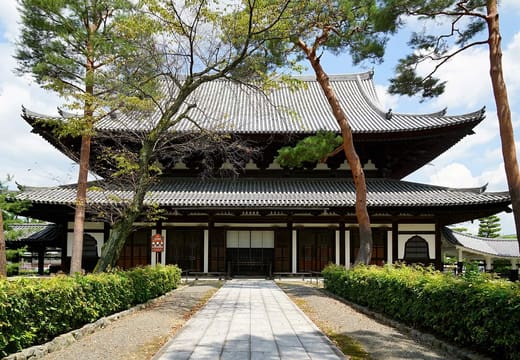
Temple · ¥ Shokoku-ji Shokoku-ji heads its own branch of Rinzai Zen, which also takes in Kinkaku-ji and Ginkaku-ji, and the shogun Ashikaga Yoshimitsu had it built, finished in 1392. Its Dharma Hall, rebuilt in 1605, is the oldest lecture hall of its kind in Japan. On the ceiling is Kano Mitsunobu's dragon, about 9 m across, known as the crying dragon.
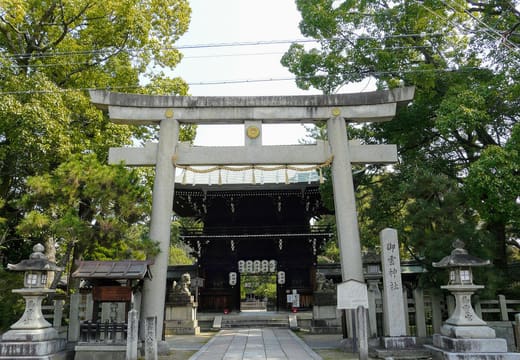
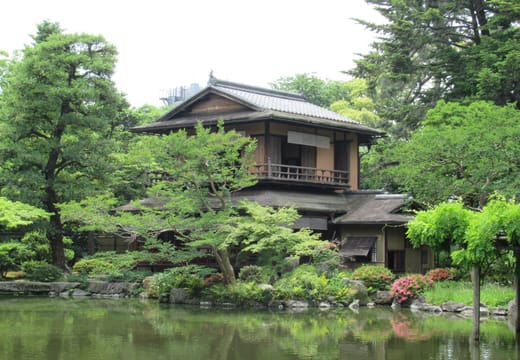
Landmark · ¥ Shusuitei Shusuitei is the only building left of the Kujo family, one of the five regent houses, put up about 200 years ago as a pavilion for tea gatherings. It keeps two tea rooms of ten and three mats, and from upstairs you look over the Kujo pond and the Takakura bridge. On the pond beside it, Itsukushima Shrine has a stone torii with a curved gable top, one of Kyoto's three unusual torii.
Cafe · ¥¥ Toraya Karyo Kyoto Ichijo Toraya, the wagashi maker founded in Kyoto in the late Muromachi period, has kept a shop here since before 1628, back when it supplied the palace. Its tea room, a short way west along Ichijo-dori, looks onto a garden with a small Inari shrine and an Edo-period storehouse, and you can read any of its 600 books on wagashi and Japanese culture.
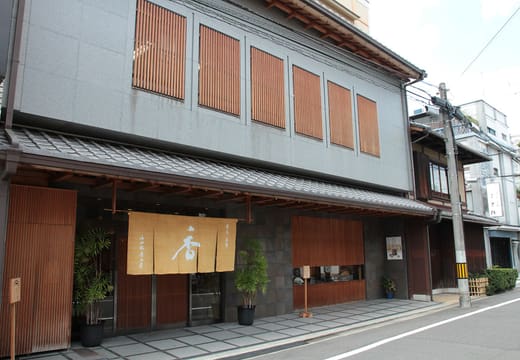
Shopping · ¥ Yamadamatsu Kobokuten Yamadamatsu has been an incense wood specialist since the Edo period, and its main shop is on Muromachi-dori, west of the palace. Besides fragrant woods you'll find incense shaped like Kyoto's seasonal flowers, cream incense and an electric burner for warming incense wood.

Stay in Imperial Palace

Browse live availability and compare prices around the neighbourhood.

See hotels near Imperial Palace on Booking.comPrices are for the night of Saturday 17 October. You can change the dates on Booking.com. If you book, Roam Kyoto earns a small commission from Stay22 at no extra cost to you.