Kyoto Station, Kyoto
Photo: Martin Falbisoner / Wikimedia Commons (CC BY-SA 4.0)
Neighbourhood guide

Kyoto Station

Free temples and late ramen a few minutes from the platforms

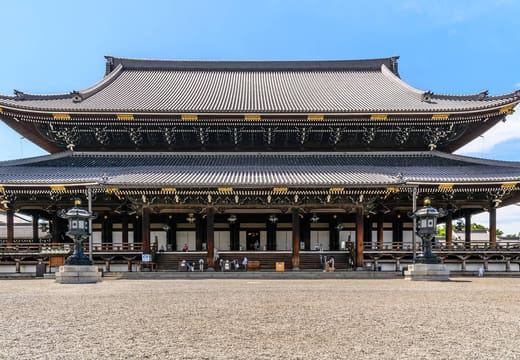
Most visitors only see Kyoto Station on the way in or out, which is a shame. Higashi Hongan-ji is 7 minutes north on foot and free, To-ji's pagoda is 15 minutes south, and at the railway museum to the west a working steam engine will pull you along. After dark, 15,000 LEDs light the station's 171-step staircase.

Kyoto Station is the city's biggest gateway, and that's the best reason to stay here. Kyoto City's tourism site puts Fushimi Inari-taisha about 10 minutes away, downtown Shijo-Kawaramachi about 20 and Arashiyama about 25. Crosta Kyoto in the basement will hold your bags on the last day, so you can check out and still fit in a temple.

It's an early neighbourhood. Nishi Hongan-ji's gates open at 5:30, Higashi Hongan-ji's at 5:50 (6:20 from November to February), and Honke Daiichi Asahi starts serving ramen at 6:00. Both temples are free and let you walk into their great halls. Come back in the evening too, when the Skyway's lit from 17:00.

Getting there

The Tokaido Shinkansen takes about 130 minutes from Tokyo on a Nozomi, the Haruka limited express about 80 from Kansai Airport, and the JR Special Rapid about 30 from Osaka. The Karasuma subway line and the Kintetsu Kyoto Line stop here too.

23 places
Gojo (Karasuma Line) · Kyoto (JR, Karasuma Line, Kintetsu) stations
Tap to open the interactive map

What to see

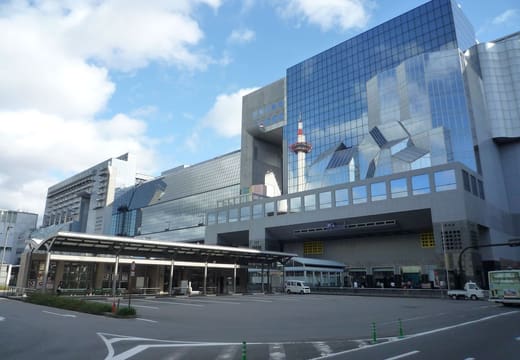
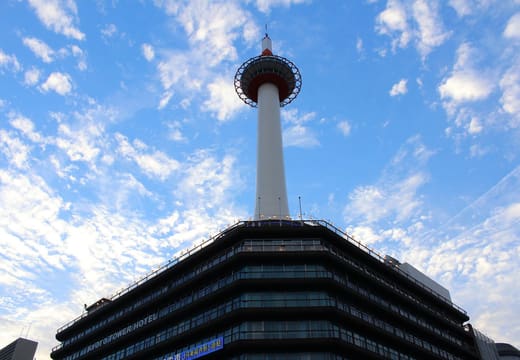
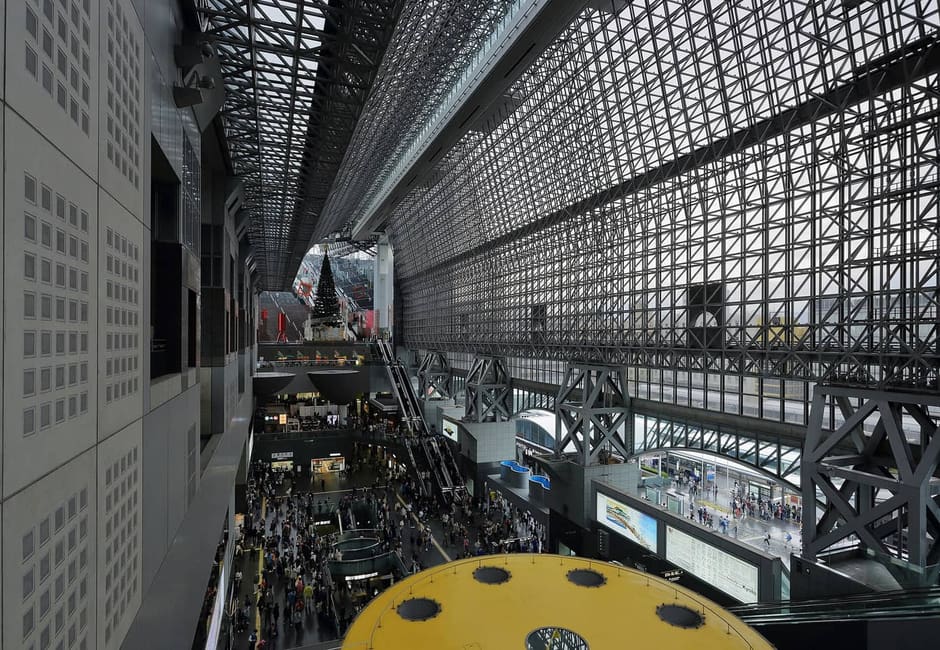
Hiroshi Hara's Kyoto Station Building opened in 1997, and its 171-step staircase climbs 35 m to a rooftop garden, which closes for building work from around late November 2026. The Skyway, a 185 m corridor on the 10th floor, looks north over the city for free until 22:00. Kyoto Tower is the white tower you'll see from the central exit. Its deck is 100 m up and costs ¥1,000.

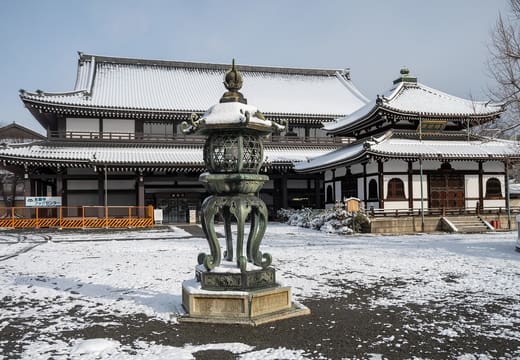
Walk north to the two Hongan-ji. Higashi Hongan-ji's great halls were finished in 1895, after the fighting of 1864 burned the old ones, and its pond garden, Shosei-en Garden, is a few blocks east (a donation of ¥700 or more). You'll find an upside-down ginkgo about 400 years old outside Nishi Hongan-ji, and the Ryukoku Museum across Horikawa-dori holds a full-size copy of a cave corridor from Bezeklik in Xinjiang.

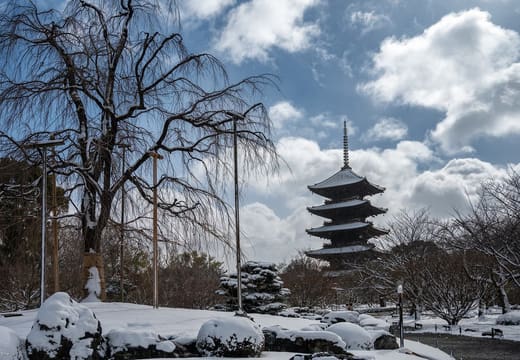
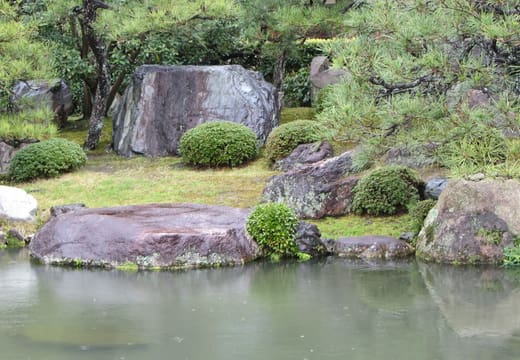
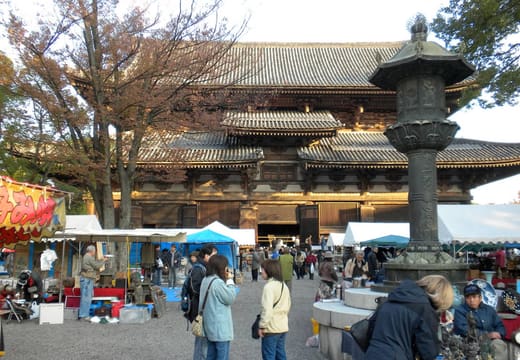
To-ji is 15 minutes on foot from the Hachijo exit. On the 21st of every month the To-ji Kobo-ichi Market fills its grounds with nearly 1,000 stalls, almost all of them trading by 8:00. Umekoji Park holds the Kyoto Aquarium and sits beside the Kyoto Railway Museum, and its Suzaku no Niwa garden (¥200, closed Mondays) has a pond that's just 1 cm of water over black granite. Shimabara Sumiya, the last surviving ageya banquet house, only opens in spring and autumn.

Where to eat and drink

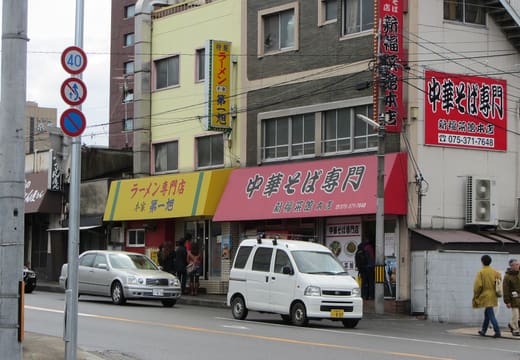
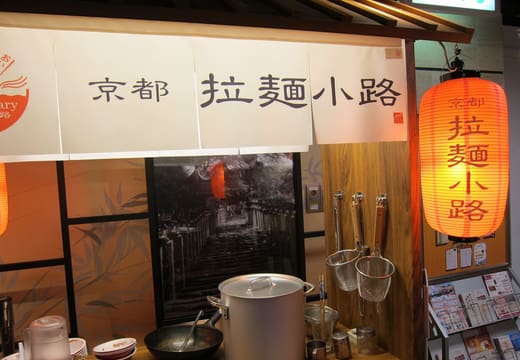
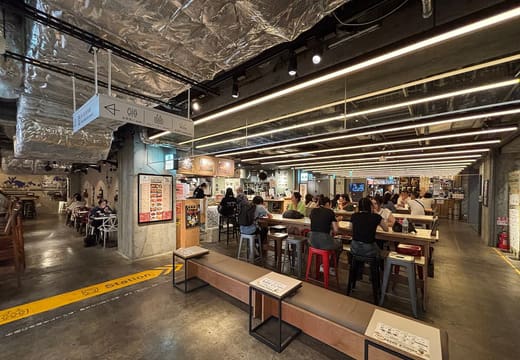
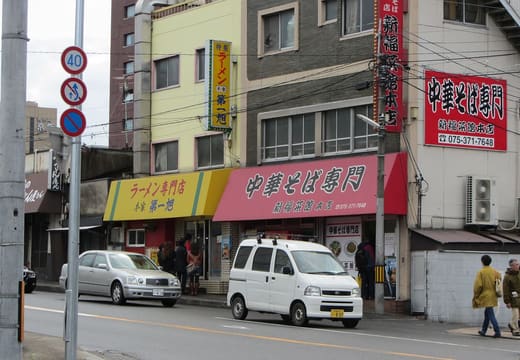
Come hungry for ramen. Kyoto Ramen Koji puts ten shops on the station building's 10th floor, from Sapporo miso to Hakata tonkotsu, and UNO RAMEN up there does vegan, gluten-free bowls. A few minutes east, two ramen shops sit a few steps apart. Shinpuku Saikan started as a street stall in 1938 and serves a soy broth so dark it surprises first-timers (¥950, cash only). Honke Daiichi Asahi's broth is clear, and it takes cards.

Kameya Mutsu, founded in 1421, bakes matsukaze, a chewy cake made with white miso. Kaikado Café, run by tea caddy makers who've worked by hand since 1875, opens at 8:00 and roasts its own coffee. Kyoto Tower Sando's basement food hall runs until 23:00, and its sushi bar cuts up a whole tuna on Saturdays at noon. Kyoto Brewing Co. Taproom, south-west of To-ji, pours its Belgian-yeast beers Wednesday to Sunday. There's no food, but you can bring your own.

Where to stay

You can sleep right on top of the trains here. Hotel Granvia Kyoto is part of the station building, and Kyoto Tower Hotel is in the tower's building, 2 minutes' walk away. Since 1 October 2026 every guest there gets a ticket to the deck. Several chains also run hotels named after the station, so you won't be short of choice.

Stay here if your trip is short or you're planning day trips. Osaka is about 30 minutes away. The catch is the crowd. Kyoto City's tourism site even tells visitors to avoid getting off at JR Kyoto Station when they can, and if you want to walk home after a night out in Gion, stay downtown instead.

How to do it in a day

Have coffee at Kaikado Café at 8:00 and be at Shosei-en Garden when it opens at 9:00. Walk on through Higashi Hongan-ji to Nishi Hongan-ji for the 11:30 tour, then get matsukaze at Kameya Mutsu if it isn't a Wednesday. After lunch, City Bus 205 or 208 from stop B3 at the station takes about 10 minutes to Umekoji Park and the Kyoto Railway Museum or the Kyoto Aquarium. On the 21st, start at the To-ji Kobo-ichi Market instead.

Come back for Kyoto Tower before the 20:30 last entry. Eat at Kyoto Ramen Koji (last orders 21:30), walk the Skyway before it shuts at 22:00, and come down the big staircase while the LEDs are on. From 31 October to 13 December 2026, swap the tower for To-ji's maple light-up (18:00 to 21:30, ¥1,000).

Temple · Free Higashi Hongan-ji The head temple of the Otani branch of Jodo Shinshu, founded here in 1602 on land Tokugawa Ieyasu gave it. Both great halls burned in the fighting of 1864, and the Goei-do and Amida-do you walk into today were finished in 1895.
Food · ¥ Honke Daiichi Asahi A 31-seat ramen shop east of the station that's open from 6:00 until 1:00. The soup is a clear soy broth with raw soy sauce from Fushimi, topped with pork from mature sows, Kyoto's Kujo green onions and mung bean sprouts.
Shopping · ¥¥¥ Kaikado Kaikado has made tea caddies by hand since 1875, when it started working tinplate imported from England. Each caddy still goes through about 130 steps, the same way as in 1875, and the shop sells them in copper, tinplate and brass.
Cafe · ¥ Kaikado Café The cafe of Kaikado, the tea caddy makers, on the Shichijo-Kawaramachi corner. The coffee is the fifth-generation owner's favourite blend, roasted in-house since 2023, and the teas include Postcard Teas from London and Marukyu Koyamaen from Kyoto. Kaikado's tins and Asahi-yaki cups are in use around the room, and the pieces on display are for sale.
Cafe · ¥ Kameya Mutsu A confectioner founded in 1421 that still makes offerings for Nishi Hongan-ji. Its matsukaze is a chewy cake of wheat flour, sugar, malt syrup and white miso, left to ferment, scattered with poppy seeds, baked as one big round in a 45.5 cm pan and cut into strips. The family's third generation is said to have created it as food for the 11-year siege of Ishiyama Hongan-ji by Oda Nobunaga.
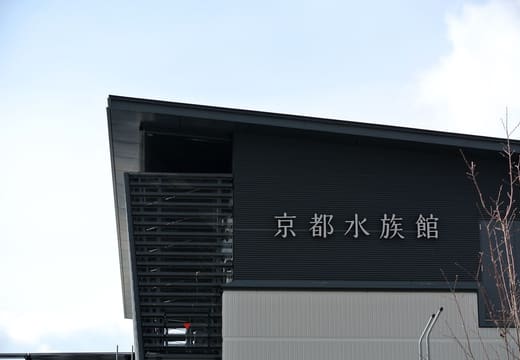
Museum · ¥¥ Kyoto Aquarium An aquarium in Umekoji Park that opened in March 2012. Its river zone recreates the upper to lower reaches of the Yura River, home to Japanese giant salamanders, a special natural monument. The jellyfish room shows about 30 kinds around a 360-degree tank called GURURI, and bottlenose dolphins perform in the stadium.
Nightlife · ¥ Kyoto Brewing Co. Taproom Kyoto Brewing Co. was started in Minami-ku in spring 2015 by three friends who'd met in Aomori, and it built its range on Belgian yeast. The taproom next to the brewery pours 200 ml and 400 ml glasses, with seats outside and in an air-conditioned room inside.
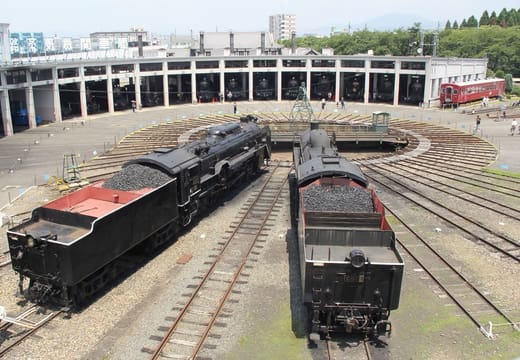
Museum · ¥¥ Kyoto Railway Museum A railway museum next to Umekoji Park that opened on 29 April 2016, with steam locomotives still in working order. The SL Steam ride pulls a coach 1 km out and back behind a real steam engine, and after the last run you can watch the locomotive turn on the turntable in the middle of the roundhouse.
Food · ¥ Kyoto Ramen Koji Ten ramen shops share the 10th floor of the station building, just south of the big staircase, and each has its own seats. The line-up runs from Sapporo miso at Men-ya Kotetsu and Yamagata's Wantanmen no Mangetsu (since 1960) to Toyama Black and Ganso Hakata Daruma's tonkotsu (since 1963), plus Kyoto's own bowls.
Landmark · Free Kyoto Station Building Kyoto's station is a sight in its own right. Hiroshi Hara won the 1991 design competition, and the building opened in 1997. A 171-step staircase climbs 35 m to a rooftop garden 59.8 m up, and the Skyway, a 185 m corridor on the 10th floor, looks north over the city.
Viewpoint · ¥ Kyoto Tower Kyoto Tower, officially Nidec Kyoto Tower, is 131 m tall and sits on top of a nine-storey building across from the station's central exit. Its shape is meant as a lighthouse over a sea of tiled roofs. Mamoru Yamada designed it, and it opened on 28 December 1964. The deck at 100 m looks over the whole city to the mountains on three sides.
Shopping · ¥ Kyoto Tower Sando The bottom three floors of the Kyoto Tower building, opened in April 2017. The basement is a food hall that runs to 23:00, with counters for gyoza, dashi rice bowls, Torisei yakitori and conveyor-belt sushi. The ground floor sells Kyoto sweets and souvenirs, and upstairs you can book a wagashi or sushi-making class.
Temple · Free Nishi Hongan-ji The head temple of the Hongwanji branch of Jodo Shinshu, and part of the Historic Monuments of Ancient Kyoto World Heritage listing since 1994. The Goei-do, rebuilt in 1636, measures 62 m by 48 m, and you can walk in and sit on its tatami. Out front, a ginkgo of about 400 years spreads its branches like roots, which is why it's called the upside-down ginkgo.
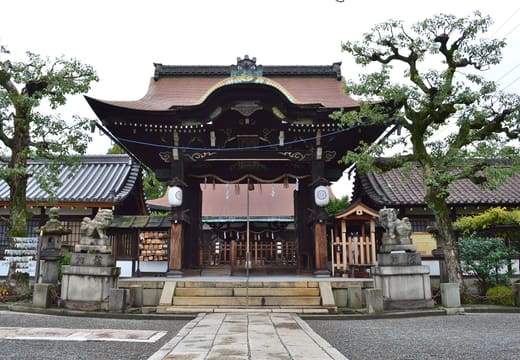
Shrine · Free Rokusonno Shrine Rokusonno Shrine was built in front of the grave of Minamoto no Tsunemoto, a grandson of Emperor Seiwa whose descendants include Minamoto no Yoritomo and the Ashikaga and Tokugawa clans. His son Mitsunaka built the first shrine here in the mid-Heian period, and the present halls went up again under the fifth Tokugawa shogun, Tsunayoshi.
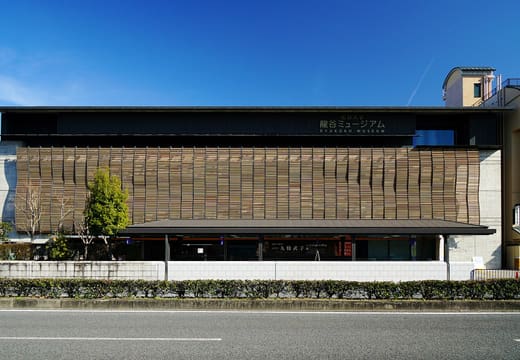
Museum · ¥ Ryukoku Museum Ryukoku University's museum stands on Horikawa-dori facing Nishi Hongan-ji and puts on exhibitions on the history of Buddhism, from its start in India to Japan. Don't miss the full-size reconstruction of the corridor of Cave 15 at Bezeklik, near Turfan in Xinjiang, about 15 m long and 3.5 m high, with nine murals of about 3 m each.
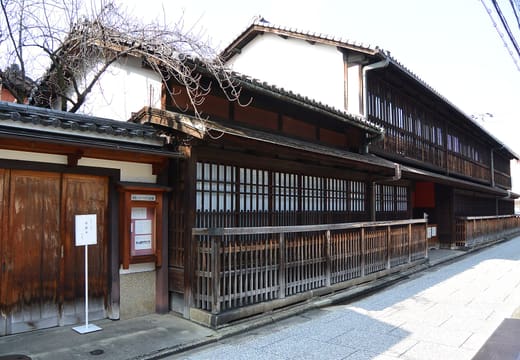
Museum · ¥ Shimabara Sumiya Sumiya is the last surviving ageya, an Edo-period banquet house where hosts fed and entertained guests with taiyu and geiko sent over from the okiya. The Nakagawa family has run it since Shimabara, Kyoto's old licensed hanamachi, moved here in 1641. It was enlarged in 1787 and listed as an Important Cultural Property in 1952.
Food · ¥ Shinpuku Saikan Shinpuku Saikan started as a street stall in 1938 and still serves chuka soba in a soy broth so dark it surprises first-timers. It's a few minutes east of Kyoto Station, a few steps from Honke Daiichi Asahi.
Park · ¥ Shosei-en Garden Higashi Hongan-ji's own pond garden, a few blocks east of the temple. It began in 1653 as a retirement villa for the temple's 13th head, the layout is credited to Ishikawa Jozan, and it's been a national Place of Scenic Beauty since 1936. You'll also hear it called Kikoku-tei, after the trifoliate orange hedges planted round it.
Temple · ¥ To-ji When Heian-kyo became the capital in 794, the only temples allowed in it were To-ji and its twin, Sai-ji, built either side of the main gate, Rashomon. Sai-ji and the gate are long gone, and To-ji is all that still stands of Heian-kyo. In 823 Emperor Saga handed it to Kukai, and his Kodo hall holds a three-dimensional mandala of statues. The pagoda, about 55 m tall, is the fifth on the spot, rebuilt in 1644.
Market · Free To-ji Kobo-ichi Market On the 21st of every month, Kobo-san's day, nearly 1,000 stalls fill To-ji's grounds. It started over 700 years ago as tea stalls for pilgrims at the monthly Mieku service for Kukai. Then came stalls selling dango, firewood, charcoal and pots.
Park · Free Umekoji Park Umekoji Park is 13.7 hectares of lawns, play areas and woods a 15-minute walk west of Kyoto Station, open since 1995, with the aquarium in its grounds and the railway museum next door. Its Suzaku no Niwa garden was built for the capital's 1,200th anniversary. Its pond is just 1 cm of water over black granite, so the whole pond works as a mirror, and its 6 m waterfall is the biggest in central Kyoto.
Sento · ¥ Goko-yu Goko-yu is a two-floor sento near Omiya-Gojo. Upstairs are a hot steam sauna and a far-infrared one, a cold bath of well water, and a bath with Bad Gastein radium ore sunk in the tub, indoors but open to the outside air, so it feels like an outdoor bath. Downstairs there are six more baths. The herbal bath changes about once a week, and a snack counter sells draught beer for afterwards.
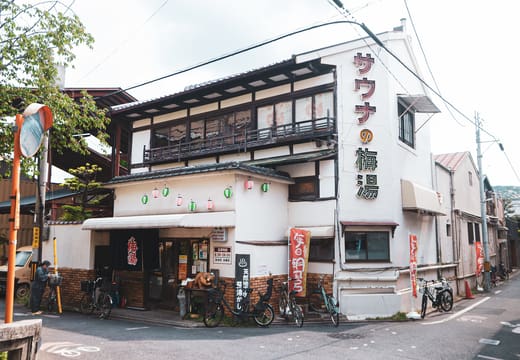
Sento · ¥ Sauna no Umeyu Umeyu sits on the Takase canal, a 15-minute walk from Kyoto Station, under a big neon sign that lights up red, yellow and green at night. The "sauna" in its name supposedly dates from when the sign went up and a sento with a sauna was still rare. Yutonamisha, a company that takes over sento to keep them open, has run it since 2015, when it was about to close, and both sides have a dry sauna, a cold bath, an electric bath and a herbal bath.

Stay in Kyoto Station

Browse live availability and compare prices around the neighbourhood.

See hotels near Kyoto Station on Booking.comPrices are for the night of Saturday 17 October. You can change the dates on Booking.com. If you book, Roam Kyoto earns a small commission from Stay22 at no extra cost to you.