Kinkakuji, Kyoto
Photo: John Mason / Flickr (CC BY 4.0)
Neighbourhood guide

Kinkakuji

Three World Heritage temples on one road under Mount Kinugasa

Kinkaku-ji, Ryoan-ji and Ninna-ji all sit on Kinukake-no-Michi, a road that climbs about 2.5 km from Omuro-Ninnaji Station up to the Golden Pavilion. Start at Ryoan-ji, which opens at 8:00 from March to November, an hour before Kinkaku-ji. South of the road, Myoshin-ji's grounds don't close at all, and they hold more than 40 subtemples.

This is the city's north-west edge. Toji-in, which Ashikaga Takauji founded in 1341, became the shoguns' family temple, and Yoshimitsu began the villa that's now Kinkaku-ji in 1397. Ninna-ji is older. Emperor Uda finished it in 888, and imperial princes were its head priests until 1867. The road's named after Mount Kinugasa, a 201-metre hill between Ryoan-ji and the Insho-Domoto Museum of Fine Arts.

Come in late October if you can. Waratenjin Shrine's autumn festival, with kyogen and a tea seat, is on 25 October 2026, the museum reopens on 15 October with Muses, and Ninna-ji's light-up runs on Fridays, weekends and holidays from 24 October to 13 December (¥2,800). In spring you'll want early to mid April, when the low Omuro cherries flower.

Getting there

From Kyoto Station, take the Karasuma Line subway to Kitaoji (about 15 minutes), then City Bus 204 or 205 from the blue stops to Kinkakuji-michi (about 11 minutes). The JR Sagano Line runs to Emmachi (7 to 11 minutes) for the same buses, and to Hanazono, five minutes' walk from Myoshin-ji's south gate.

14 places
Kitano-Hakubaicho (Randen Kitano Line) · Ritsumeikan Daigaku-mae bus stop (City Bus 12, 50, 59) stations
Tap to open the interactive map

What to see

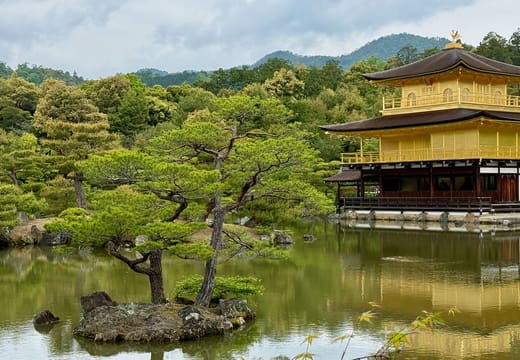
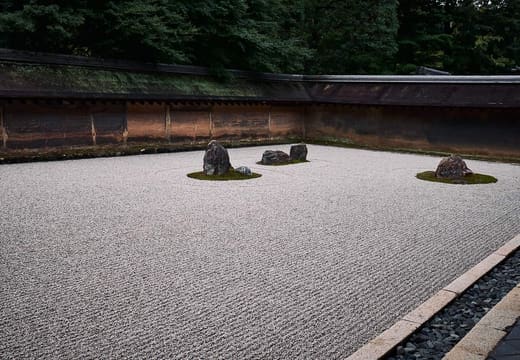
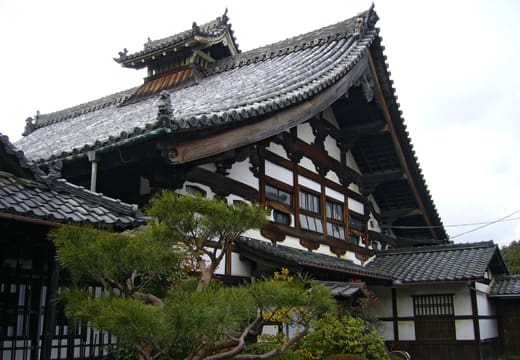
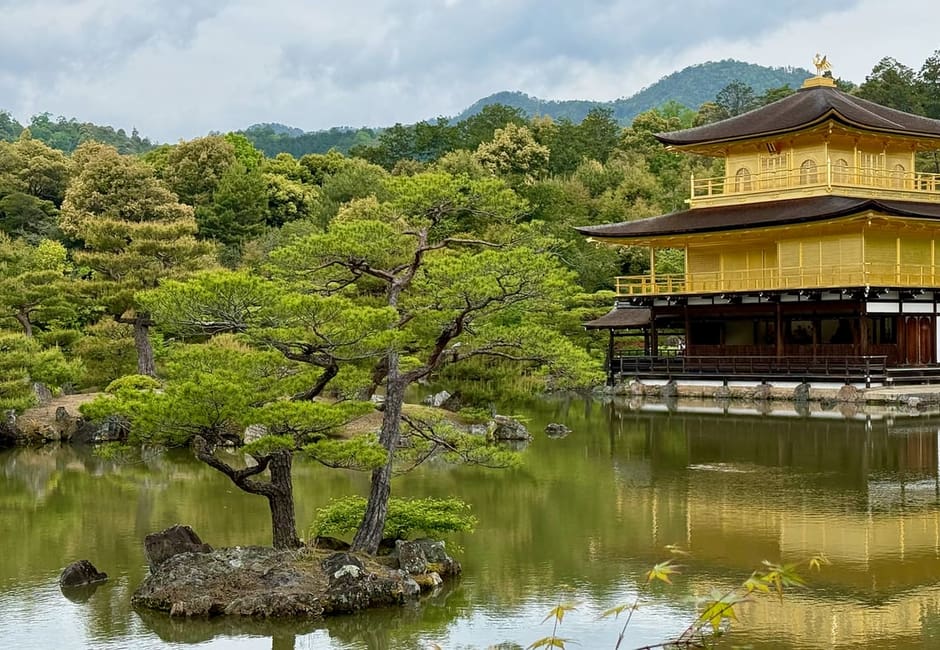
Kinkaku-ji's formal name is Rokuon-ji, and each floor of the pavilion is built in a different style, from palace to samurai house to Zen hall. At Ryoan-ji, don't just count the stones. The garden tilts slightly towards the far left corner so the rain drains off, and the right-hand wall slopes down towards the far end, which makes the garden look deeper.

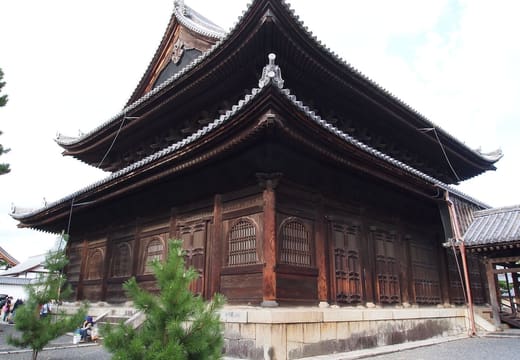
Ninna-ji's Kondo was once the Shishinden, the Imperial Palace's ceremonial hall, moved here between 1624 and 1643, and it's the oldest one still standing. Outside cherry season you can walk the grounds for free, and the Goten palace and garden cost ¥800. Toji-in keeps wooden statues of the Ashikaga shoguns (and one of Tokugawa Ieyasu) in its Reikoden hall, and Takauji's grave is a stone pagoda behind the abbot's hall.

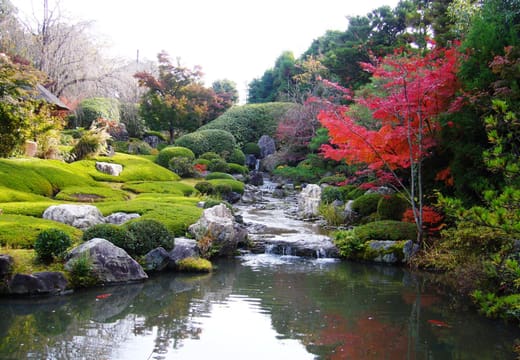
Myoshin-ji heads a Rinzai Zen school of about 3,300 temples, and Kano Tan'yu's dragon looks down from its Hatto ceiling (¥500, tickets until 15:30). Taizo-in has a dry garden by the painter Kano Motonobu and a pond garden you walk around. Keishun-in has four gardens and gold sliding doors by Kano Sansetsu. If it's raining, try the Insho-Domoto Museum of Fine Arts or the Kyoto Museum for World Peace, a couple of hundred metres apart.

Where to eat and drink

Most of what you'll eat here is lunch or tea. Mancho faces Myoshin-ji's north gate and does the two-tier Tsurezure bento (¥3,960), named after the essays of Yoshida Kenko, who lived nearby. Book if you're coming after 17:00. Fruit Parlor Cricket, across Nishioji-dori from Hirano Shrine, has been a fruit specialist since 1974. Get the jelly in a hollowed-out grapefruit (¥900 on its price list) and squeeze the peel lid over it.

The temples do the tea. Taizo-in serves matcha with Kore Nanzo, a gourd-and-catfish sweet served only at its tea seat (¥900), and Keishun-in pours matcha with a seasonal sweet for ¥800. Evenings are quiet. TENJIN's bar at ROKU KYOTO has live music on Saturday nights, and in autumn Ninna-ji's light-up runs until 21:00.

Where to stay

You won't find many beds here. Kyoto City's register of licensed lodgings (end of July 2026) lists fewer than 20 from Kinkaku-ji down to Hanazono, and several belong to temples. Hanazono Kaikan, the temple hotel beside Myoshin-ji, has 81 rooms, a big bath and electric bikes to rent, and Shunko-in runs overnight stays. Up the hill there's Aman Kyoto, with private onsen, and ROKU KYOTO, LXR Hotels & Resorts, 15 minutes' walk from the Kinkakuji-michi bus stop.

Stay here if you'd like Ryoan-ji at 8:00 without a bus ride first, or a calm place to sleep on a return trip. The catch is getting around. Buses from Kyoto Station get crowded and stuck in traffic, and the temples close by 17:00, so if you want dinner in Gion and a walk home, sleep downtown.

How to do it in a day

Be at Ryoan-ji for 8:00 (8:30 from December to February) and give it the 30 to 40 minutes the temple suggests. Then walk up Kinukake-no-Michi to Kinkaku-ji, where you'll need about 45 minutes. Waratenjin Shrine is a 10-minute walk south, and the old saying goes that a knot in its straw charm means a boy. Fruit Parlor Cricket opens at 10:00, further down Nishioji-dori.

Walk west to Toji-in for a matcha by the pond, then ride the Randen to Omuro-Ninnaji. See Ninna-ji's Kondo and have lunch at Mancho, five minutes away. Spend the afternoon at Myoshin-ji. Buy your Hatto ticket before 15:30, see Taizo-in and Keishun-in, and take the JR Sagano Line home from Hanazono. Rather walk? Swap Myoshin-ji for the Omuro 88 Pilgrimage Trail, which starts north of Ninna-ji's Kondo.

Cafe · ¥ Fruit Parlor Cricket Fruit Parlor Cricket has been a fruit specialist since 1974, opened by an owner who traded at Kyoto's central wholesale market. Order the jelly served in a hollowed-out grapefruit, orange or lemon, with the peel as its lid. It's made less sweet on purpose, so you eat it with the whipped cream on the side and squeeze the lid over the top.
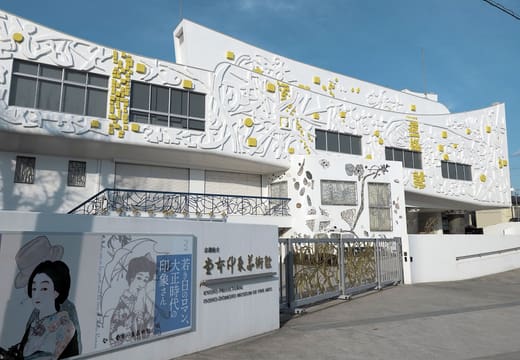
Museum · ¥ Insho-Domoto Museum of Fine Arts The painter Domoto Insho designed this museum himself, inside and out, and opened it in 1966. His patterns cover the outer walls, the door handles, the stained glass and 18 kinds of garden chairs, and the building became a registered Tangible Cultural Property in 2025. The shows rotate through his own work, made on the idea that true tradition means breaking with it.
Temple · ¥ Keishun-in Keishun-in is a small Myoshin-ji subtemple with four gardens by Gyokuenbo, a pupil of Kobori Enshu, laid out to trace a monk's path to enlightenment. Its founder, Tsuda Hidenori, was Oda Nobunaga's grandson, and the buildings have kept the same shape for about 400 years. The gold sliding doors of pine and a crescent moon are by the Edo painter Kano Sansetsu.
Temple · ¥ Kinkaku-ji Kinkaku-ji's formal name is Rokuon-ji, and it started life as the retirement villa of the shogun Ashikaga Yoshimitsu, who began building here in 1397. The pavilion's top two floors are covered in pure gold leaf over lacquer, there's a phoenix on the roof, and the garden around it centres on the Kyoko-chi pond, about 6,600 square metres. Each floor is built in a different style, from palace to samurai house to Zen hall.
Museum · ¥ Kyoto Museum for World Peace Ritsumeikan University opened this museum in 1992 and calls it the world's first peace museum run by a university. The permanent exhibition, rebuilt for the reopening in September 2023, starts with a timeline, then turns to four themes, from Japan's colonies and occupied lands and the harm Japan both did and suffered in the Fifteen Years' War to human security and world peace.
Food · ¥¥ Mancho Mancho is a Kyoto cuisine restaurant facing Myoshin-ji's north gate, about five minutes' walk from Ninna-ji. The house special is the Tsurezure bento, two tiers of seasonal dishes with sashimi and soup, named after Tsurezuregusa, the essays of Yoshida Kenko, who lived nearby at Narabigaoka.
Temple · ¥ Myoshin-ji Myoshin-ji is the head temple of a Rinzai Zen school of about 3,300 temples, and more than 40 subtemples stand in its grounds. In the Hatto hall, Kano Tan'yu's dragon looks down from the ceiling, and the hall also keeps a temple bell that's a National Treasure. Look out for the Edo-period bathhouse, known as the Akechi bath, built to pray for Akechi Mitsuhide.
Temple · ¥ Ninna-ji Emperor Uda finished Ninna-ji in 888, and imperial princes served as its head priests until 1867. The Kondo main hall is the oldest surviving Shishinden, the ceremonial hall of the Imperial Palace, moved here between 1624 and 1643 and now a National Treasure. The five-storey pagoda went up in 1644, and in early to mid April the low, late-blooming Omuro cherries flower inside the middle gate.
Viewpoint · Free Omuro 88 Pilgrimage Trail Behind Ninna-ji, a 3 km path loops over Mount Joju past 88 small halls, a copy of Shikoku's 88-temple pilgrimage. In 1827 a Ninna-ji head priest had sand brought back from each Shikoku temple and buried under the halls, so people who couldn't make the trip could walk this one. On a clear day you can see over the city as far as Fushimi.
Temple · ¥ Ryoan-ji Ryoan-ji's rock garden is 15 stones set in 248 square metres of white sand, and nobody knows what its maker meant by them. Hosokawa Katsumoto founded the temple in 1450 on a villa of the Tokudaiji family, and the garden probably dates from 1499, when the abbot's hall was built. The earthen wall around it is 180 cm high, made of clay mixed with rapeseed oil.
Temple · ¥¥¥ Shunko-in Shunko-in is a Myoshin-ji subtemple founded in 1590 by Horio Yoshiharu, later the first lord of Matsue. It keeps the Nanbanji bell, an Important Cultural Property, and a front garden laid out to stand for the Ise shrines and Ise Bay. The temple and garden aren't open for ordinary visits, so you come here for Zen sessions in English with the priest Takafumi Zenryu Kawakami.
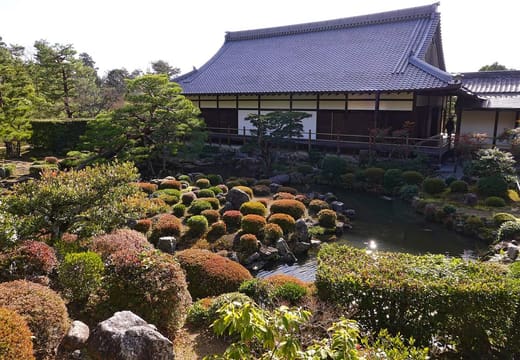
Temple · ¥ Taizo-in Taizo-in is one of the oldest of Myoshin-ji's subtemples, founded around 1404, and it has two very different gardens. The dry Motonobu garden was laid out by the painter Kano Motonobu, while the Yoko-en is a pond garden you walk around. Near the abbot's hall hangs a copy of Josetsu's Hyonen-zu, a National Treasure the temple calls the oldest ink painting in Japan.
Temple · ¥ Toji-in Ashikaga Takauji founded Toji-in in 1341 at the foot of Mount Kinugasa, and it became the family temple of the Ashikaga shoguns. The Reikoden hall holds wooden statues of the shoguns, and one of Tokugawa Ieyasu, and Takauji's grave is a stone pagoda behind the abbot's hall. The Fuyo pond, in a garden said to be by Muso Soseki, is shaped like a lotus flower.
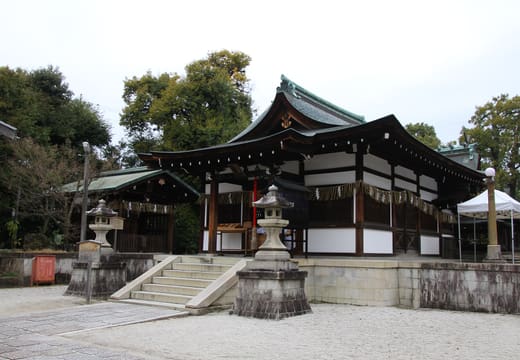
Shrine · Free Waratenjin Shrine Waratenjin, formally Shikichi Jinja, is the shrine people visit to pray for a safe birth. Its charm holds a piece of straw, and the old saying goes that a knot in the straw means a boy and no knot means a girl. The shrine believes it was founded before Kyoto became the capital.

Stay in Kinkakuji

Browse live availability and compare prices around the neighbourhood.

See hotels near Kinkakuji on Booking.comPrices are for the night of Saturday 17 October. You can change the dates on Booking.com. If you book, Roam Kyoto earns a small commission from Stay22 at no extra cost to you.