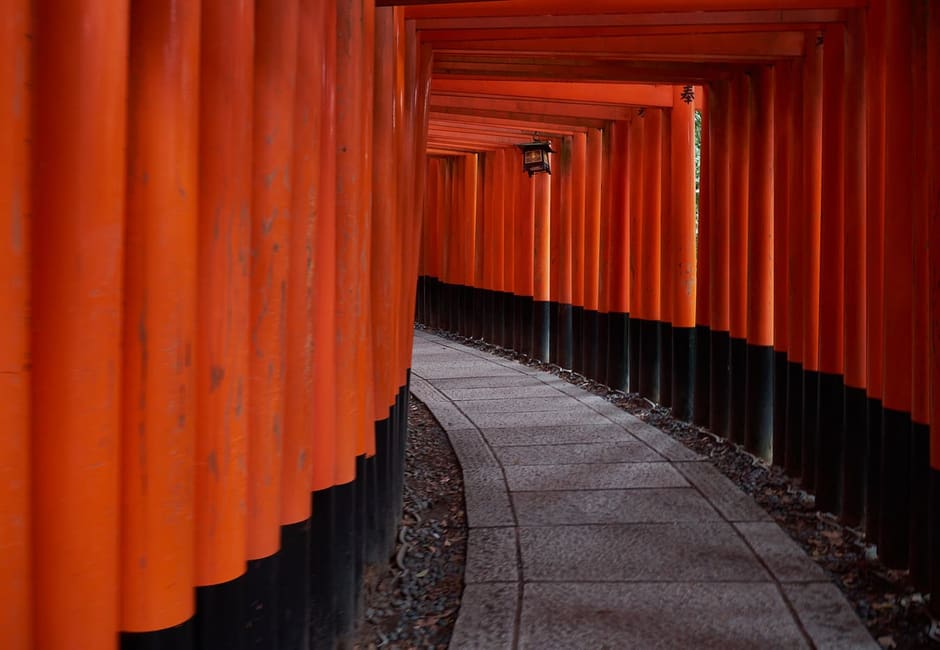
Fushimi
Torii tunnels at dawn, then sake by the old castle moat
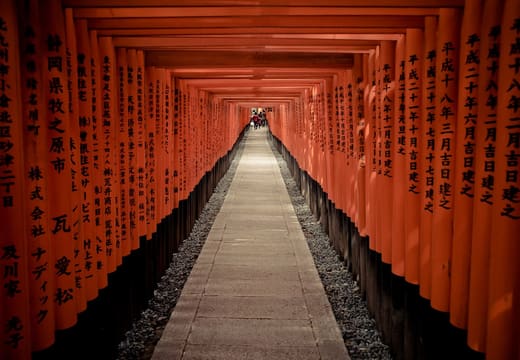
Fushimi is two trips in one. In the north, about 10,000 torii line the paths up Mount Inari behind Fushimi Inari Taisha, and the grounds never close, so you can walk them at dawn. Five stops south on the Keihan line, about 20 breweries still make sake in the old river port, and you can taste most of them in one alley.
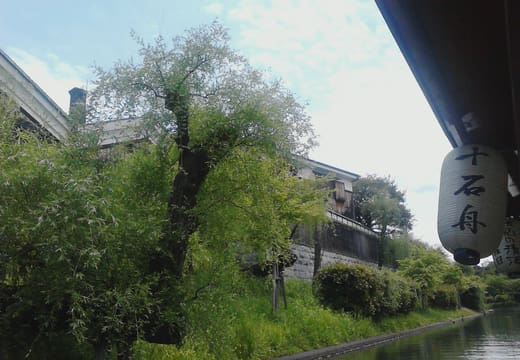
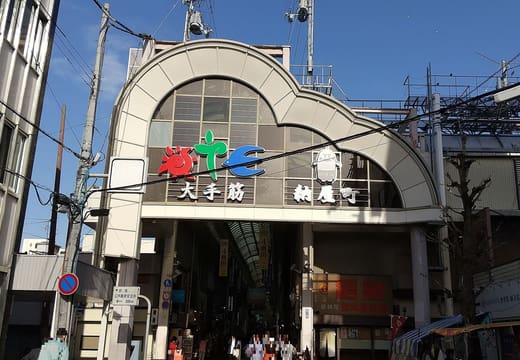
Fushimi sits on the old road between Kyoto and Osaka and was once an important river port. Toyotomi Hideyoshi's Fushimi Castle stood on the hill above. The Otesuji Shopping Arcade follows a street laid out in 1594 from the castle's main gate, and the canal through the brewery quarter was its outer moat.
The two halves keep different hours. The shrine never closes and it's free, so you can be there at 6:00 or after dark. The Fushimi Sake District runs on shop hours. The Gekkeikan museum's last entry is at 16:00, and Torisei Honten's last orders are at 21:30. Jikkokubune boats run on the canal from late March to early December.
Getting there
The JR Nara Line takes about 9 minutes from Kyoto Station to Inari, right by the shrine's big red torii. For the sake district, take the Kintetsu Kyoto Line to Momoyama-Goryomae (about 10 minutes) or Keihan from Gion-Shijo to Fushimi-Momoyama. Limited expresses don't stop at either station.
What to see
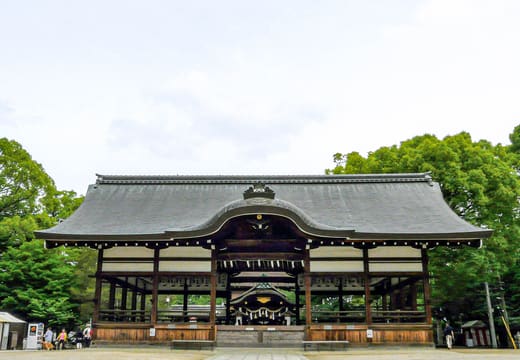
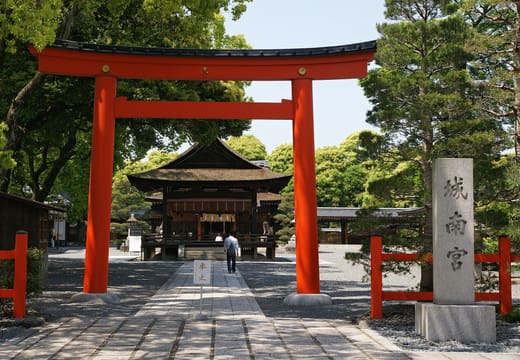
Fushimi Inari Taisha is the head shrine of Japan's roughly 30,000 Inari shrines. People were giving torii as prayers or thanks by the start of the Edo period, and you'll walk through tunnels of them up the mountain. The main hall dates from 1499. Eat only in the marked rest areas, and don't stop for photos where the paths narrow. Fujinomori Shrine, a short walk from Keihan's Sumizome Station, has stone walls from Fushimi Castle, and riders perform kakeuma stunts there on 5 May.
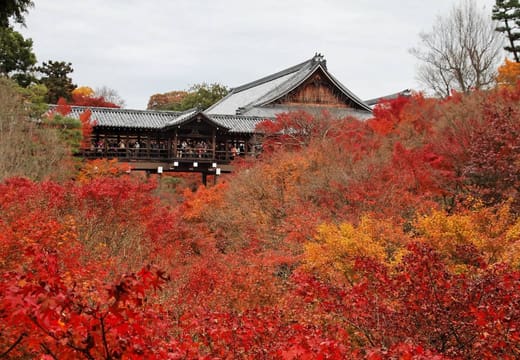
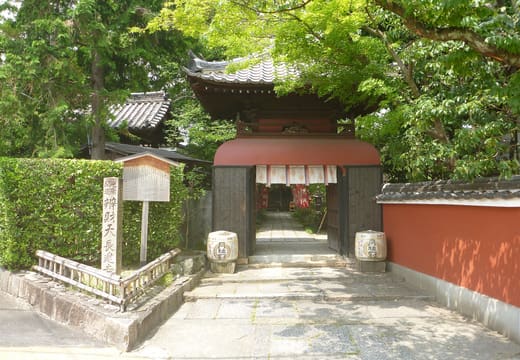
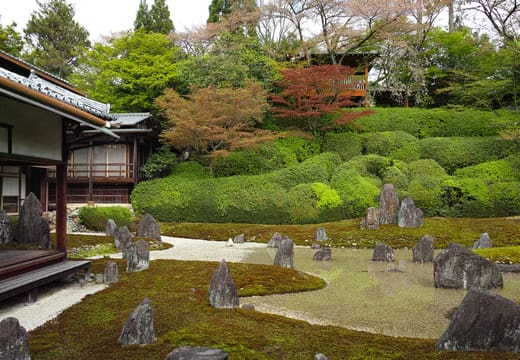
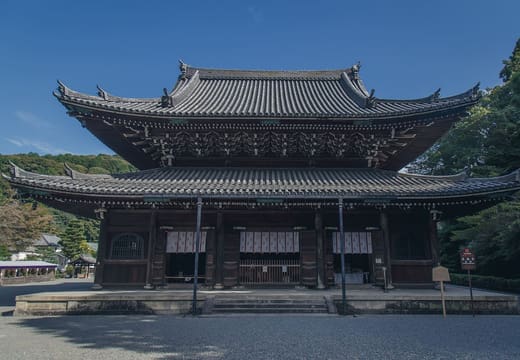
Tofuku-ji is one JR stop north of Inari (strictly, it's in Higashiyama Ward). Shigemori Mirei made the four gardens round its Hojo in 1939, and his moss and white-sand garden at Komyo-in opens at about 7:00, well before Tofuku-ji. Sennyu-ji, the imperial family's temple, is a 15 to 20 minute walk east of Tofukuji Station, with a Kano Tanyu dragon on its Buddha hall ceiling.
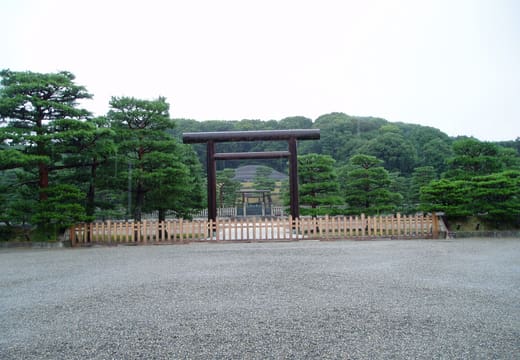
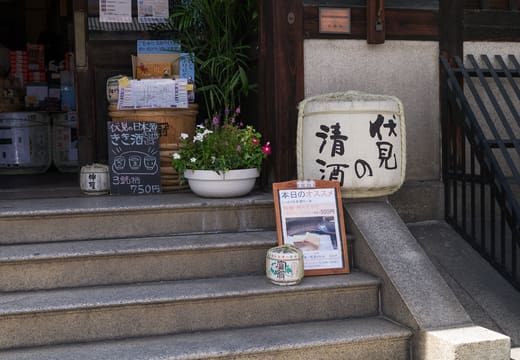
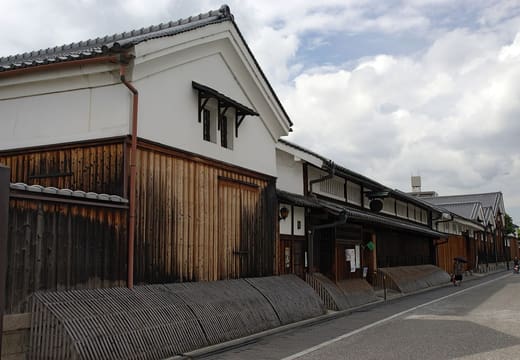
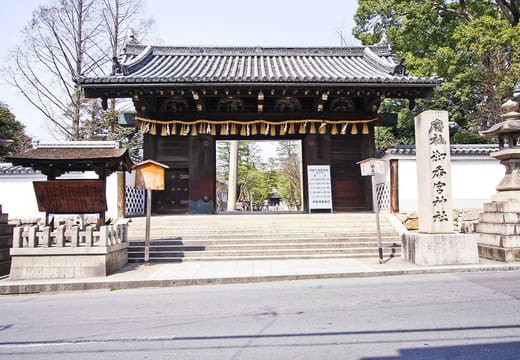
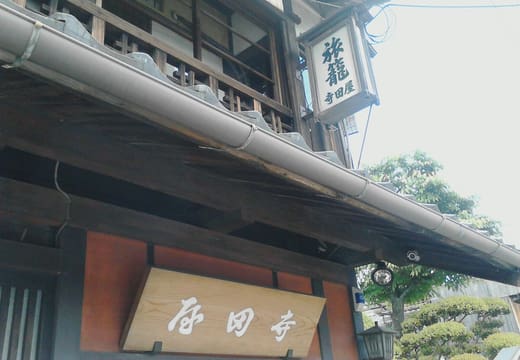
In the sake district, the Gekkeikan Okura Sake Museum (¥600, no cash) fills a 1909 storehouse and ends with a tasting. Gokonomiya Shrine's spring is one of the Environment Ministry's 100 best, and you can fill a bottle there from 7:00 to 19:00. Teradaya, the inn where Sakamoto Ryoma escaped an attack in 1866, was rebuilt after it burned in 1868. Further out, you can climb 230 steps to Fushimi Momoyama Mausoleum or catch Jonangu's weeping plums, which flower from mid February.
Where to eat and drink
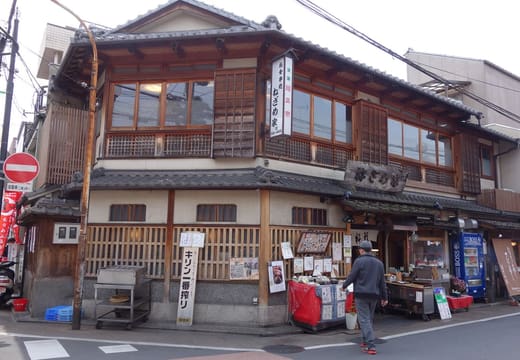
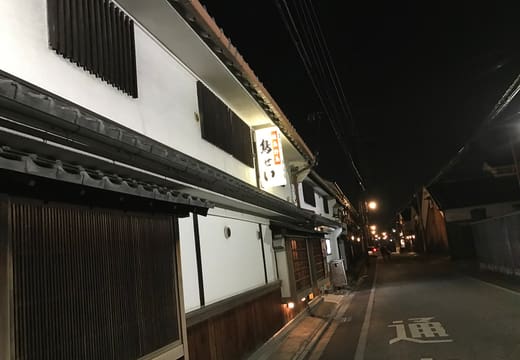
Nezameya has fed pilgrims on the shrine approach for 500 years, by its own count. You have to order at least one dish, from inari-zushi and saba-zushi to grilled quail. Torisei Honten, the brewer Yamamoto Honke's chicken restaurant, pours unpasteurised genshu straight from the tank (it's closed on Mondays). A few doors away, Tsuki no Kurabito makes its hotpot broth with a whole bottle of Gekkeikan daiginjo, in a 1913 rice-polishing mill.
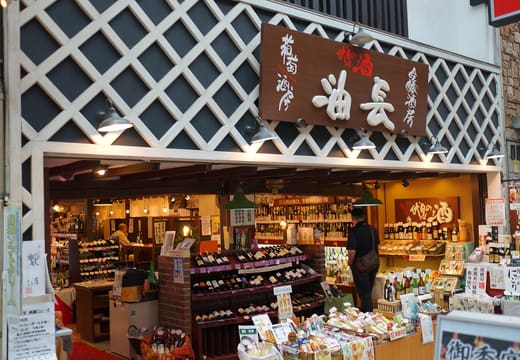
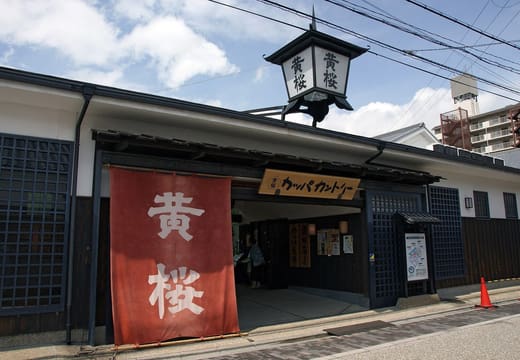
Fushimi Sakagura Koji puts eight restaurants and its sake counter in one alley between the Otesuji and Nayamachi arcades, and it all goes on one bill. On Otesuji, Aburacho lets you taste three cups at a time (¥160 to ¥1,290 a cup), and the owner speaks English. It's shut on Tuesdays, like Kizakura Kappa Country, which brews beer on site. Fushimi Yume Hyakushu, in Gekkeikan's former head office (1919), serves a Fushimi sake tasting set, with last orders at 16:30.
Where to stay
There aren't many beds in Fushimi. At the end of July 2026, Kyoto City's register of licensed places to stay listed 183 in all of Fushimi Ward, against 956 in Shimogyo Ward, and most are licensed as simple lodgings (guesthouses, hostels and rented houses) rather than hotels. About half are within a kilometre of the shrine, round Inari and Fushimi-Inari stations. There are about 15 within a kilometre of the Gekkeikan museum.
Stay by the shrine if you want the torii at first light. The sake district suits a slow evening, with dinner in a storehouse and no train to catch. If you'd rather have a big hotel and more choice, sleep near Kyoto Station and come down for the day.
How to do it in a day
Take an early JR train to Inari and give Mount Inari two hours. Come down for an early lunch at Nezameya, which opens at 10:00. Then ride the Keihan five stops to Fushimi-Momoyama, or stop at Sumizome on the way for Fujinomori Shrine. Fill a bottle at Gokonomiya Shrine, walk through the Otesuji Shopping Arcade and reach the Gekkeikan Okura Sake Museum before its 16:00 last entry.
In season, take a Jikkokubune boat along the canal, then look round Teradaya. Taste at Aburacho before it shuts at 20:00, and eat at Torisei Honten or in Fushimi Sakagura Koji, both open until 22:00. Don't come on a Monday or Tuesday, when one of them is shut. From 14 November to 6 December, start instead at Komyo-in at about 7:00 and Tofuku-ji at 8:30, then take the JR one stop to Inari.
Nearby neighbourhoods
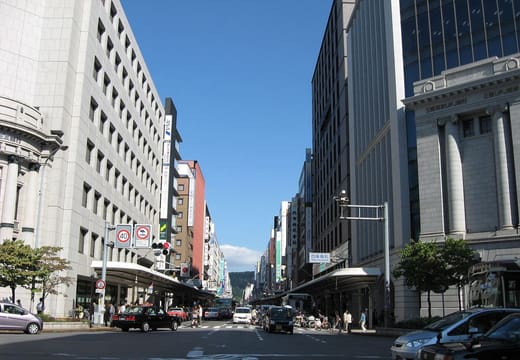
The best of Fushimi
Things to do in Fushimi
Stay in Fushimi
Browse live availability and compare prices around the neighbourhood.
See hotels near Fushimi on Booking.comPrices are for the night of Saturday 17 October. You can change the dates on Booking.com. If you book, Roam Kyoto earns a small commission from Stay22 at no extra cost to you.