Kurama and Kibune Day Trip from Kyoto: Eizan Line, Hike, Kawadoko
Kurama and Kibune are a half-day mountain walk on the Eizan line. What 16 guides recommend, the fare, the temple fee, the hours and when kawadoko runs.
The short answer. Yes, it’s worth a half day, and it’s the one day trip from Kyoto that’s mostly a walk. Take the Eizan line from Demachiyanagi to Kurama, climb through Kurama-dera and over the ridge to Kibune, eat there, and ride back from Kibuneguchi. The Kyoto City Tourism Association gives about 30 minutes to Kurama, and Eizan’s English page gives 470 yen for an adult as of November 2026.
Roam Kyoto read 16 guides on this trip, in English, Spanish, German, French and Japanese. They agree on the route and on what to stop for, and they split on which way to walk it. Roam Kyoto is a data platform as well as a guide: put your dates into the map and it shows events for those days, read from organisers’ own pages. Fares, hours and fees below come from the railway’s, the temple’s and the shrine’s own pages, with the date they were read.
What the guides agree on
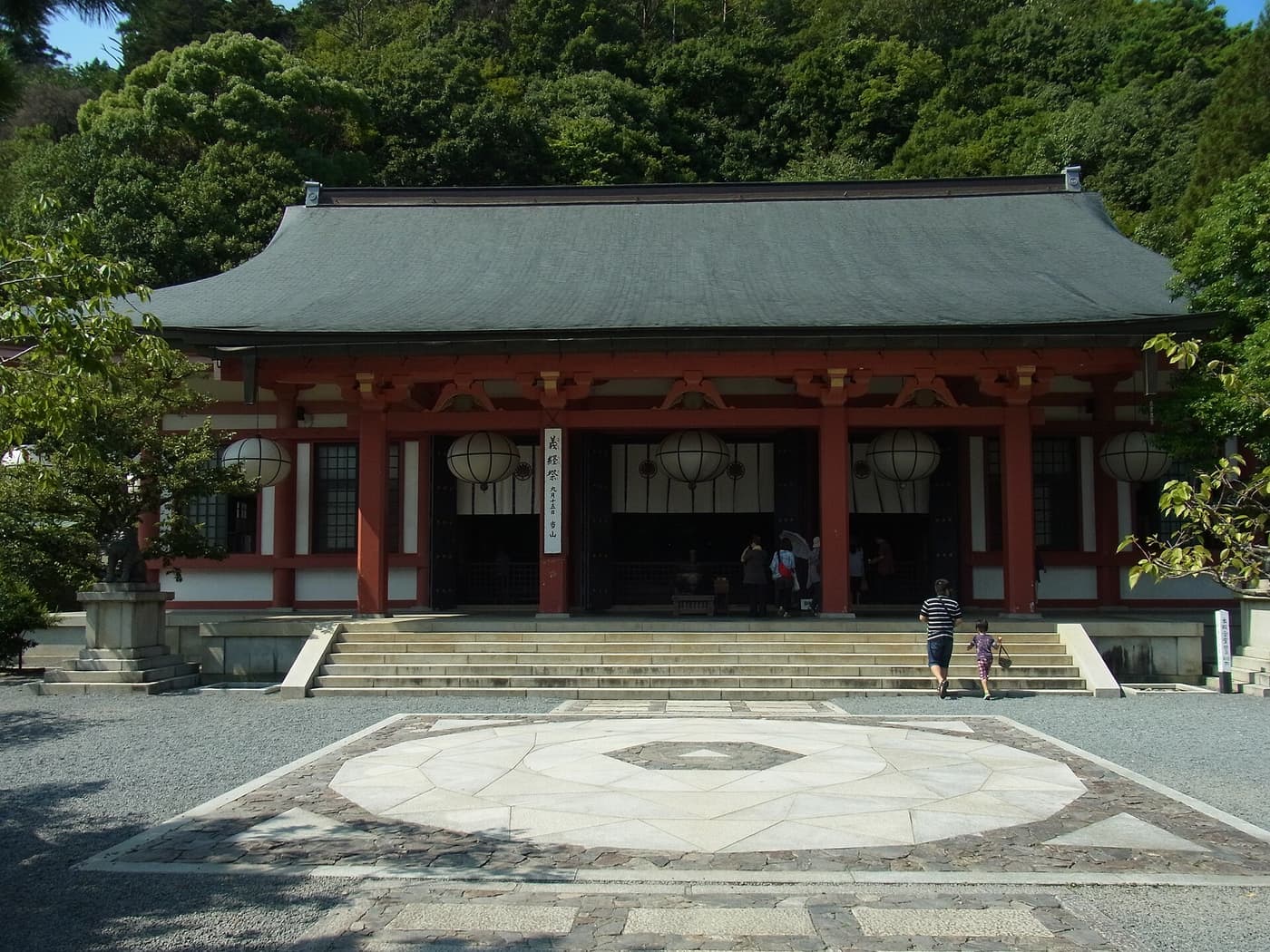
Kurama-dera. Recommended by 16 of 16 guides read. It’s the temple on the mountain between the two villages, and the walk goes through it. Guides tie it to the legend of the young Ushiwakamaru learning swordsmanship from the tengu, which the Kurama and Kibune entry on the map also tells.
A meal in Kibune. Recommended by 13 of 16 guides read. In summer that means a table on a platform built over the river, which is kawadoko. Keihan’s Eizan page says it runs between May and September. Several guides say to book ahead, and a few warn that kaiseki courses aren’t cheap.
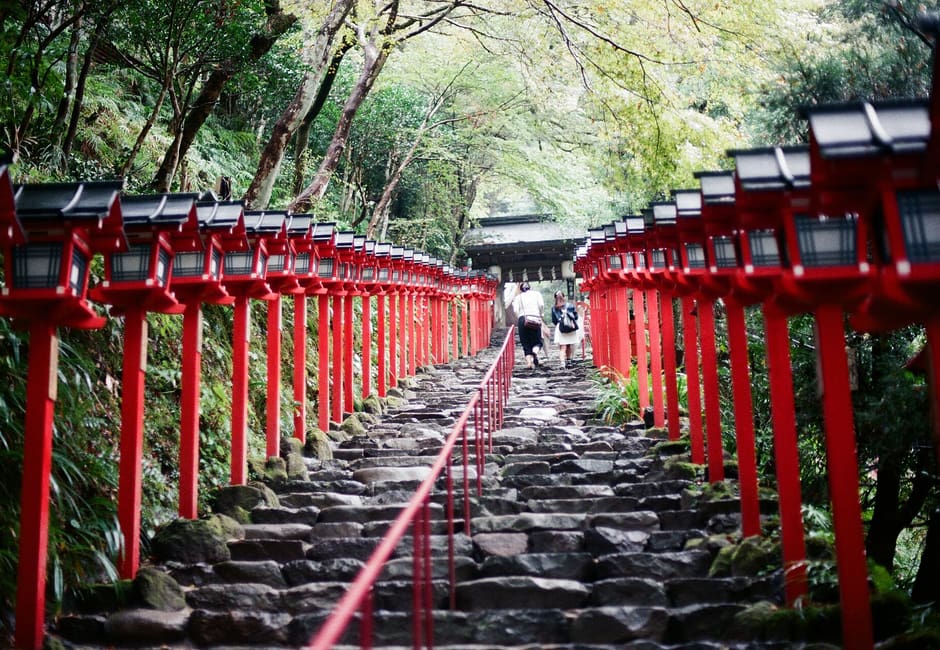
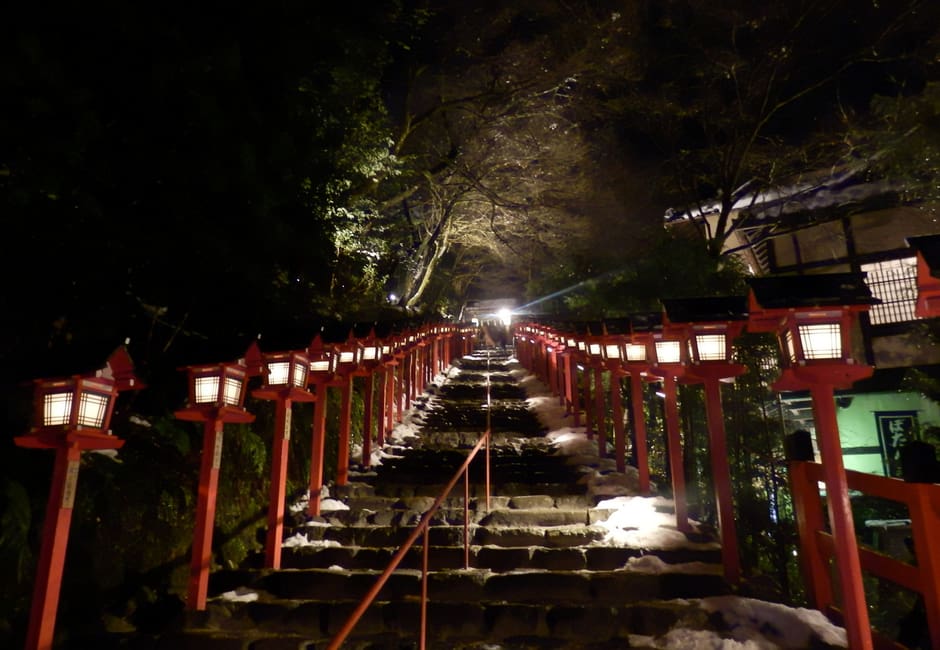
Kifune Shrine. Recommended by 12 of 16 guides read. It’s the shrine of the water god, with a long stairway of red lanterns and water fortune slips that show their words when you wet them. The Kyoto City Tourism Association also lists it for matchmaking luck.
Ki-no-ne Michi. Recommended by 12 of 16 guides read. This is the stretch over the ridge where cedar roots cover the ground. The tourism association calls it a power spot, and the guides that name it say to wear shoes with grip.
Kurama Onsen afterwards. Recommended by 11 of 16 guides read. The outdoor bath is open to day visitors, and Keihan’s page lists a shuttle bus from Kurama Station to the Kurama Spa Hourokuyu. Prices vary by guide and by year, so check the onsen’s own page.
Walk from Kurama to Kibune. Recommended by 9 of 16 guides read. The reason they give is that you climb first and finish downhill, ending at the restaurants. Five other guides start in Kibune instead so the bath comes last, so it’s a real choice.
Autumn for the leaves. Recommended by 8 of 16 guides read. Several add the stretch of maples that the Eizan train passes through. Eizan’s English page says that tunnel is about 20 minutes from Demachiyanagi.
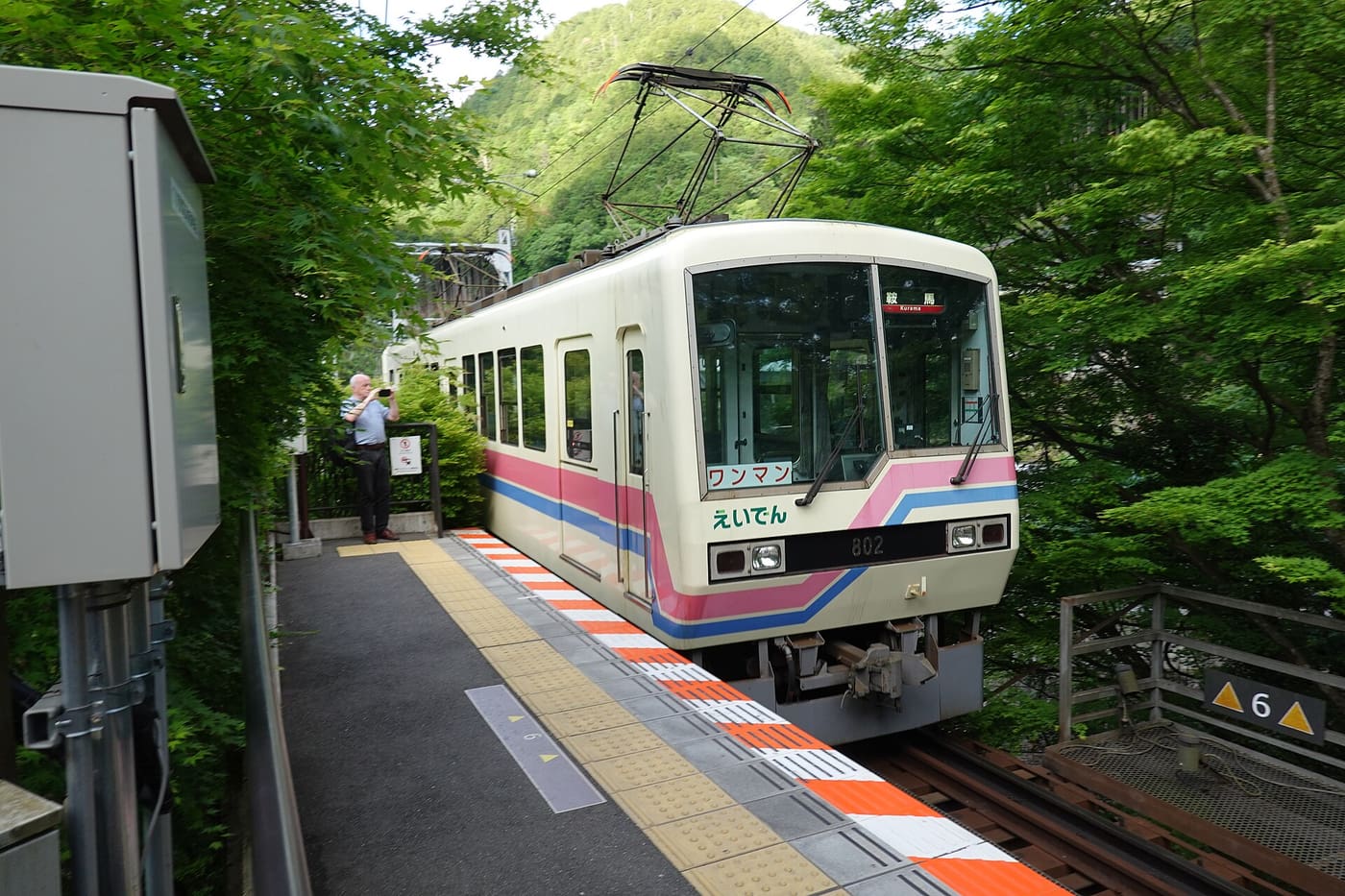
Finish at Kibuneguchi. Recommended by 8 of 16 guides read. From Kibune you walk down the road or take the bus to Kibuneguchi Station, then ride the Eizan line back.
Walk up instead of taking the cable car. Recommended by 6 of 16 guides read. Their case is that the first climb is short and the funicular skips parts of the temple. Others mention the cable car as an option for tired legs.
Carry water. Recommended by 6 of 16 guides read. They say there are no vending machines on the trail.
Seven guides mention the Kurama Fire Festival at Yuki-jinja in October, and none says to build the trip around it. The Kyoto City Tourism Association gives the date as October 22.
The route in order
| Stop | What you do | Official fact |
|---|---|---|
| Demachiyanagi | Board the Eizan Kurama Line | 470 yen adult, 240 yen child |
| Kurama Station | Walk 3 minutes to the Niomon gate | Kurama-dera’s access page |
| Kurama-dera | Pay the mountain fee, climb or take the cable car | 500 yen fee, cable car 200 yen |
| Ki-no-ne Michi and the ridge | Walk over to Kibune | About 2 hours from Kurama Station per Keihan |
| Kifune Shrine | Walk up the lantern steps | Free, main shrine 6:00 to 20:00 |
| Kibune | Lunch, kawadoko in season | May to September per Keihan |
| Kibuneguchi | Bus 33 or about 30 minutes on foot, then the train | About 28 minutes to Demachiyanagi |
Verdicts by trip type
First trip. Go in the morning, walk Kurama to Kibune, and plan lunch in Kibune. It fits between a late breakfast and dinner in town.
Short stay. Give it a half day only if you’d rather walk than queue. Kyoto’s temples are easier to fit in, so skip it on a two-day visit.
Summer. Book a kawadoko table first and fit the walk around the booking.
Autumn. Go early on a weekday. Guides say the mountain is crowded in the leaf weeks, and one says to arrive at opening.
Winter. Two guides warn that the trail can be muddy or icy, and kawadoko only runs between May and September. One suggests walking Kibune to Kurama and finishing in the bath.
Families. The walk is rated easy by most guides, but it has steep stone steps and roots. Use the cable car on the way up and don’t push a stroller.
With a rail pass. The Japan Rail Pass isn’t valid on the Eizan railway, according to its own page. The 1,200 yen Ee Kippu one-day ticket covers all Eizan lines. Check the Kyoto passes guide before you buy one.
Which way to walk
| Kurama to Kibune | Kibune to Kurama | |
|---|---|---|
| Named by | 9 guides | 5 guides |
| Why | Climb first, finish at the restaurants | Bath comes last, shuttle bus to the station |
| Finish | Kibuneguchi Station, bus or road | Kurama Station |
| Best for | Lunch and kawadoko | Onsen, winter, hot days |
Official facts, as of November 2026
| Item | What the page says | Source |
|---|---|---|
| Eizan fare | Demachiyanagi to Kurama or Kibuneguchi 470 yen adult, 240 yen child | Eizan Electric Railway |
| Eizan one-day ticket | Ee Kippu 1,200 yen adult, 600 yen child, not valid on the cable car | Eizan Electric Railway |
| Journey time | About 30 minutes to Kurama, about 28 to Kibuneguchi | Kyoto City Tourism Association |
| Kibuneguchi to Kibune | Kyoto Bus 33, about 7 minutes | Kyoto City Tourism Association |
| Kurama-dera fee | 500 yen mountain fee since April 2023 | Kurama-dera |
| Cable car | 200 yen adult, 100 yen child one way | Kurama-dera |
| Cable car hours | First 8:40, last 16:25, every 20 minutes | Kurama-dera |
| Main hall | Open 9:00 to 16:15 | Kurama-dera |
| Kifune Shrine | Main shrine 6:00 to 20:00 from 1 May to 30 November, free | Kifune Shrine |
| Kawadoko | Between May and September | Keihan |
The Eizan page doesn’t give a total journey time, and the tourism association page doesn’t give fares, so the two are combined here. Kifune Shrine’s page gives no hours for December to April, and Kurama-dera’s page gives none for the mountain grounds, so check both before a winter visit. Kurama-dera’s page also lists cable car stoppages for inspections, so look at its notices before you go. The route from Kyoto Station is one stop on the JR Nara Line to Tofukuji, then the Keihan line to Demachiyanagi. Check JR West and Keihan for those fares and times. If you’re staying nearby, Demachiyanagi is where the Eizan line starts, and the where to stay in Kyoto guide compares the other areas.
When to go
Guides that name a season split between summer for kawadoko and autumn for the leaves. The best time to visit Kyoto guide covers the rest of the year. For other trips out of town, see the best day trips from Kyoto, and Nara or Uji if you’d rather go by Kintetsu or JR. The how many days in Kyoto guide says where a day like this fits.
Whichever day you pick, check what’s on. The events page lists what’s on in Kyoto, this weekend narrows it to the next two days, and the map shows the Eizan stations beside it.
Frequently Asked Questions
How do you get from Kyoto to Kurama and Kibune?
Take the Eizan Kurama Line from Demachiyanagi, which the Kyoto City Tourism Association puts at about 30 minutes to Kurama and about 28 to Kibuneguchi. Eizan’s English page gives 470 yen for an adult and 240 for a child as of November 2026. From Kyoto Station you reach Demachiyanagi by the JR Nara Line to Tofukuji and then the Keihan line.
Is the Kurama to Kibune hike hard?
Most of the 16 guides read rate it easy, and Keihan calls the route gentle. It has stone steps and a root-covered stretch, so wear shoes with grip. Use the cable car at Kurama-dera if the first climb worries you.
How long does the Kurama to Kibune hike take?
Keihan gives about two hours on foot from Kurama Station through Kurama-dera and Kinone Michi to Kifune-jinja. The guides range from about one hour to three, depending on how long they stopped. Add time for the temple, lunch and the walk or bus to Kibuneguchi.
Should you walk from Kurama to Kibune or the other way?
Nine of the 16 guides say Kurama to Kibune, so you climb first and finish at the restaurants. Five start in Kibune so they can end in Kurama’s hot spring. Both are fine, and the first suits a lunch in Kibune.
When is kawadoko open in Kibune?
Keihan’s Eizan page says between May and September. Individual restaurants set their own dates and weather can change them, so book a table and confirm with the restaurant. The Kyoto City Tourism Association’s page says only that it’s a summer experience.
How much does Kurama-dera cost?
The mountain fee is 500 yen, according to Kurama-dera’s page, which dates it from April 2023. The cable car is 200 yen for adults and 100 yen for children one way. Kifune Shrine is free.
Can you use a Japan Rail Pass to get to Kurama?
No. Eizan’s English page says the Japan Rail Pass can’t be used on the Eizan railway. The Ee Kippu one-day ticket is 1,200 yen for an adult and covers every Eizan line.
Sources: 16 guides in English, German, Spanish, French and Japanese, and 8 official pages
Guides in English
- Kurama to Kibune hike guideJapan Activity
- Kurama to KibuneInside Kyoto
- Kurama to Kibune hike: Kyoto trail guideVoyaged Magazine
- The Kurama - Kibune TrailJapan Travel
- Kurama to Kibune hikeMyHikes
- A Day Trip Itinerary to Kurama and Kibune in Rural KyotoTripZilla
- Kibune to Kurama hikeJapan Journeys
- Kurama to Kibune Hike: A Guide to Kyoto's Mystical Mountain TrailTravely Notes
- Kyoto: KuramaJapan Guide (blog, 16 Nov 2009)
- Kurama & Kibune: A Pair of Dual Allures in Northern KyotoDonny Kimball
- Kurama and Kibune hike from KyotoGeneva Vanderzeil
- Around Majestic Mount KuramaOsaka Info
Guides in German
- Kurama und Kibune, Wanderung ab KyotoThe Hangry Stories
Guides in Spanish
Guides in French
Guides in Japanese
- 鞍馬・貴船のモデルプランCocolocala
Official pages
- Eizan Electric Railway, English siteeizandensha.co.jp
- Kyoto City Tourism Association, access to Kurama and Kibunekyoto.travel
- Kyoto City Tourism Association, Kurama and Kibunekyoto.travel
- Keihan, Eizan Railway culture and naturekeihan.co.jp
- Kurama-dera, entering the mountainkuramadera.or.jp
- Kurama-dera, accesskuramadera.or.jp
- Kurama-dera, home pagekuramadera.or.jp
- Kifune Shrine, English sitekifunejinja.jp
Find hotels in Demachiyanagi
Browse live availability and compare prices for your dates.
See hotels near Demachiyanagi on Booking.comPrices are for the night of Saturday 21 November. You can change the dates on Booking.com. If you book, Roam Kyoto earns a small commission from Stay22 at no extra cost to you.